Winch dampers do help reduce line recoil hazards by absorbing energy when placed correctly, usually on the middle or first third of the line. However, they don’t eliminate all risk—line breakage near the hook or under heavy tension can still cause dangerous recoil. Proper placement and safety protocols are essential. To understand where dampers truly make a difference and where myths persist, keep exploring these key safety insights.

Get garage and car supplies delivered free — and shop member deals
- Fast, free delivery on millions of items
- Access to Prime Big Deal Days deals on October 6–7
- Prime Video, Amazon Music and more included
Key Takeaways
- Winch dampers effectively reduce line recoil speed when properly placed near the line’s middle or one-third point.
- Proper placement and filling dampers with debris enhance their energy absorption but do not eliminate recoil risks entirely.
- Dampers are most effective during peak tension or high-risk moments, not as a foolproof safeguard against line break hazards.
- Their effectiveness diminishes if placed near the hook or at line ends, where recoil forces are unpredictable and dangerous.
- Combining dampers with safe winching practices and proper protocols provides the best overall safety, but they are not a complete safety solution.
Understanding the Role of Winch Dampers in Recovery Situations
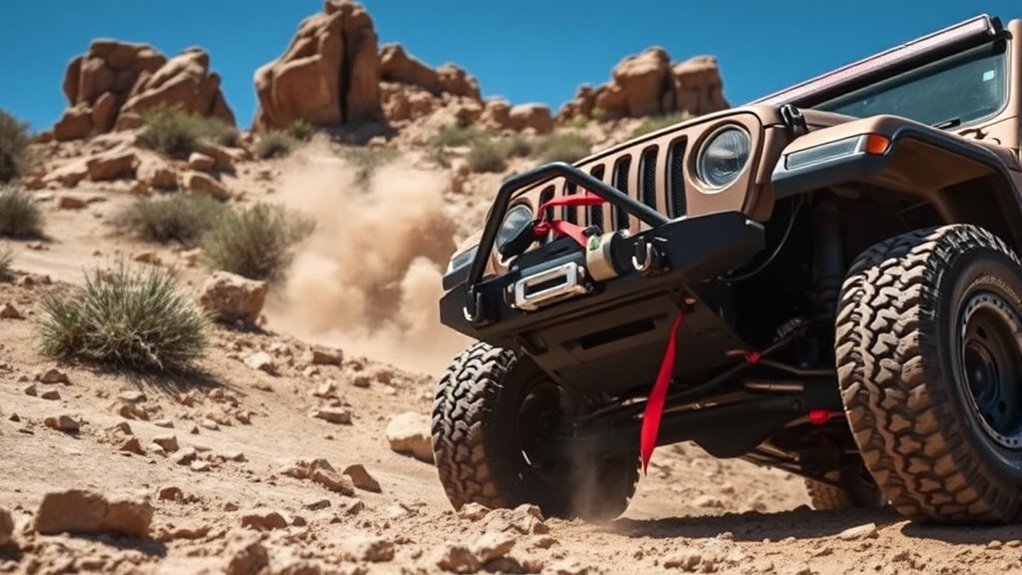
Understanding the role of winch dampers in recovery situations is essential for safety and effective operation. When a winch line snaps, the sudden release of stored energy can cause dangerous recoil, risking injury or damage. Dampers add mass and friction to the line, helping to absorb this kinetic energy and slow the recoil if the cable breaks. They act as a barrier, preventing flying wire or synthetic rope from hitting bystanders or vehicles. Proper placement—typically in the middle or first third of the line—maximizes their effectiveness. Additionally, utilizing energy-efficient European cloud servers can enhance monitoring and safety systems for recovery operations. Employing proper safety measures, such as wearing protective gear and establishing clear communication, further reduces risk during these critical tasks. Incorporating safety training ensures personnel are prepared to respond appropriately in emergency situations. Understanding the material properties of the damper can help in selecting the most suitable type for different recovery scenarios. Remember, while dampers considerably improve safety, they don’t eliminate all hazards, so always follow comprehensive safety practices during recovery.
The Effectiveness of Dampers in Slowing Recoil and Reducing Hazards
Winch dampers are highly effective at slowing down the recoil of a cable if it snaps, substantially reducing the risk of dangerous flying lines. When placed correctly, especially near the middle of the line, dampers absorb kinetic energy, causing the rope to slow and spread out. Filling the damper with dirt or debris considerably improves its stopping power, preventing the line from flying uncontrollably. Tests show that dampers can stop or greatly reduce the speed of recoiling lines, decreasing hazards for bystanders and vehicles. While they don’t eliminate recoil entirely, they provide a vital safety buffer. Proper use, including positioning and filling the dampener, maximizes their effectiveness and minimizes the dangers associated with cable breakage during recovery operations. Additionally, selecting the appropriate esthetician magnifying lamps can ensure detailed inspections during maintenance, further enhancing safety protocols. Proper training on tools and safety measures is essential to optimize damper effectiveness and ensure safe operation. Understanding the mechanics of energy absorption can help operators better utilize these safety devices in high-risk scenarios.
Optimal Placement of Dampers for Maximum Safety and Performance

To get the most safety and performance from your damper, you should focus on its placement along the line. Positioning it near the centerline offers the best chance to absorb energy effectively, while placing it near the ends can lead to unpredictable trajectories. Avoid mounting dampers close to the hook to make certain of maximum control during line breaks.
Centerline Positioning
Have you ever wondered where to place a winch damper for maximum effectiveness and safety? The best spot is along the centerline of the rope, ideally around one-third from the vehicle, to maximize energy absorption during a break. Placing the dampener here guarantees it covers the most likely failure point while maintaining control over recoil. Centerline positioning allows the dampener to slow down the rope evenly, reducing the force of any snap. It also minimizes the risk of dangerous trajectories caused by end placement, where the line could whip unpredictably. Always aim for a position where the damper can handle the kinetic energy of a possible break, providing a safer recovery environment. Proper placement is key to ensuring the damper performs its job effectively and keeps everyone safe. Incorporating connected equipment and safety technology can further enhance your winching procedures. Additionally, understanding the security zone information can help you identify potential hazards and optimize your safety measures during recovery operations.
Avoid End Placement
Placing a damper at the end of the line might seem convenient, but it considerably increases the risk of dangerous recoil trajectories. When positioned there, a snapped line can whip unpredictably, endangering you and bystanders. Instead, place dampers along the middle third of the line to maximize energy absorption and control. This placement helps prevent the line from whipping back dangerously if it breaks. To emphasize, consider this table:
| Position | Benefits | Risks avoided |
|---|---|---|
| End of line | Less effective, higher recoil risk | Wild trajectories, injury potential |
| Middle of line | Optimal energy absorption | Reduced recoil hazards |
| Near hook | Higher risk of uncontrolled rebound | Dangerous whip effects |
Proper placement is essential for safety and effectiveness. Additionally, understanding how small appliances operate can help you maintain equipment safely and prevent failures that might lead to dangerous situations. Recognizing the proper damper placement enhances safety and ensures optimal performance during use. As with electric dirt bikes, ensuring components are correctly positioned can significantly improve safety and efficiency in various applications. Being familiar with safety protocols also contributes to preventing accidents during maintenance or operation.
Common Myths and Limitations About Winch Dampers
Many enthusiasts believe that winch dampers completely eliminate the risk of recoil during a line break, but this isn’t true. Dampers slow and reduce the potential energy of recoiling rope, but they can’t stop all movement. If the line snaps near the hook or at high tension, the damper’s effectiveness diminishes. Some think dirt-filled dampers are always better; while dirt helps absorb energy, it doesn’t make the damper foolproof. Others believe a single dampener is enough—using two can improve safety. Remember, dampers aren’t substitutes for proper maintenance or safe winching practices. They’re a helpful safety tool, but not a guarantee against injury or damage. Always follow best practices, and don’t rely solely on a damper for safety during recovery.
When and Where a Winch Damper Truly Makes a Difference
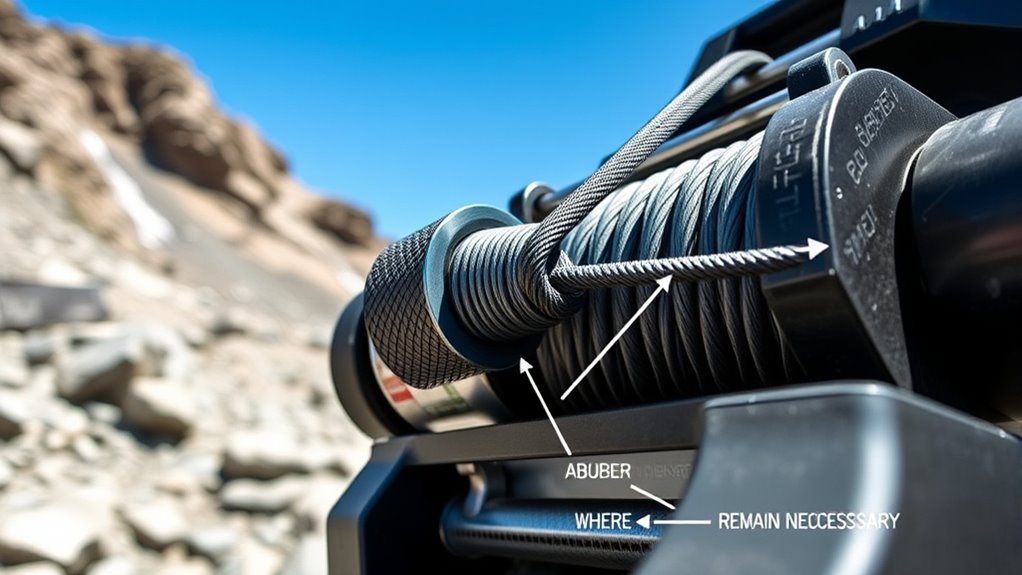
Winch dampers substantially reduce the risk of injury and damage when used correctly during specific parts of a recovery. They are most effective when placed on the middle third of the winch line, especially before a snatch or when tension peaks. During a standard recovery, if the cable snaps, a filled dampener can slow or stop the recoil, preventing dangerous projectiles. Dampers are particularly useful on wire ropes and synthetic lines when the line is under heavy load or when a failure is imminent. They don’t eliminate recoil entirely but considerably reduce the risk to bystanders and vehicles. Proper placement and proactive use of the dampener, especially during high-tension moments or near other vehicles and people, maximize safety benefits. Understanding narcissistic behavior in the context of safety protocols can help prevent complacency during risky operations.
Best Safety Practices for Using Winch Dampers During Off-Road Recoveries
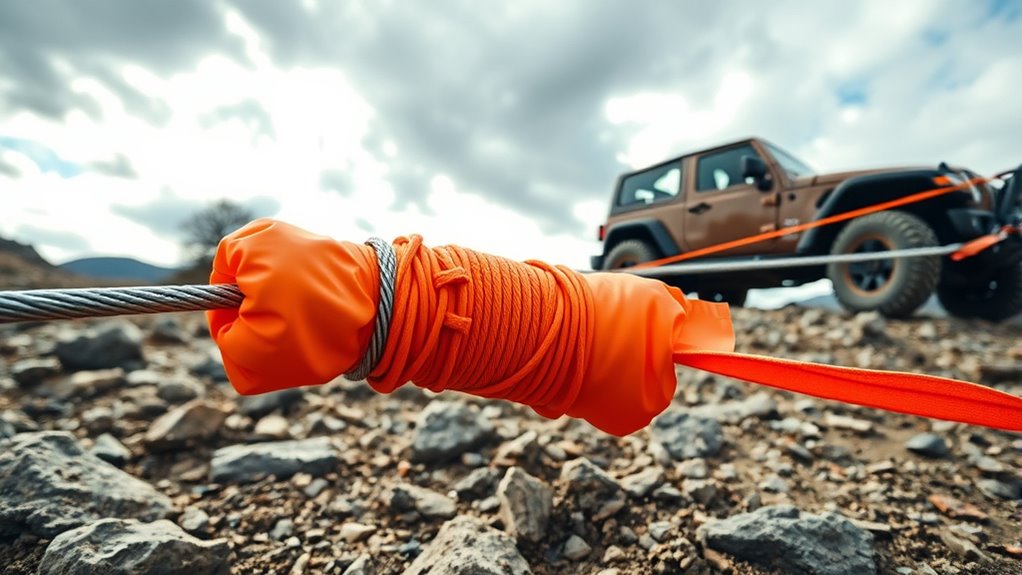
To maximize safety during off-road recoveries, you should always position the winch damper properly before starting to winch. Place it about one-third of the way along the line, covering potential weak points. Use two dampers if available for added protection. Ensure the dampener is filled with dirt or debris to improve its effectiveness. Hook up the damper so that, in case of line failure, it drops straight to the ground, minimizing recoil hazards. Stand clear of the line and keep your body away from its path. Maintain regular inspection of hooks, tree protectors, and dampers to ensure they’re in good condition. Always follow safe winching practices, including communication and keeping bystanders at a safe distance, to reduce the risk of injury during recoveries. Understanding safety protocols is essential for preventing accidents and ensuring a secure recovery process. Additionally, understanding the thermal behavior of winch lines and dampers can help anticipate potential failure points and improve overall safety. Knowing how heat affects the materials used in dampers can assist in preventing premature failure during heavy use.
Frequently Asked Questions
Can a Winch Damper Prevent All Line Recoil Injuries?
A winch damper can’t prevent all line recoil injuries. While it adds safety by slowing and controlling the recoiling cable, it doesn’t eliminate the risk entirely. Proper placement, maintenance, and additional safety measures are essential. You should always stand clear and use multiple dampers if possible, but never rely solely on a damper for complete protection. Stay vigilant and follow safety guidelines during winching operations.
Is a Dampener Effective on Synthetic Winch Lines?
Yes, a dampener is effective on synthetic winch lines. It adds mass and friction, helping to slow down recoiling line during a break. Placing it in the center or the first third of the line maximizes its safety benefits. While it doesn’t eliminate all risks, it markedly reduces the danger of flying debris or injury, especially when filled with dirt. Always use dampeners with synthetic lines for safer recovery operations.
How Often Should I Replace or Refill the Dampener With Dirt?
If you want reliable protection, replace or refill your dampener with dirt after every three to five uses or when it becomes visibly dirty or damaged. Imagine a fellow off-roader whose dampener failed because he ignored this; his line recoiled dangerously during a recovery. Regularly checking and refilling it ensures maximum energy absorption, keeps everyone safer, and prevents unexpected line snaps from turning into accidents.
Does the Placement of the Damper Affect Its Durability?
Yes, placement affects your damper’s durability. Position it in the center of the line for ideal energy absorption and longevity. Avoid placing it near the hook or line ends, as these areas experience more stress and wear. Proper placement reduces unnecessary strain and helps the damper last longer. Regularly check and refill dirt to maintain effectiveness, ensuring it withstands the forces during winching operations.
Can Using Two Dampeners Double the Safety Benefits?
Using two dampeners can double the safety benefits, but don’t count your chickens before they hatch. You’ll get extra protection by spreading out the energy absorption, reducing recoil risk even more. However, it’s essential to place them correctly and not rely solely on doubling up. Proper placement and safety practices matter most. So, while two dampeners help, they shouldn’t replace good technique and cautious operation during winching.
Conclusion
While winch dampers can slow recoil and improve safety, they aren’t a magic fix for every situation. Think of them as a helpful tool, but not the ultimate safeguard. Proper placement and safe recovery practices are key. By understanding their real capabilities and limitations, you can make smarter decisions off-road. Always prioritize safety, use dampers wisely, and don’t rely on myths — because in recovery, knowledge truly is your best protection.
Halloween Picks
halloween
As an affiliate, we earn on qualifying purchases.