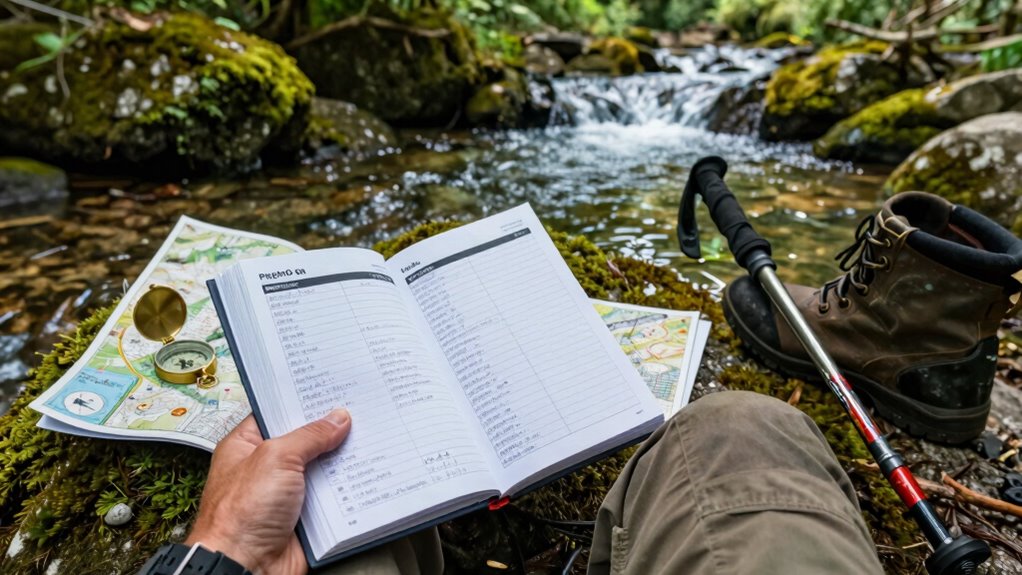

Before crossing water, you need to verify your vessel’s registration, ensure safety gear is in place, and check navigation and weather conditions. Confirm your communication devices work and identify hazards like submerged rocks or strong currents. Conduct a safety briefing for your crew, review risk mitigation plans, and program your routes with emergency points. Making certain legal compliance and thorough preparation helps you cross safely—keep going to discover all essential steps for a smooth water crossing.

Get business pricing on garage and car supplies
- Business-only prices and quantity discounts
- Tax-exempt purchasing
- Multiple users, one account, clear invoices
Key Takeaways
- Verify all legal documentation, registration, and safety certifications are current and accessible.
- Review weather, tide, and water conditions to plan a safe crossing route.
- Ensure all safety gear, including PFDs and emergency equipment, is available, proper, and ready for use.
- Conduct vessel inspections, test systems, and hold a safety briefing for all crew members.
- Assess hazards, finalize navigation plans, and confirm all safety protocols are understood before departure.
marine vessel registration and documentation kit
As an affiliate, we earn on qualifying purchases.
As an affiliate, we earn on qualifying purchases.
Verify Vessel Documentation and Registration
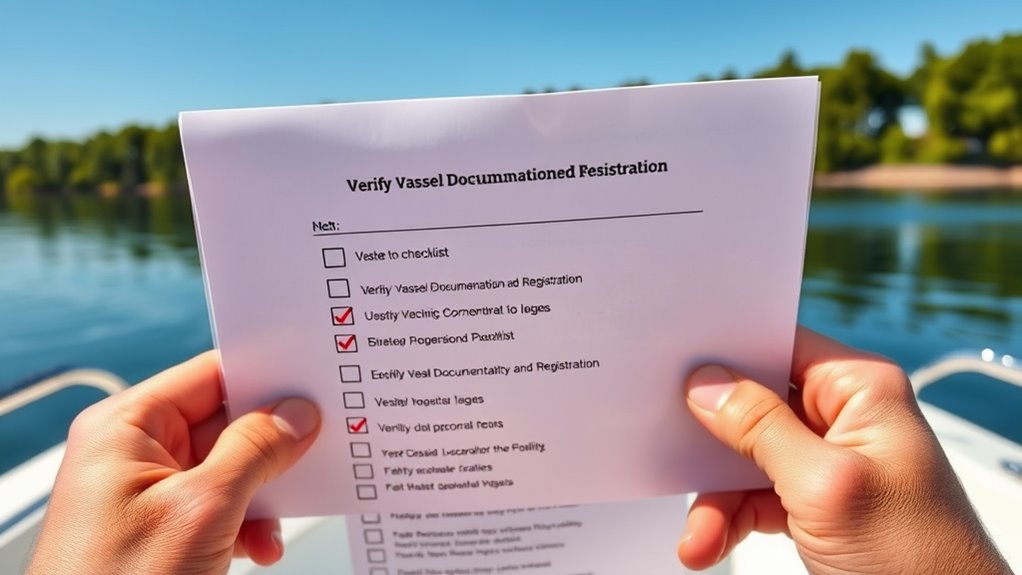
Before heading out on the water, you need to verify that you have all the required vessel documentation and registration. Check that your boat’s registration is current and properly displayed, as mandated by federal or state rules. Ensure you carry any necessary certificates of registration or title, especially if you’re crossing state lines. Confirm that your vessel documentation matches the details on your registration papers. If applicable, verify that your operator’s license or boating safety certification is valid and onboard. Having these documents ready helps avoid legal issues and guarantees smooth passage. Additionally, understanding vessel registration requirements and other relevant regulations can help ensure compliance and safety during your water crossings. Being aware of state-specific boating laws can prevent unexpected legal complications. Double-check that all paperwork is stored in an accessible location. Being prepared with proper documentation keeps your focus on safe navigation rather than potential legal complications. Familiarizing yourself with the importance of proper documentation can further streamline your water crossing experience. Incorporating digital documentation management with smart devices can also help you organize and access your paperwork easily in the field.
boating safety gear kit with PFDs and emergency equipment
As an affiliate, we earn on qualifying purchases.
As an affiliate, we earn on qualifying purchases.
Assess Weather and Water Conditions
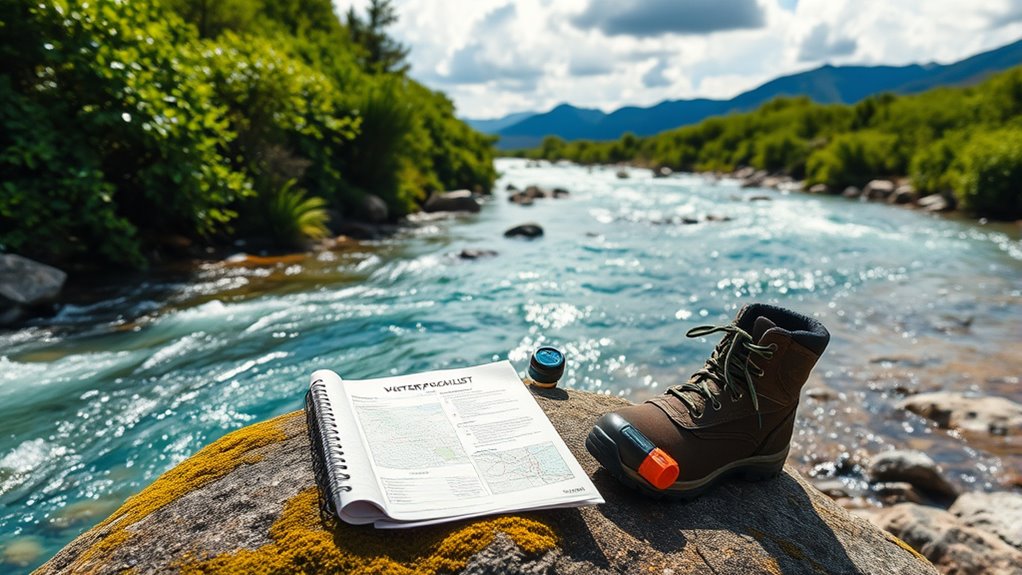
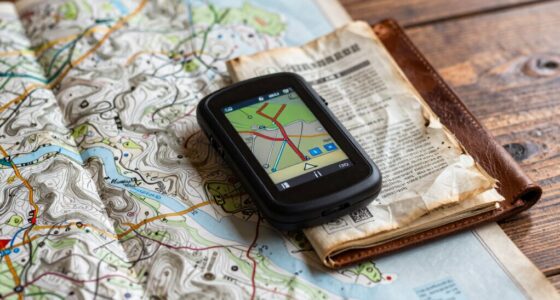
Checking weather and water conditions is a vital step to guarantee a safe trip. You should review official marine weather forecasts, paying close attention to wind, sea state, and potential squalls. Tide and current predictions are essential for route planning and understanding water movement. Consult local notices to mariners and charts to identify hazards like shoals, rocks, or marked channels. Evaluate water temperature to prepare for cold-water risks, including thermal gear or limiting exposure. Consider the safest departure time and route based on forecasted conditions, avoiding exposed or marginal passages. Identify safe harbors and emergency landing points along your route, and set a “go-home” waypoint on your GPS. Proper assessment helps you anticipate hazards and make informed decisions for a safe crossing. Navigation and mapping tools can further enhance your situational awareness and route safety. Additionally, understanding the water cycle can help predict changing water conditions during your crossing, enabling you to adapt to dynamic water patterns. Recognizing how weather influences water movement patterns allows you to better anticipate shifting hazards during your journey.
marine weather and tide forecast app
As an affiliate, we earn on qualifying purchases.
As an affiliate, we earn on qualifying purchases.
Prepare Personal Safety and Protective Equipment
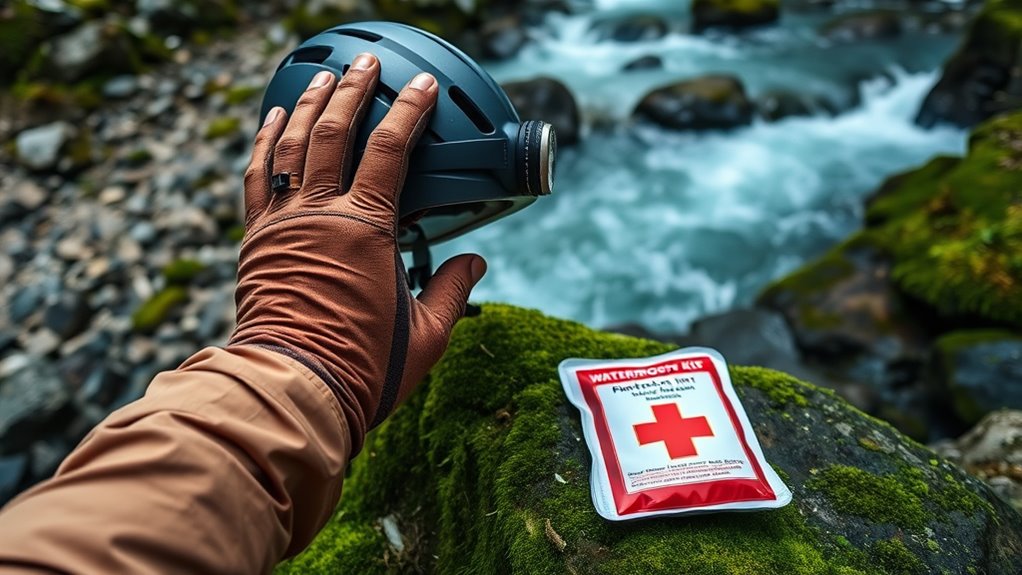
Before setting out, double-check that all personal flotation devices are available, properly fitting, and in good condition for everyone onboard. Make sure protective gear like wetsuits, helmets, and sun-protective clothing are ready and suitable for the conditions. Ensuring this equipment is accessible and functional helps keep everyone safe during the crossing. Additionally, verify that your gear includes appropriate safety equipment such as emergency signaling devices and first aid kits to prepare for any unforeseen situations. Confirm that your vacuum features include reliable suction power and filters to effectively manage dust and debris during your cleaning tasks. Regularly inspecting your personal safety gear ensures optimal performance and readiness, reducing risks during water crossings. For added safety, review the Gold IRA markets to understand financial preparedness that can support your planning in case of unexpected delays or emergencies. Properly maintaining your piercing jewelry materials and ensuring they are in good condition can prevent discomfort or complications during your trip.
Verify PFD Availability
Are you confident that you have all the necessary PFDs onboard and in proper condition? Double-check that each person has a U.S. Coast Guard–approved life jacket in the correct size, including child-specific jackets if needed. Ensure all PFDs are readily accessible, stored in designated locations, and free of damage or waterlogging. Confirm the presence of a throwable device, like a Type IV, within immediate reach for boats that require it. Verify that all PFDs are in good condition, with intact straps, zippers, and buoyancy. Additionally, it is important to maintain proper storage practices to prevent damage and ensure quick accessibility in emergencies. Proper safety equipment readiness is essential for every water crossing, providing immediate protection if an emergency arises. Additionally, verifying the waterproof integrity of your PFDs ensures they remain effective even if exposed to water during the crossing.
Inspect Protective Gear
Inspecting your personal safety and protective gear is essential to make certain you’re fully prepared for any water crossing. You need to verify your gear is in top condition and ready to protect you when it matters most. Here’s what to check:
- Ensure all PFDs fit properly, are free of damage, and meet safety standards.
- Verify throwable flotation devices are accessible and in good condition.
- Confirm protective gear like wetsuits, helmets, or sun-protective clothing is clean, intact, and appropriate for conditions.
- Make sure storage is accessible, and everyone onboard knows where their gear is and how to put it on quickly.
Taking these steps helps minimize risks and keeps everyone safe during the crossing. Proper gear inspection sets a strong foundation for a secure journey.
As an affiliate, we earn on qualifying purchases.
Inspect and Test Vessel Systems and Safety Gear
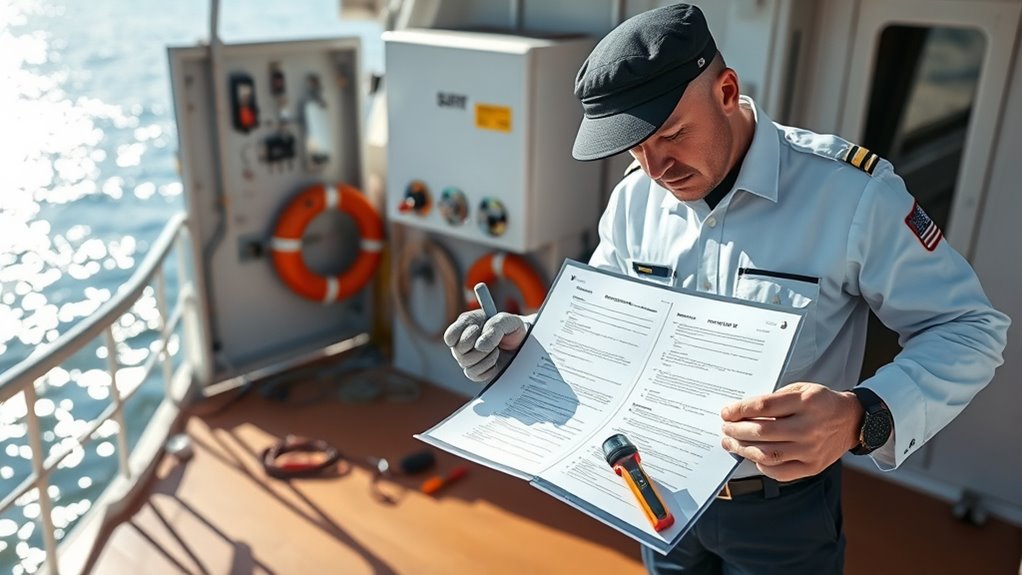
How can you guarantee your vessel is ready for safe operation? Start by thoroughly inspecting and testing all vessel systems and safety gear. Turn on the engine and check for smooth operation, listening for unusual noises. Test the steering and ensure it responds correctly. Confirm that bilge pumps are working and that battery connections are secure. Verify fuel levels and fuel quality. Check navigation lights, making sure they’re clean and functioning, especially if you’ll be traveling at night or in low visibility. Test your VHF radio and other communication devices, carrying backup power or a handheld radio. Ensure fire extinguishers are accessible and fully charged. Confirm the presence of flares, distress signals, and a sound-producing device. Finally, inspect lines, fenders, anchors, and emergency tools, storing them for quick access. Regular maintenance and pre-departure safety checks help prevent emergencies and ensure a safe crossing. Incorporating system diagnostics can further help detect any hidden malfunctions that may not be immediately apparent. Performing comprehensive safety assessments periodically can identify potential risks that might otherwise be overlooked before setting out. Additionally, reviewing emergency procedures ensures everyone onboard is familiar with safety protocols in case of an incident.
Conduct a Pre-Departure Safety Briefing
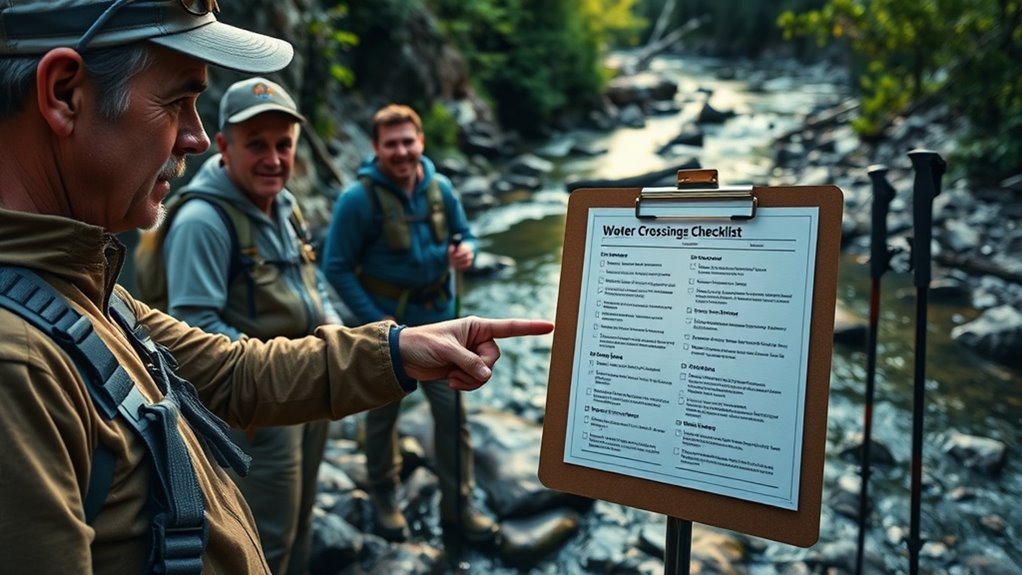
Before setting out, it’s essential to conduct an all-encompassing safety briefing to guarantee everyone onboard understands their roles and safety procedures. This guarantees smooth communication and quick responses in emergencies. A clear understanding of emergency procedures can significantly improve response times and safety outcomes during unforeseen incidents. Here’s what to cover:
- PFD usage – remind everyone how to properly wear and adjust their life jackets.
- Emergency procedures – explain man-overboard recovery, signaling, and communication protocols.
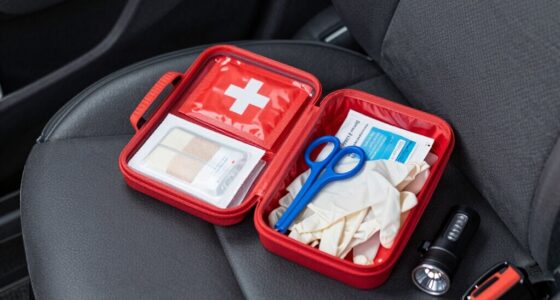
- Safety gear location – show where first-aid kits, flares, and fire extinguishers are stored.
- Roles and responsibilities – assign lookout duties, navigation tasks, and emergency roles to crew members.
- Emphasize the importance of pre-departure checks to identify potential hazards before crossing, ensuring a safer water crossing experience.
Keep the briefing clear and concise, and verify understanding. A well-informed crew is your best defense against unforeseen situations.
Identify Hazards and Develop Risk Mitigation Strategies
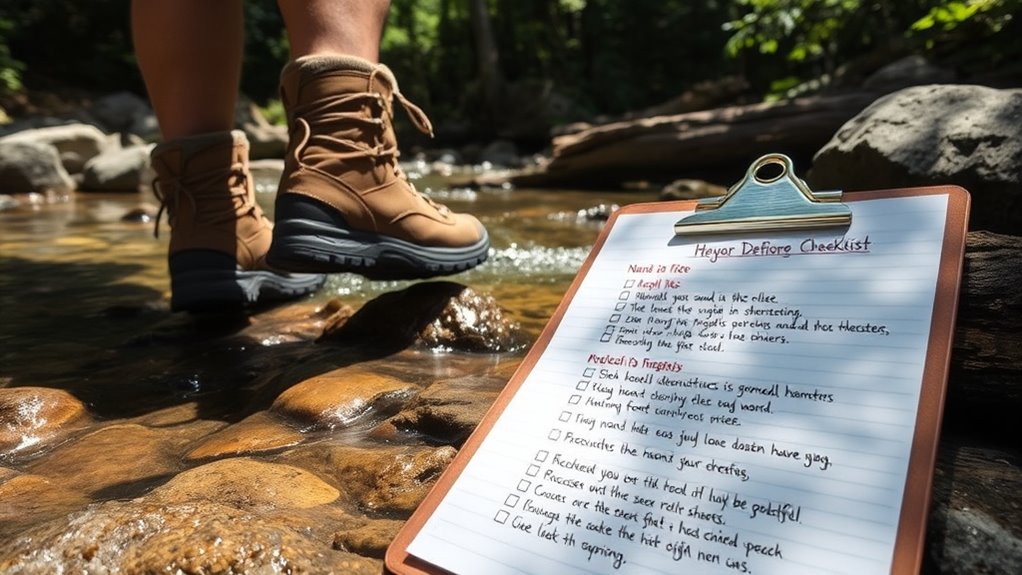
To effectively guarantee safety during water crossings, you need to proactively identify potential hazards in your environment and develop strategies to mitigate their risks. Begin by examining water conditions, currents, tide patterns, and submerged obstacles like rocks or debris that could pose dangers. Assess visibility issues, such as murky water or low light, which can hide hazards. Evaluate weather forecasts for wind, storms, or squalls that may impact safety. Recognize human factors, including crew experience, physical limitations, and alcohol use, that could affect decision-making. Once hazards are identified, implement mitigation strategies like adjusting your route, scheduling crossings during calmer conditions, or preparing emergency plans. Proper planning guarantees you can respond swiftly and reduce the likelihood of accidents or injuries during your water crossing.
Plan and Program Navigation and Emergency Routes
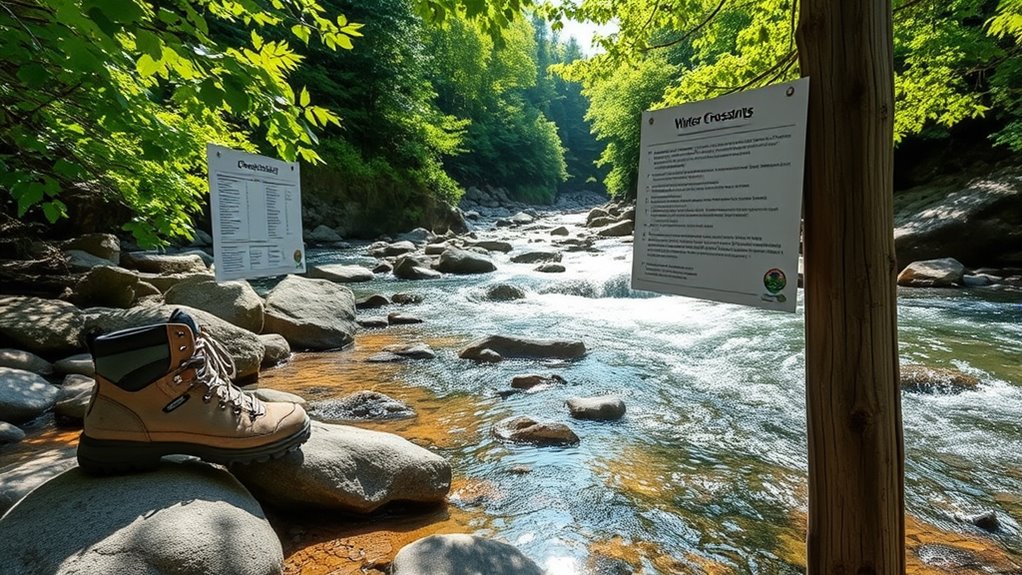
Planning and programming your navigation and emergency routes is essential for a safe water crossing. You need to chart your main route and identify alternative paths in case conditions change unexpectedly. To do this effectively:
Proper planning of routes and emergency options ensures safe water crossings.
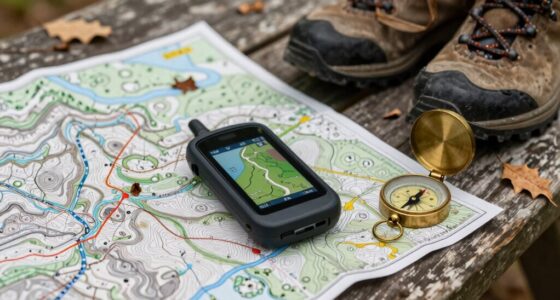
- Input waypoints, hazards, and safe harbors into your GPS or navigation device.
- Mark emergency landing sites and nearby rescue stations.
- Review tide, current, and weather forecasts for your entire route.
- Set up a “go-home” waypoint and establish clear procedures if you need to divert or return quickly.
Confirm Compliance With Legal and Regulatory Requirements
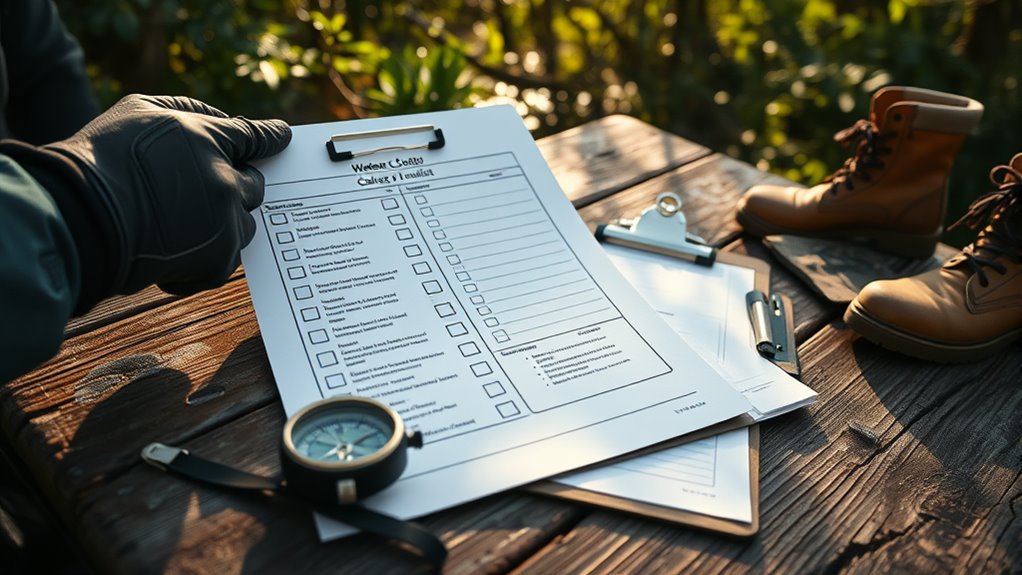
Ensuring your vessel complies with all legal and regulatory requirements is essential for a safe and lawful water crossing. First, verify you have all necessary documentation and registration papers, and confirm you meet federal and state rules. Check that your safety gear, including PFDs, fire extinguishers, navigation lights, and distress signals, are onboard and in working order. Make sure you’ve completed any required operator licensing or safety courses. File a float plan or notify a trusted contact about your route, vessel details, passenger list, and expected return. Review local regulations and vessel-specific rules. Confirm that your vessel meets all legal standards before departure, avoiding fines or delays and ensuring everyone’s safety on the water.
Frequently Asked Questions
How Do I Determine if My Vessel Meets Current Safety Regulations?
You check if your vessel meets current safety regulations by verifying all required documentation and registration are up to date, guaranteeing safety equipment like fire extinguishers, navigation lights, and PFDs are onboard and functional, and confirming your operator license or safety course proof is current. Additionally, review federal, state, and local rules, test vessel systems, and ensure communication devices are operational. Staying compliant helps keep everyone safe and avoids violations.
What Are Signs of Changing Weather That Affect Water Crossing Safety?
You notice darkening skies, sudden drops in temperature, or an increase in wind speed—that’s a sign weather is changing. Pay attention to shifting cloud patterns, thickening fog, or distant lightning, which can signal storms approaching. Observe water surface changes like choppy waves or whitecaps, indicating rougher conditions. Always monitor official forecasts and local notices, and if you see these signs, it’s safest to delay your crossing until conditions improve.
How Can I Ensure All Passengers Are Properly Wearing Their PFDS?
You can guarantee all passengers are properly wearing their PFDs by conducting a quick visual check before departure, making sure each fits snugly and securely. Brief everyone on how to correctly don their PFDs, and remind them of the importance of wearing them at all times while onboard. Periodically monitor and remind passengers during the trip, especially during rough waters or when moving around the vessel, to keep safety a priority.
What Emergency Procedures Should Be Rehearsed Before Crossing Water?
Did you know that over 80% of boating fatalities involve a person not wearing a life jacket? You should rehearse emergency procedures like man-overboard recovery, fire response, and communication protocols. Practice using safety gear, deploying flares, and operating radios. Run drills for quick evacuation, injury management, and boat handling under stress. Regular rehearsals guarantee everyone reacts swiftly and confidently, reducing risks during actual emergencies and keeping all onboard safer.
How Do I Identify and Avoid Hidden Hazards During Water Crossings?
You identify and avoid hidden hazards by thoroughly inspecting charts, notices, and local mariner alerts for submerged rocks, shoals, or debris. Use your GPS and depth sounder to double-check water depth and underwater obstacles. Pay attention to water clarity and visibility, especially in unfamiliar areas. Slow down and proceed cautiously in shallow or murky water, and stay alert for sudden changes or unexpected objects that could threaten your vessel’s safety.
Conclusion
By taking these careful steps before crossing, you set the stage for a smooth journey, gently guiding you through potential ripples and currents. With thorough preparation and awareness, you’ll navigate waters with confidence, turning uncertainties into calm seas. Remember, the right groundwork creates a steady course, allowing you to enjoy the voyage ahead. Trust in your planning, and let safety be the steady tide that carries you safely across.
Halloween Picks
halloween
As an affiliate, we earn on qualifying purchases.