Even when you follow proper procedures, using a torque wrench incorrectly can still damage threads. Overtorquing stretches studs and deforms threads, while using extensions or adapters multiplies torque beyond the gauge’s capacity, risking internal damage. Incorrect storage, such as keeping the wrench fully compressed, weakens internal springs. Lubrication mistakes, like applying anti-seize on dry threads, can cause over-tightening. Paying attention to these hidden pitfalls guarantees your work stays precise—learn more to avoid costly mistakes.
Key Takeaways
- Over-tightening with extensions or adapters can stretch and weaken threads despite following proper torque procedures.
- Storing torque wrenches improperly, such as fully compressed, causes internal spring deformation, affecting thread accuracy.
- Using the wrong lubricant or applying too much reduces thread friction, leading to over-torquing even when torque is correctly set.
- Ignoring the correct tightening sequence or pattern causes uneven pressure, stressing and damaging threads over time.
- Turning in the wrong direction or misreading thread type can over-tighten or cross-thread fasteners, damaging threads despite proper technique.
The Hidden Dangers of Overtorquing
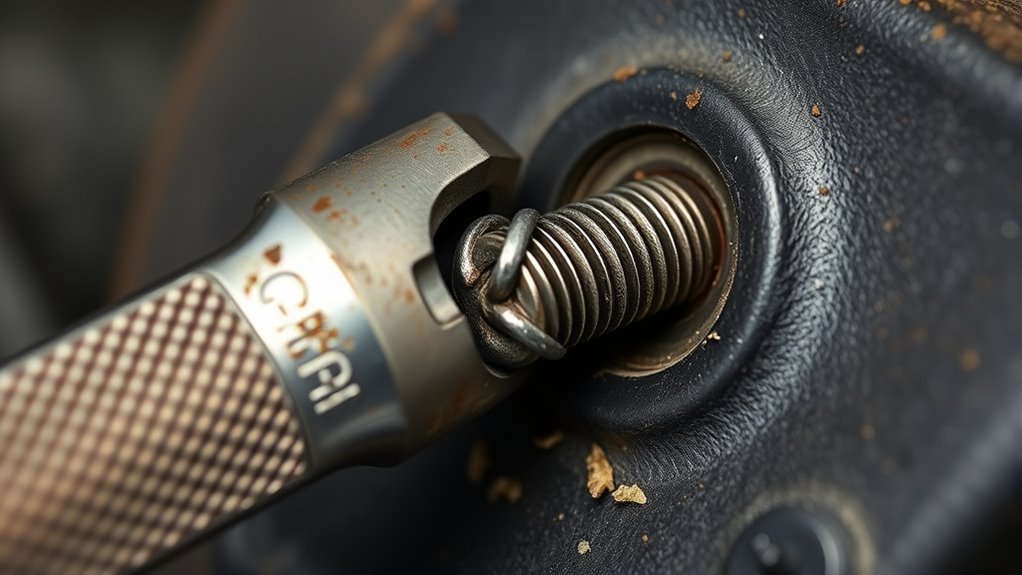
Overtorquing can seem like a minor mistake, but it hides serious risks that often go unnoticed. When you tighten lug nuts too much, you stretch the studs at their base threads, deform them, and cause premature failure. Excessive force on one stud during uneven torquing can multiply stress via the lever effect, leading to stretching or breakage. Inaccurate torque wrenches, especially when overused or misused, can damage threads from excessive leverage. Applying anti-seize lubricant on dry threads increases friction, which makes you think more torque is needed, risking thread overstress. Additionally, multiple clicks on a click-type wrench can deliver unintended extra torque, damaging threads and weakening the entire assembly. These hidden dangers compromise wheel safety and can cause costly repairs down the line. Proper calibration of torque tools is essential to prevent such issues and ensure safe, reliable fastening. Proper tool maintenance and regular calibration help maintain accuracy and prevent damage caused by faulty equipment. Moreover, understanding torque specifications for different components is vital to avoid over-tightening and ensure longevity. Being aware of manufacturer guidelines can further help prevent overtightening and potential thread damage.
The Critical Importance of Proper Sequencing
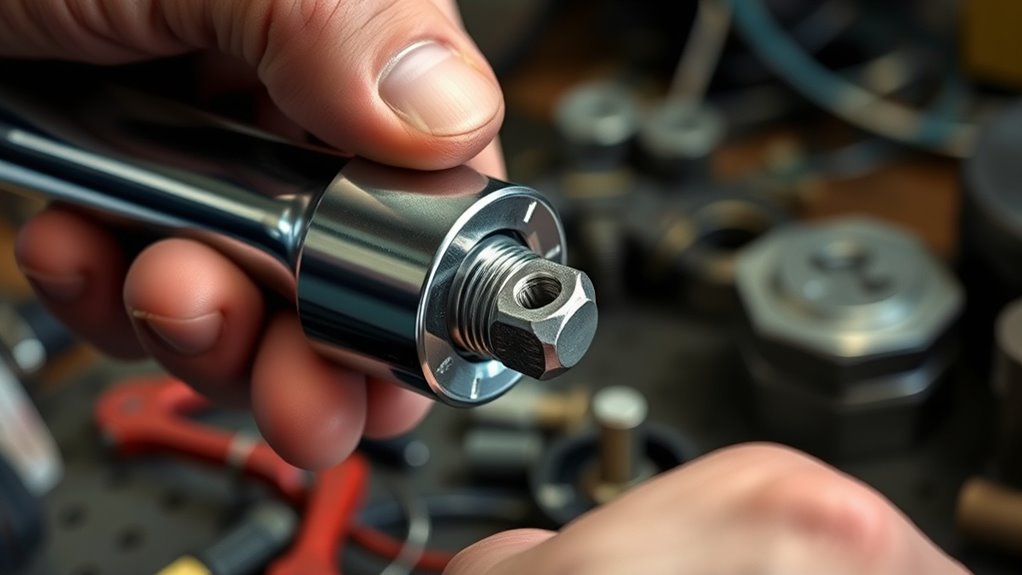
Proper sequencing when tightening lug nuts is essential because tightening them in the wrong order can create uneven pressure, risking damage to the wheel assembly. If you tighten one lug fully before moving to the next, it pulls the rim unevenly, stressing individual studs. This uneven force can deform threads or stretch studs beyond their limits. To prevent this, tighten the nuts in a star or crisscross pattern, gradually increasing torque in multiple stages. This distributes pressure evenly across the wheel, ensuring proper seating and thread integrity. Skipping incremental tightening or ignoring the sequence can lead to uneven load distribution, which increases the chance of thread galling or breakage. Always verify torque after following the correct pattern to avoid costly damage. Proper sequence is crucial for maintaining thread health and ensuring safety during assembly. Additionally, understanding torque application helps prevent common mistakes that can compromise thread longevity. Applying the correct tightening technique can significantly reduce the risk of thread damage and extend the lifespan of wheel components. Recognizing the importance of correct tightening order can help you avoid these common pitfalls and ensure lasting durability. Incorporating best practices for torque application can further enhance the reliability of your work and prevent costly repairs.
Storage Mistakes That Compromise Accuracy
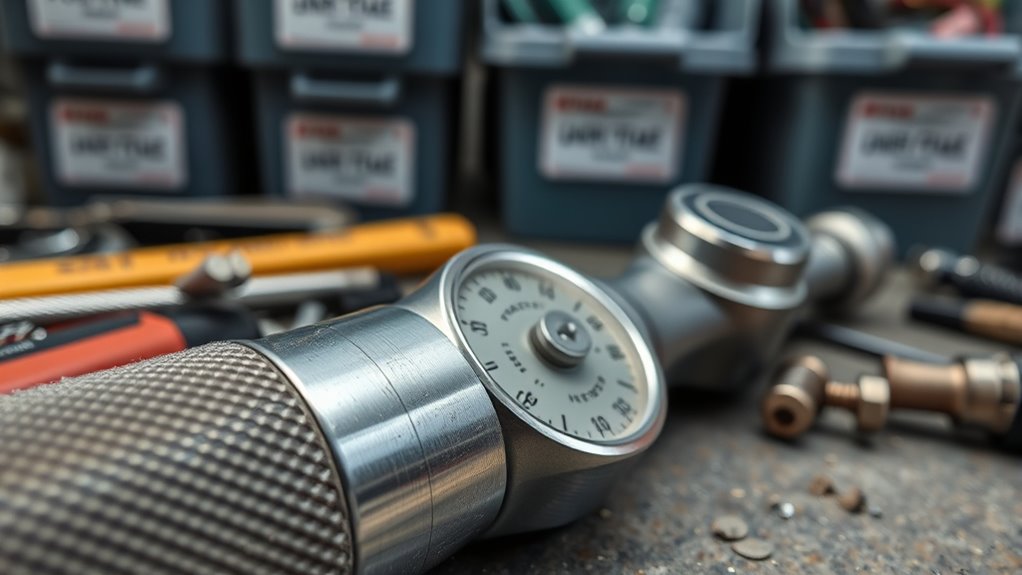
If you store your torque wrench improperly, you risk losing its calibration accuracy. Keeping it fully compressed or fully released can deform the internal spring, affecting future readings. To maintain precision, store your wrench with the spring partially compressed and in a clean, dry place. Additionally, proper storage techniques help ensure the longevity and accuracy of your torque wrench over time. Regularly inspecting and calibrating your wrench also plays a vital role in preserving measurement accuracy, especially since environmental factors can impact instrument calibration. Proper storage methods are essential for preventing spring deformation that can compromise your readings. Ensuring your workspace has adequate ventilation can also help prevent moisture buildup that may affect the internal components.
Spring Compression Effects
Storing a torque wrench with the spring compressed can substantially reduce its accuracy over time. When the spring stays compressed, it experiences permanent deformation, weakening its ability to return to calibration. This deformation can be accelerated by exposure to extreme temperatures, which further compromises the spring’s integrity. This loss of spring memory causes the wrench to apply less torque than indicated, leading to inaccurate readings. Conversely, storing the wrench with the spring fully extended can shift internal components and alter calibration, especially if left that way for long periods. To maintain precision, avoid compressing or fully releasing the spring during storage. Instead, store your torque wrench in a neutral position, with the spring lightly tensioned or relaxed. Proper storage prevents spring fatigue and preserves the wrench’s accuracy, ensuring consistent and correct torque application whenever you need it. Additionally, understanding the importance of air quality in your workspace can help prevent dust and debris from affecting delicate tools like torque wrenches. Maintaining a clean environment minimizes the risk of contaminants interfering with internal components and calibration. Regularly inspecting and calibrating your torque wrench can further prevent accuracy issues over time, safeguarding your investment and work precision. Also, being aware of storage practices for sensitive tools can extend their lifespan and reliability.
Proper Storage Practices
Incorrect storage methods can considerably reduce your torque wrench’s accuracy over time. If you store it fully loaded or with the spring compressed, the internal components can weaken or deform, leading to inaccurate readings later. Always store your torque wrench with the spring tension released, preferably in a protective case or on a designated rack. Avoid leaving it in a drawer or toolbox where it can be knocked or exposed to humidity. Long-term compression damages the spring, and exposure to moisture can cause corrosion, both of which impair precision. For best results, periodically calibrate your wrench and store it unloaded, ideally in a controlled environment. Proper storage preserves calibration, ensures consistent torque accuracy, and extends the life of your tool.
Directional Errors and Their Consequences
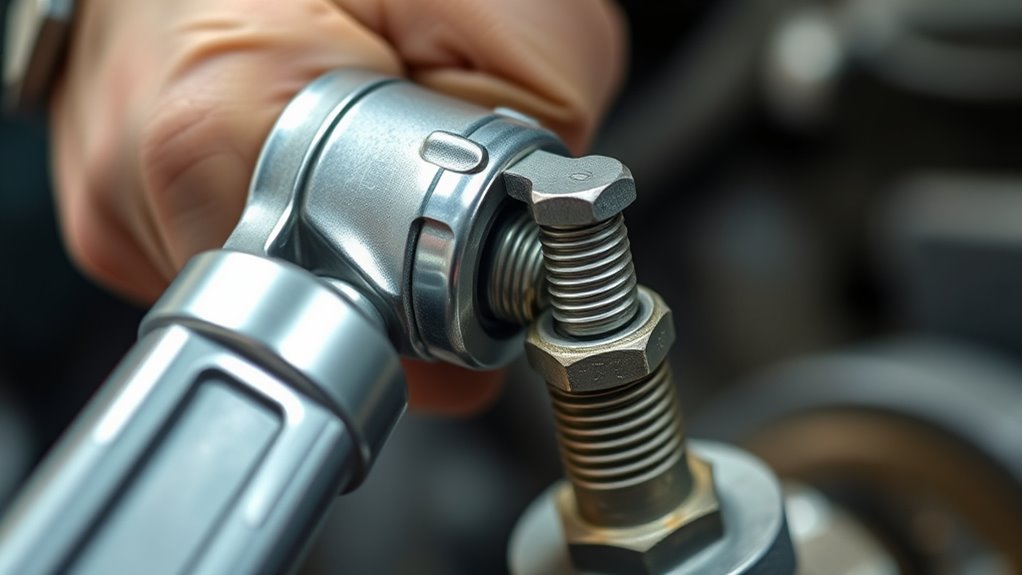
Using the wrong wrench direction can lead to serious damage, especially when working on threaded fasteners. Turning a wrench clockwise on a left-hand thread tightens it further, risking over-tightening and stripping. Conversely, loosening a bolt meant to be tightened can cause threads to bind or break. Many wrenches are designed for only one direction; using them backward can damage internal mechanisms, making future adjustments inaccurate. When you ignore directional markings or force the wrench in the wrong direction, you increase the risk of cross-threading, stripping, or damaging the threads entirely. Properly matching the wrench direction to the thread type is essential for safe, effective torque application. Additionally, understanding the importance of correct tool use is key to avoiding costly repairs and maintaining fastener integrity. Recognizing proper torque application techniques helps prevent damage caused by improper force. Missteps here can compromise the integrity of the fastener and lead to costly repairs down the line. Ignoring thread direction guidelines can also cause damage that’s difficult to repair, emphasizing the need for careful attention during torque procedures. Always double-check the thread type before applying torque to ensure proper fastener engagement. Using the appropriate torque wrench settings based on thread type and application ensures that fasteners are neither under- nor over-tightened, protecting the threads from damage.
The Risks of Using Extensions and Adapters

Using extensions or adapters with your torque wrench can considerably increase the risk of over-torquing and damaging threads. These tools alter leverage, making it easy to apply more force than intended, which can strip bolts or studs. Plus, many manufacturers void their warranties if extensions or adapters are used improperly.
Amplifies Torque Risk
Extensions and adapters substantially increase the risk of over-torquing because they act as force multipliers, amplifying the torque applied to a fastener. When you add these tools, the wrench’s torque increases beyond intended levels, risking thread damage.
- They lengthen the lever arm, making it easier to apply excessive force unintentionally.
- They alter the torque reading, leading you to believe you’re within specs when you’re actually over-tightening.
- They can cause sudden, uneven force distribution, stressing threads unevenly and increasing the chance of stripping or deformation.
Using extensions or adapters might seem convenient, but they compromise accuracy and safety. Always follow manufacturer guidelines, which typically advise against their use, to prevent thread damage and ensure proper fastener torque.
Causes Thread Damage
Extensions and adapters can considerably increase the risk of thread damage because they act as force multipliers, amplifying the torque you apply beyond safe limits. When you add these components, the leverage changes, making it easier to over-tighten or strip threads without realizing it. They can also cause uneven force distribution, which stresses individual threads and studs unevenly. Many manufacturers explicitly warn against using extensions, as they compromise torque accuracy and can deform or break threads. Additionally, adapters can alter the intended force path, leading to unexpected stress concentrations. If you ignore these risks, you may damage the threads or studs, resulting in costly repairs or safety hazards. Always follow the manufacturer’s guidelines and avoid using extensions or adapters unless explicitly approved.
Voids Wrench Warranty
Have you ever considered how adding extensions or adapters can impact your torque wrench’s warranty? Many manufacturers explicitly state that using these accessories voids the warranty because they alter the wrench’s designed leverage and accuracy. Here’s what happens:
- Extensions increase leverage, causing the wrench to apply more force than intended, risking damage.
- Adapters change the torque transmission path, leading to inaccurate readings and potential internal wear.
- Using these accessories can stress the wrench beyond its calibrated limits, causing internal damage that voids the warranty.
Lubrication Missteps and Friction Control
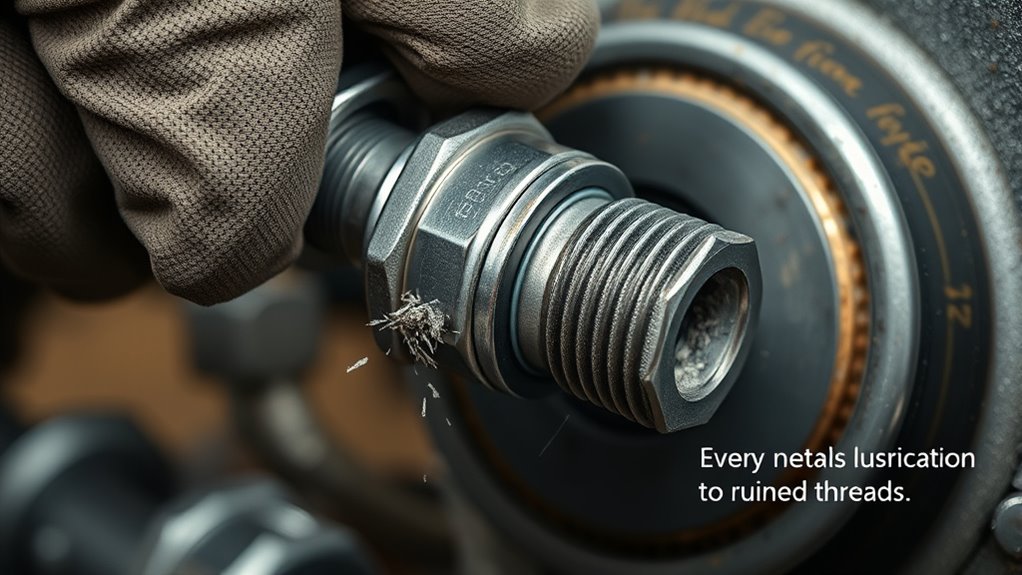
Lubrication mishandling can considerably affect torque accuracy because applying the wrong type or amount of lubricant alters the friction between threads. Using anti-seize or grease on dry threads reduces friction, causing you to apply more turns or torque than necessary to reach the desired clamping force. This over-torquing stresses and damages threads, risking deformation or failure. Conversely, applying too little lubricant or neglecting cleanliness increases friction and can lead to uneven torque distribution, risking under-tightening. It’s vital to match the lubricant type and quantity to the specific application and follow manufacturer guidelines. Always record the torque adjustments needed for lubricated threads to guarantee accurate, consistent tightening and prevent thread damage caused by friction mismanagement.
The Impact of Inaccurate Torque Wrench Calibration
Inaccurate calibration of a torque wrench can lead to serious issues, causing you to tighten fasteners either too much or too little. When your wrench isn’t properly calibrated, you risk over-tightening or under-tightening, which affects thread integrity and overall safety. Here’s what happens:
- You may apply excessive torque, overstressing threads and causing deformation or breakage.
- Insufficient torque leaves fasteners loose, risking component failure.
- Repeated inaccuracies lead to uneven tension distribution, compromising assembly strength.
These issues occur because an uncalibrated wrench provides false readings, making you believe you’re tightening to the correct specification when you’re not. Regular calibration ensures your wrench delivers precise torque, preventing thread damage and maintaining the integrity of every fastener.
How Improper Handling Can Lead to Thread Damage
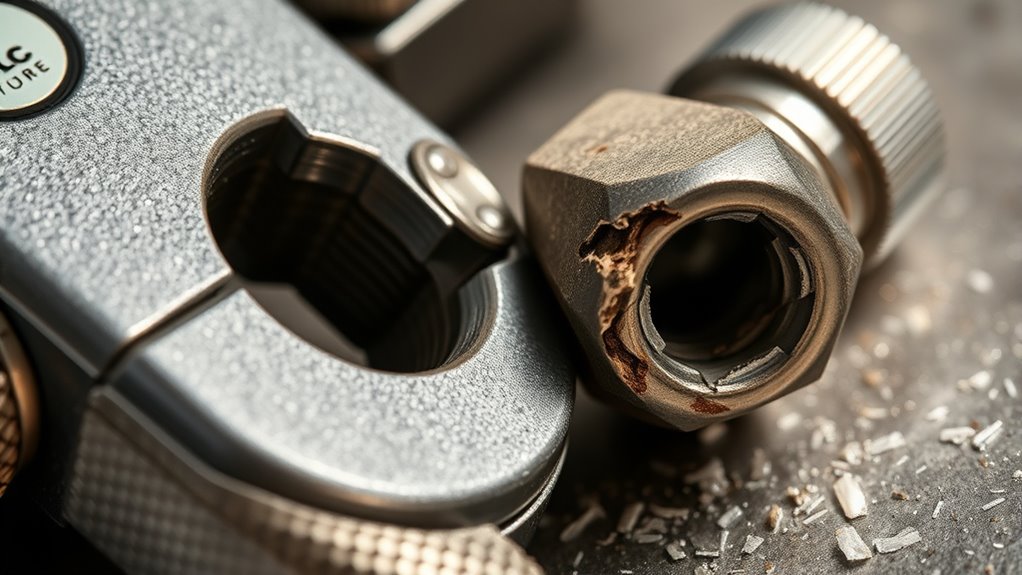
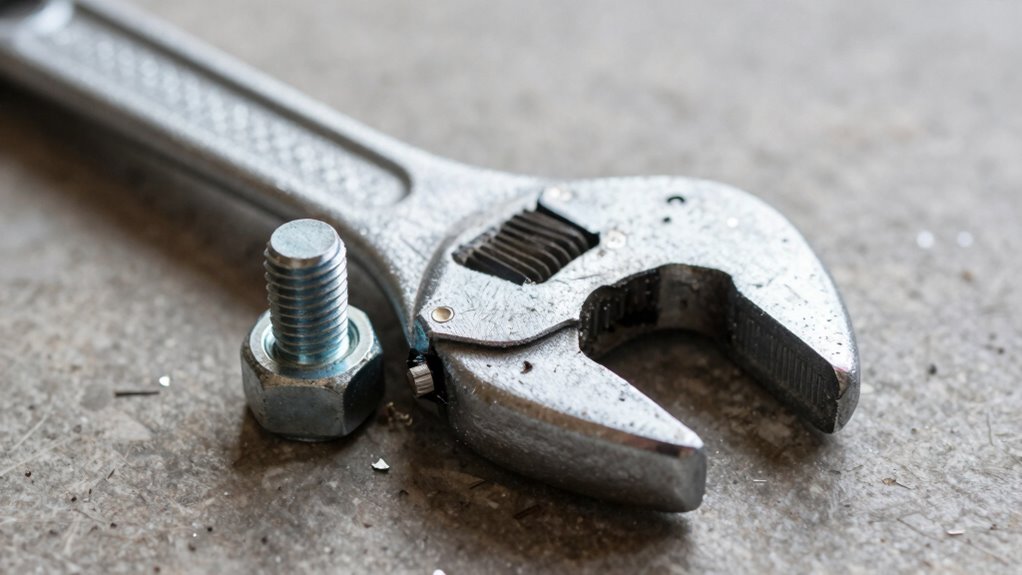
Improper handling of a torque wrench can directly lead to thread damage, compromising the integrity of fasteners. Using a wrench with a damaged or worn-out tip can strip threads or deform studs. Applying excessive force—like turning beyond the desired torque—causes thread galling or deformation, even if you think you’re tightening correctly. Improper technique, such as rushing the process or skipping incremental tightening, puts uneven stress on threads, increasing the risk of damage. Ignoring the correct sequence or using the wrench at the wrong angle can also cause cross-threading or uneven loads that weaken threads. Additionally, storing your wrench improperly or using extensions or adapters inappropriately can alter force distribution, leading to thread deformation. Handle your torque wrench carefully to protect your fasteners and ensure accurate, damage-free tightening.
Frequently Asked Questions
Can Using a Worn-Out Torque Wrench Still Cause Thread Damage?
Yes, using a worn-out torque wrench can cause thread damage. When your wrench loses calibration or its internal components deteriorate, it may apply inconsistent or excessive torque without you realizing. This over-torquing can stretch or deform the studs and threads, leading to premature failure. Always check your wrench’s accuracy regularly and replace it if it shows signs of wear to prevent thread damage and ensure proper tightening.
How Does Improper Storage Affect Torque Wrench Accuracy Over Time?
Improper storage can turn your torque wrench into a crooked compass, throwing off its accuracy over time. When stored fully loaded, the spring inside compresses and weakens, making the wrench less reliable. Long-term, this deformation leads to inaccurate torque readings, risking damage to threads. To keep it true, store your wrench unloaded and lightly oiled, ensuring it stays as precise as a well-tuned instrument for years to come.
Is It Safe to Tighten Lug Nuts in a Single Pass?
No, it’s not safe to tighten lug nuts in a single pass. Doing so can cause uneven pressure, which may deform threads or stretch studs. Instead, you should tighten lug nuts incrementally in a star or cross pattern, using multiple passes. This approach ensures even torque distribution, prevents damage, and guarantees the wheel is securely and safely mounted. Always follow proper torque procedures for maximum safety.
Do All Torque Wrenches Have the Same Sensitivity to Lubrication Changes?
No, all torque wrenches aren’t equally sensitive to lubrication changes, even though it might seem like a minor detail. You’d think they’d be standardized, but some are more affected by lubrication, causing significant torque variations. So, don’t assume your wrench behaves the same with dry or lubricated threads. Always verify torque settings, especially when switching between lubricated and dry bolts, to prevent over-tightening or damaging threads.
Can Using the Wrong Direction Setting Damage a Torque Wrench?
Yes, using the wrong direction setting can damage your torque wrench. When you turn it counterclockwise on a non-reversible wrench, you risk stripping internal gears or mechanisms designed for clockwise use only. Over time, this can cause calibration issues or breakage, making it less accurate or unusable. Always make certain you’re using the correct setting for tightening or loosening to avoid damaging your tool and compromising safety.
Conclusion
To keep your threads intact, treat your torque wrench like a trusted partner, not a reckless cowboy. Even small mistakes can turn your precision tool into a thread-wrecking monster. Remember, a well-maintained torque wrench is your best ally in avoiding costly repairs. Handle it with care, follow proper procedures, and don’t let oversights tighten the noose around your projects. Keep your threads strong—don’t let mistakes unravel your work.