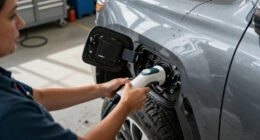
To perform a quick sanity test on your torque wrench at home, set it to a known value like 20 ft-lb or 30 Nm. Use a sturdy object and apply force until it signals (click or break). Stop immediately to see if it consistently reaches the set torque across multiple tries. This simple check helps verify your wrench remains accurate, and if discrepancies appear, you’ll learn how to troubleshoot and recalibrate properly.

Get business pricing on garage and car supplies
- Business-only prices and quantity discounts
- Tax-exempt purchasing
- Multiple users, one account, clear invoices
Key Takeaways
- Set your torque wrench to a known value, like 20 ft-lb or 30 Nm, before testing.
- Secure the wrench against a fixed object and apply force until it signals, then stop immediately.
- Repeat the test multiple times, noting any significant variation in readings to check consistency.
- Use the results to determine if recalibration is needed; minor differences are normal, large ones indicate issues.
- Perform this quick check regularly (every few months) to ensure accuracy and prevent calibration drift.
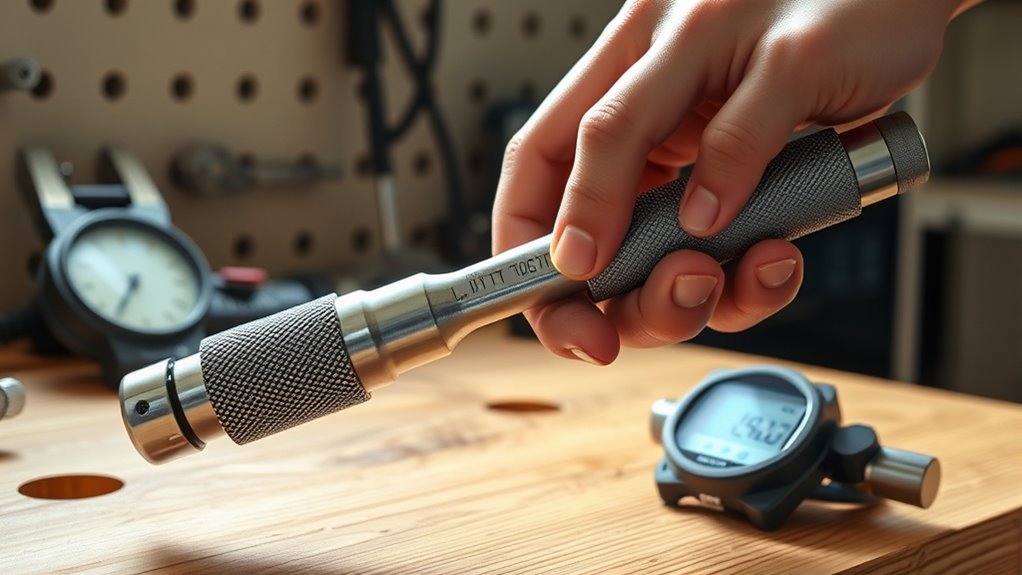
Ensuring your torque wrench is properly calibrated is essential for accurate and consistent torque application. When you rely on your tools to tighten bolts to specific specifications, any deviation can lead to mechanical failures or damage. To keep your torque wrench performing reliably, a quick calibration check at home is a smart move. This simple ‘sanity test’ helps verify your tool’s torque wrench accuracy without the need for specialized equipment.
Start by setting your torque wrench to a known value—say, 20 ft-lb or 30 Nm—based on your typical usage. Use a sturdy, fixed object like a piece of scrap wood or a thick metal plate, and apply the torque until you reach that setting. As you tighten, pay close attention to the point where the wrench signals that it’s reached its preset torque, whether that’s through a click, a break, or a digital readout. Once you hear the click or feel the break, stop applying force immediately. If your wrench is properly calibrated, it should reach the set torque value consistently each time.
Set your torque wrench to a known value and apply force until it signals; repeat to verify consistent accuracy.
To further test the accuracy, repeat this process multiple times, resetting the wrench each time. If you notice significant variation—say, one test reads 20 ft-lb while another reads 22 ft-lb—that indicates your calibration might be off. Keep in mind, calibration methods like this are not replacements for professional calibration but serve as quick checks for torque wrench accuracy. If you find discrepancies, it’s advisable to recalibrate your wrench either by adjusting it if it’s a click-type, or by sending it to a professional calibration service. Many torque wrenches have an adjustment screw or dial that allows you to fine-tune the calibration, but be cautious and consult the manufacturer’s instructions.
This at-home sanity check isn’t just convenient; it also helps you catch potential issues before they compromise your work. Regularly verifying your torque wrench’s accuracy ensures that each tightening job meets the proper specifications, prevents over-tightening or under-tightening, and extends the lifespan of your tool. Additionally, calibration procedures can help you understand the importance of maintaining your tools in optimal condition. Remember, even a high-quality torque wrench can drift out of calibration over time, especially with frequent use. Performing these quick checks every few months or after heavy use will keep your tool trustworthy and your projects safe. So, take a few minutes to test your torque wrench now, and keep your work precise, reliable, and professional.
digital torque wrench calibration kit
As an affiliate, we earn on qualifying purchases.
As an affiliate, we earn on qualifying purchases.
Frequently Asked Questions
How Often Should I Calibrate My Torque Wrench Professionally?
You should calibrate your torque wrench professionally every 6 to 12 months, depending on usage frequency and workload. Regular calibration intervals guarantee accuracy and safety. If you use your wrench often or for critical jobs, consider more frequent professional services. Keep track of your calibration schedule and don’t skip it, as it maintains your tool’s reliability and prevents potential over-tightening or under-tightening issues.
Can I Use Any Weight for the Calibration Check?
You shouldn’t use any weight for your calibration check—only proper calibration weights. These weights guarantee weight accuracy and are specifically designed for calibration purposes. Using random or household objects won’t give you the precision you need and could lead to inaccurate torque readings. Always invest in quality calibration weights and follow the manufacturer’s instructions to keep your torque wrench calibrated and reliable.
Is There a Risk of Damaging My Torque Wrench During the Test?
Yes, there is a small risk of damaging your torque wrench during the calibration safety check if you apply excessive force or use improper weights. To safeguard wrench durability, follow the manufacturer’s guidelines and avoid over-tightening or dropping the tool. Using the correct weights and gentle handling ensures your wrench remains accurate and in good condition, preventing unnecessary wear and tear over time.
What Signs Indicate My Torque Wrench Needs Calibration?
Imagine a clock losing its rhythm—you notice your torque wrench’s calibration indicators flickering. If your wrench consistently over- or under-torques, or if the readings feel off despite proper use, it’s a sign its performance has slipped. These signs suggest your wrench needs calibration. Regular checks help guarantee accurate torque, preventing potential damage or safety issues. Trust your senses—your wrench’s performance reveals when calibration is due.
Are Digital Torque Wrenches More Accurate Than Manual Ones?
Digital torque wrenches generally offer better digital accuracy, providing precise and consistent readings thanks to advanced sensors. However, manual torque wrenches, when properly maintained, remain reliable and simple to use, especially for casual tasks. Your choice depends on your needs; if you want high precision and easy readouts, go digital. But for durability and straightforward use, manual wrenches still stand strong regarding reliability.
click-type torque wrench calibration adjustment
As an affiliate, we earn on qualifying purchases.
As an affiliate, we earn on qualifying purchases.
Conclusion
Performing a quick torque wrench calibration check at home is simple and saves you time and money. Did you know that even a slight 2% miscalibration can lead to over-tightening or under-tightening, increasing your risk of equipment failure? By doing this quick sanity test regularly, you guarantee your tools stay accurate and your projects remain safe. Keep your wrench calibrated, and you’ll always work with confidence, knowing your torque readings are spot-on.
torque wrench accuracy check tool
As an affiliate, we earn on qualifying purchases.
As an affiliate, we earn on qualifying purchases.
professional torque wrench calibration service
As an affiliate, we earn on qualifying purchases.
As an affiliate, we earn on qualifying purchases.
Fall Picks
fall essentials
As an affiliate, we earn on qualifying purchases.