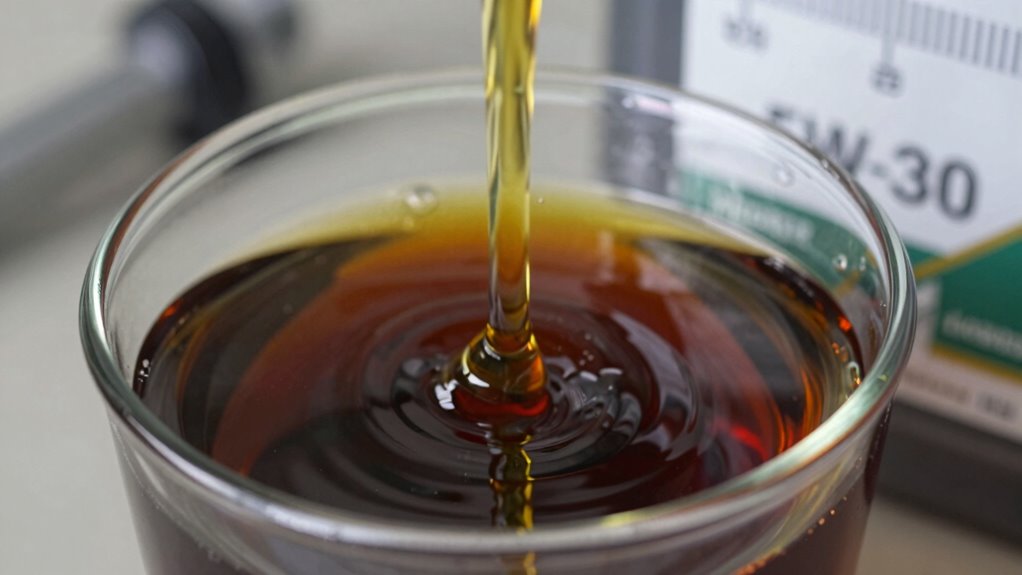

Oil viscosity numbers like 5W-30 tell you how the oil flows at different temperatures. The “5W” means it flows well at cold starts, making cold weather easier on your engine. The “30” indicates its thickness at normal operating temperatures, helping protect your engine from wear when it’s hot. Understanding these numbers guarantees you choose the right oil for your climate and driving habits. Keep exploring to see how these ratings can impact your engine’s performance.
Key Takeaways
- “5W-30” indicates the oil flows well in cold temperatures (“5W”) and maintains a moderate viscosity at engine operating temperature (“30”).
- The first number (“5W”) reflects cold start performance, meaning easier engine starts in winter.
- The second number (“30”) shows the oil’s thickness at standard engine operating temperatures, affecting lubrication and protection.
- Lower first numbers (like “0W” or “5W”) mean better cold weather flow; higher second numbers (like “40” or “50”) mean thicker oil at high temps.
- Understanding these numbers helps select suitable oil for climate and driving conditions, ensuring engine efficiency and longevity.

Oil viscosity numbers are essential for understanding how a lubricant performs under different conditions. When you see a label like 5W-30 on your motor oil, it tells you how the oil flows at various temperatures, which directly impacts engine protection and efficiency. The first number, followed by the “W,” indicates how the oil behaves in cold temperatures, while the second number reflects its thickness at operating temperature. Knowing this helps you choose the right oil for your vehicle’s climate and driving habits.
Understanding oil viscosity numbers helps you choose the right lubricant for optimal engine protection and performance.
You might wonder about synthetic versus conventional oils when it comes to viscosity. Synthetic oils are engineered with more uniform molecules, allowing them to maintain consistent viscosity over a wider temperature range. This means that, at low temperatures, synthetic oils flow more easily, providing better cold start protection. Conversely, conventional oils, derived from crude oil, tend to thicken more quickly in cold weather, which can make engine starts harder and increase wear. At high temperatures, synthetic oils generally retain their viscosity better, offering stable lubrication and reducing engine wear over time. This difference becomes especially noticeable in extreme climates, where synthetic oils help prevent the thickening or thinning that can compromise engine performance.
Temperature effects play a significant role in how viscosity numbers impact your engine’s health. In cold weather, you want an oil that flows quickly to lubricate engine parts immediately upon startup. That’s where the “W” rating, like the 5W in 5W-30, comes into play—indicating good cold flow. In hot weather, the second number, such as the 30 in 5W-30, shows how well the oil can resist thinning out at operating temperature. If the oil gets too thin, it won’t provide sufficient lubrication, increasing wear and reducing efficiency. Conversely, if it’s too thick, it can cause increased drag and reduce fuel economy. Choosing the right viscosity number, considering your climate and driving style, guarantees your engine stays protected across temperature extremes.
Ultimately, understanding oil viscosity numbers helps you make informed choices about your engine’s lubrication needs. Whether you prefer synthetic oils for their stability and performance or stick with conventional oils, knowing how temperature influences viscosity allows you to pick an oil that keeps your engine running smoothly, no matter the season. It’s about matching the oil’s flow characteristics with your driving environment to optimize performance, durability, and fuel efficiency. So, next time you’re selecting motor oil, pay close attention to those numbers—they’re your key to better engine health and longevity.
Frequently Asked Questions
How Is Oil Viscosity Measured in Laboratories?
In laboratories, you measure oil viscosity through laboratory testing using standardized viscosity measurement methods like capillary viscometers or rotational viscometers. These tests involve carefully controlling temperature and applying precise shear forces to the oil sample. You record the flow time or resistance, which indicates the oil’s viscosity. This process guarantees accurate viscosity measurement, helping you determine oil performance under specific conditions and classify it correctly for various applications.
Do Viscosity Numbers Change With Oil Age or Use?
Viscosity numbers do change with oil aging and use, unlike the stable viscosity you see when oil is fresh. As oil ages, it loses additives and can thicken or thin, affecting viscosity stability. Continuous use exposes oil to heat, contaminants, and oxidation, causing gradual changes. These variations can impact engine performance, making regular oil changes essential to maintain peak viscosity and protect your engine over time.
Are Synthetic Oils Affected Differently by Temperature?
Synthetic oils handle temperature effects better than conventional oils. They maintain consistent viscosity across a wider temperature range, so your engine stays protected whether it’s hot or cold. You’ll notice synthetic oil flows more easily at low temperatures, providing quicker lubrication during cold starts. At high temperatures, it resists thinning, ensuring your engine’s protection remains stable. So, yes, synthetic oils are less affected by temperature fluctuations, offering better performance and engine longevity.
How Often Should I Change My Oil Based on Viscosity?
Changing your oil is like tending a garden; consistency is key. For ideal viscosity, you should follow your vehicle’s recommended oil change intervals, usually every 5,000 to 7,500 miles, but check your owner’s manual. Regular oil changes help maintain viscosity consistency, preventing breakdowns. Synthetic oils might last longer, but always monitor oil quality and level, ensuring your engine stays smooth and protected over time.
Can Viscosity Ratings Predict Oil Lifespan or Engine Wear?
Viscosity ratings don’t directly predict oil lifespan or engine wear. Instead, they help you choose the right oil for your engine’s operating conditions, supporting ideal engine performance. Using the correct oil viscosity ensures your engine runs smoothly and reduces wear over time. Regular oil changes, along with the right viscosity, are your best tools for extending oil life and protecting your engine’s health effectively.
Conclusion
Now that you know what those numbers really mean, you’ll never look at oil the same way again. But here’s the twist—there’s more to contemplate when choosing the right oil for your engine. Will you stick with the familiar, or explore other options that might give your car that extra edge? The choice is yours, and it could make all the difference in how your vehicle performs. Are you ready to access the full potential of your engine?