Torque-to-yield bolts are designed to stretch beyond their elastic limit during installation, providing reliable clamping force. Because they deform permanently, you must replace them after use, as reusing can lead to insufficient tension and potential failure. Proper installation with exact torque and angle is essential. If you stick to new fasteners, you’ll guarantee safety and performance for vital applications. To understand the best practices and why replacement matters, keep exploring further.

Get business pricing on garage and car supplies
- Business-only prices and quantity discounts
- Tax-exempt purchasing
- Multiple users, one account, clear invoices
Key Takeaways
- Torque-to-yield bolts are designed to stretch plastically during installation, ensuring precise tension and high clamping force.
- They are intended for one-time use because reusing can compromise their stretch and tension integrity.
- Reinstalling or re-torquing these bolts risks insufficient clamping, leading to component failure or safety issues.
- Proper installation, including following torque-angle procedures, is essential for their reliability and safety.
- Always replace torque-to-yield bolts after removal to maintain optimal performance and prevent potential failures.
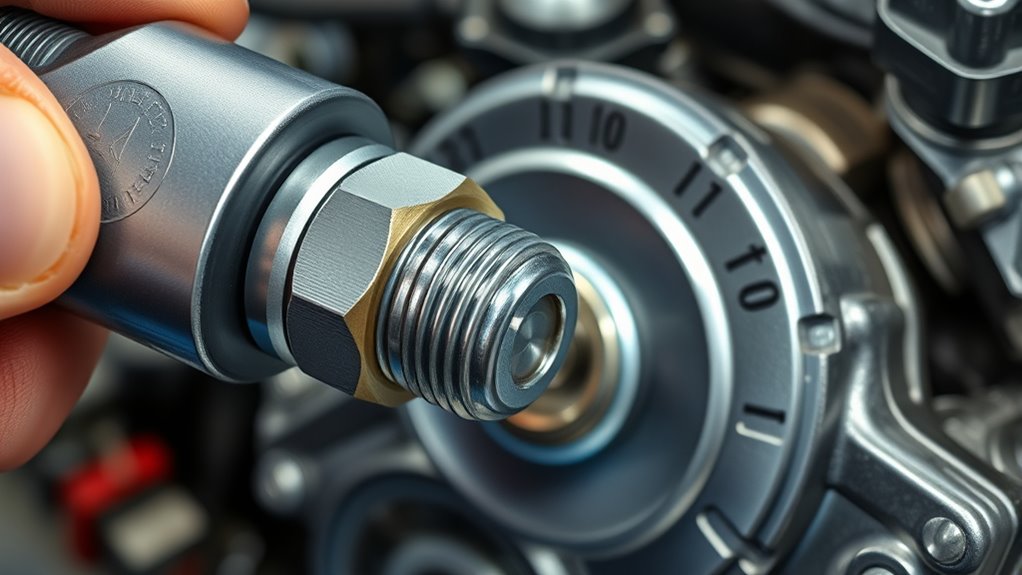
Torque-to-yield bolts are a specialized type of fastener designed to achieve precise clamping force by stretching beyond their elastic limit during installation. Unlike traditional bolts, which are tightened within their elastic range and can be reused, torque-to-yield bolts are intentionally stretched to a point where they undergo plastic deformation. This process guarantees a consistent, high-torque clamp but also means they are typically intended for one-time use. Understanding their manufacturing process and proper installation techniques is vital to maintaining their effectiveness and safety.
During manufacturing, torque-to-yield bolts are carefully engineered to have specific material properties and dimensions. They are often made from high-strength alloys that can withstand the deformation needed during tightening without fracturing. The manufacturing process involves precise heat treatment and quality control measures to ensure each bolt’s ability to stretch reliably beyond its elastic limit. This controlled deformation guarantees that, during installation, the bolt will apply the correct tension, providing ideal clamping force. Because of their unique design, they cannot be simply reused or re-torqued, as the deformation they undergo prevents them from reaching the same torque level again without risking failure.
When it comes to installation techniques, you must follow strict procedures to guarantee these bolts perform as intended. Unlike conventional fasteners, torque-to-yield bolts require specific torque specifications and often a torque-angle method. This involves tightening the bolt to a specified torque and then turning it an additional predetermined angle. This process ensures the bolt stretches enough to provide the correct clamping force without over-stressing it. It’s important not to reuse these bolts after removal because the deformation they’ve undergone during installation compromises their integrity. Reusing them may result in inadequate clamping, leading to potential component failure or safety hazards.
Proper installation also involves clean threads and lubricants if specified, as friction impacts torque readings. Over-tightening can cause the bolt to fracture, while under-tightening may lead to insufficient clamping force. Using the correct tools and following manufacturer guidelines helps prevent damage. Regular inspection is essential, especially in critical applications like engines or structural assemblies, where failure could be catastrophic. When replacing torque-to-yield bolts, always discard the old ones and use new fasteners to guarantee reliable, consistent performance. Additionally, understanding the vetted nature of these bolts and their specific application requirements is crucial for ensuring safety and longevity in critical systems.
torque-to-yield bolt replacement kit
As an affiliate, we earn on qualifying purchases.
As an affiliate, we earn on qualifying purchases.
Frequently Asked Questions
Can Torque-To-Yield Bolts Be Reused in Critical Applications?
You shouldn’t reuse torque-to-yield bolts in critical applications because their bolt material weakens after the initial stretch, compromising safety. During installation, proper techniques like clean threads and correct torque ensures proper performance, but reusing them risks failure. These bolts are designed for one-time use, so replacing them with new ones guarantees the integrity and safety of your critical components. Always follow manufacturer guidelines for torque-to-yield bolt replacement.
How Can I Tell if a Torque-To-Yield Bolt Is Damaged?
Think of inspecting your torque-to-yield bolt like checking a trust’s health. Look for visible damage indicators, such as cracks, corrosion, or deformation, which signal trouble. Feel for any unusual looseness or resistance during removal, and inspect the threads carefully. If damage indicators are present or the bolt shows signs of stress or deformation, it’s time to replace it. Trust your eyes and touch to catch hidden weaknesses before they cause failure.
Are Torque-To-Yield Bolts More Expensive Than Standard Bolts?
Torque-to-yield bolts are generally more expensive than standard bolts due to their specialized design and material properties. You’ll find the cost comparison reflects this higher price, which can impact your budget. Additionally, installation costs may be higher because these bolts require precise torque application and sometimes special tools. While they cost more upfront, their reliable performance often justifies the expense, especially in critical engine or structural components.
What Tools Are Needed to Properly Install Torque-To-Yield Bolts?
You’ll need a torque wrench to properly install torque-to-yield bolts — it’s not just a fancy tool, it’s your new best friend. Follow the manufacturer’s torque specifications and installation procedures carefully, or risk damage. A breaker bar may help initially, but precise torque control comes from a good quality wrench. Trust me, skipping steps or using the wrong tools will only make you wish you’d done it right the first time.
Do All Vehicle Manufacturers Use Torque-To-Yield Bolts?
Not all vehicle manufacturers use torque-to-yield bolts, as manufacturing standards and bolt specifications vary. Some manufacturers prefer traditional torque settings, while others opt for torque-to-yield bolts for critical components. You should always check your vehicle’s service manual to determine the specific bolt requirements. Using the correct type guarantees safety, proper sealing, and reliable performance, especially since torque-to-yield bolts require replacement after initial use to prevent failure.
high-strength bolt torque wrench
As an affiliate, we earn on qualifying purchases.
As an affiliate, we earn on qualifying purchases.
Conclusion
So, next time you’re tightening those torque-to-yield bolts, remember—they might look the same, but their story isn’t over. Reusing them could hide hidden dangers, waiting to surprise you when you least expect it. Will you risk it, or will you choose safety and replace? The decision’s yours. Just keep in mind, sometimes the smallest bolt can make the biggest difference—so don’t leave it to chance. The choice is yours—are you ready?
As an affiliate, we earn on qualifying purchases.
As an affiliate, we earn on qualifying purchases.
Evergreen bestsellers Picks
bestsellers
As an affiliate, we earn on qualifying purchases.