Bolt grade markings are your quick guide to understanding a bolt’s strength and material. They use standardized numbers and symbols, like 8.8 or Grade 8, to show the bolt’s load capacity and material type, based on accepted international standards. Recognizing these markings helps you choose the right bolt for your project effortlessly. Stay with us to discover how to interpret these markings clearly and guarantee your fasteners meet safety and durability needs.

Get business pricing on garage and car supplies
- Business-only prices and quantity discounts
- Tax-exempt purchasing
- Multiple users, one account, clear invoices
Key Takeaways
- Bolt grade markings indicate the bolt’s strength class and mechanical properties at a glance.
- Metric grades like 8.8, 10.9, and 12.9 specify material strength levels.
- Imperial grades such as Grade 5 and Grade 8 denote load capacity and toughness.
- Markings follow established standards to ensure consistent identification worldwide.
- Recognizing these markings helps quickly determine if a bolt suits your application’s strength needs.
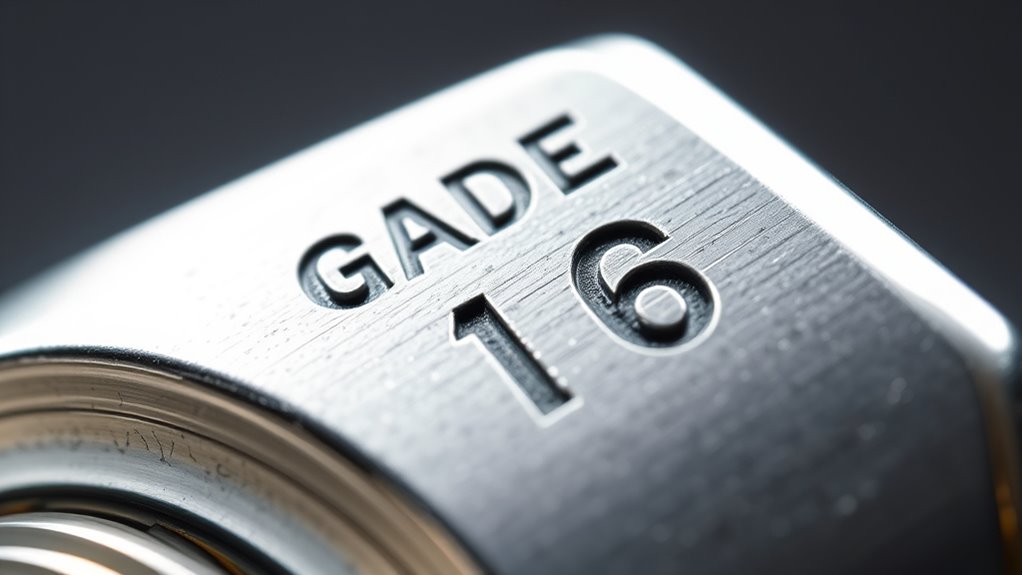
Bolt grade markings are essential indicators of a bolt’s mechanical properties and strength. When you’re selecting bolts for a project, understanding these markings helps you quickly identify whether a bolt meets your specific requirements. These markings aren’t just random symbols; they follow established standards that communicate critical information about the bolt’s material types and strength levels. By recognizing the marking standards, you can ensure you’re choosing the right fastener for safety, durability, and performance.
Material types play a significant role in how a bolt performs under stress. Different materials, such as carbon steel, stainless steel, or alloy steels, have distinct strength characteristics and corrosion resistance properties. The markings on the bolt often indicate the grade, which correlates with the material used and its mechanical properties. For example, a 304 stainless steel bolt will have different strength properties compared to a grade 8.8 carbon steel bolt. Knowing the material type through these markings allows you to match the bolt to your application‘s demands, whether it’s for high-stress machinery or corrosion-prone environments.
Marking standards are the rules that govern the symbols and numbers stamped on bolts. These standards ensure consistency worldwide, making it easier to recognize the strength and material of a bolt at a glance. For instance, in the metric system, grades like 8.8, 10.9, or 12.9 are common, with each indicating a specific tensile strength and material class. In the imperial system, markings such as Grade 5 or Grade 8 are used, with each grade representing a different level of strength. These standards help you interpret what each marking means, so you’re not left guessing about a bolt’s capabilities.
When you see a bolt with markings, you’re looking at a shorthand that conveys essential details. The numbers and symbols are a quick reference to its material type and strength class, following the designated marking standards. This shorthand saves you time, as you don’t need to perform additional tests or research to find out if the bolt is suitable for your application. Instead, a simple glance at the markings confirms whether it can handle the load or environmental conditions you’re working with.
As an affiliate, we earn on qualifying purchases.
Frequently Asked Questions
How Do Grade Markings Differ Internationally?
International standards for bolt grade markings vary, so you might see different symbols or numbers depending on the region. For example, in the U.S., you’ll find grade markings like 5.8 or 8.8, while Europe uses numbers like 8.8 or 10.9. Regional variations mean you should always check the specific standards applicable to your project, ensuring you select bolts that meet the required strength and safety criteria for your location.
Can Grade Markings Indicate Corrosion Resistance?
Did you know that bolt grade markings can sometimes hint at corrosion resistance? While they primarily indicate strength, markings may also serve as corrosion indicators, especially if made from corrosion-resistant materials like stainless steel. A coating’s durability plays a vital role here, protecting against rust and corrosion. By understanding these markings, you can better assess whether a bolt’s corrosion resistance suits your specific environment, ensuring long-lasting, reliable connections.
Are Higher Grades Always Stronger?
Higher grades typically indicate stronger bolts, but it’s not always guaranteed. Bolt material and manufacturing standards play a vital role in actual strength. You should consider both the grade markings and the specific application requirements. A higher grade may be stronger in one situation but not in another, especially if manufacturing standards aren’t met. Always verify the bolt’s material and standards to confirm it meets your strength needs.
Do Grade Markings Affect Bolt Installation?
Yes, grade markings can affect bolt installation because they indicate the bolt’s strength, which relates to thread pitch and material composition. Higher-grade bolts usually have a different thread pitch and are made from stronger materials, making them suitable for demanding applications. Using the wrong grade can lead to improper fitting or failure. Always match the bolt grade to your project’s specifications to guarantee proper installation and safety.
How Are Grade Markings Maintained During Manufacturing?
During manufacturing, grade markings are carefully maintained through strict quality controls, ensuring marking accuracy and durability. You can think of it as a precise dance between manufacturing quality and attention to detail, where each marking represents strength and reliability. These markings are stamped or embossed with high precision, resisting wear and tear, so you can confidently identify bolt strength. Maintaining clear, accurate markings guarantees you’re using the right bolt for your application.
As an affiliate, we earn on qualifying purchases.
Conclusion
Next time you spot those bolt grade markings, remember they’re like secret codes revealing strength. It’s almost like finding a tiny badge of honor on each fastener, telling you exactly what it can handle—just like discovering a hidden map leading to safety. So, when you’re working on your projects, these markings become your trustworthy companions, guiding your choices. Coincidentally, it’s as if each bolt wears a tiny badge, silently ensuring your work holds strong and lasts.
As an affiliate, we earn on qualifying purchases.
As an affiliate, we earn on qualifying purchases.
Fall Picks
fall essentials
As an affiliate, we earn on qualifying purchases.