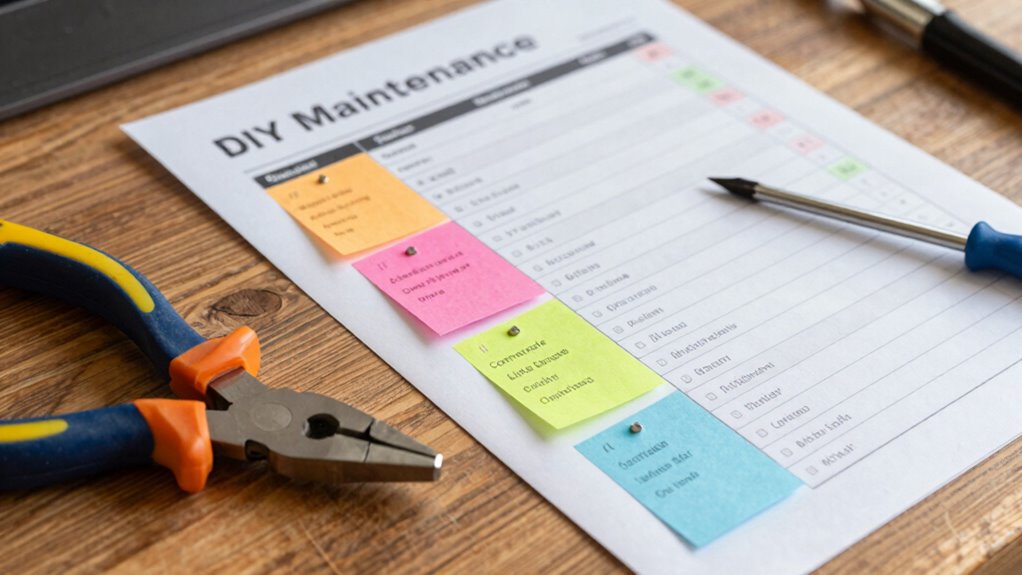

The hidden detail that makes your DIY maintenance checklist work better is paying attention to subtle organization and preparation. Make certain your tools are well-organized, appropriately sized, and ready to go before starting. Prioritize tasks, schedule routine checks, and break projects into manageable steps. This proactive approach helps prevent overlooked issues and streamlines your efforts. Keep optimizing your routines by mastering these small but impactful details, and you’ll discover more effective ways to maintain your home.

Get business pricing on garage and car supplies
- Business-only prices and quantity discounts
- Tax-exempt purchasing
- Multiple users, one account, clear invoices
Key Takeaways
- Incorporate subtle inspection steps to detect problems early and prevent costly repairs.
- Use a systematic approach to ensure all areas are consistently covered.
- Regularly update and customize the checklist based on seasonal or emerging needs.
- Pay attention to small details to enhance the thoroughness and effectiveness of tasks.
- Maintain organized records of completed maintenance to track patterns and future needs.

Are you ready to take control of your home’s upkeep? If so, understanding the hidden detail that makes your DIY maintenance checklist truly effective can transform how you approach home repairs. The key isn’t just in listing tasks or gathering tools; it’s in the way you prepare and organize your efforts. A crucial but often overlooked element is the thoughtful selection of tools and the implementation of smart scheduling tips. These factors can significantly boost your efficiency, reduce frustration, and ensure your home stays in top shape.
When it comes to tools selection, it’s tempting to grab whatever is handy or buy every gadget on the market. But the real advantage lies in choosing the right tools for the job. High-quality, appropriately-sized tools save you time and prevent damage to surfaces or parts. For example, using a well-balanced screwdriver instead of a flimsy one makes tasks easier and safer. Keep your toolkit organized and only include items relevant to your maintenance tasks to avoid clutter. This way, you spend less time searching and more time making progress. Investing in versatile tools, like a multi-bit screwdriver or a cordless drill, can streamline your efforts and adapt to various projects. Incorporating systems thinking into your planning can help you see how different tools and tasks interconnect, making your routine more efficient. Additionally, understanding how different maintenance tasks relate can help you plan more effectively and avoid redundant efforts.
Scheduling tips are equally vital. The secret to a successful maintenance routine isn’t just doing tasks randomly; it’s about planning them intelligently. Set specific days or times each month for routine checks and repairs. For instance, schedule monthly inspections for filters, gutters, and HVAC systems. Use digital calendars or reminder apps to stay on track, and don’t forget to account for seasonal tasks—like winterizing or preparing for storms. Consistency prevents problems from escalating and keeps your home running smoothly. Breaking larger projects into smaller, manageable chunks and spreading them out over time avoids burnout. It also minimizes the disruption to your daily life. Incorporating preventive maintenance into your routine ensures issues are caught early, saving you time and money.
The hidden detail that makes your DIY maintenance checklist work better is a combination of these two elements: selecting the right tools and sticking to well-planned scheduling tips. When you’re prepared with the appropriate equipment and have a clear, realistic plan, you’re more likely to follow through and complete each task thoroughly. This proactive approach not only keeps your home in excellent condition but also saves you money and stress in the long run. Paying attention to home maintenance and other related practices can further enhance your efficiency. Incorporating organization skills into your routine can help you stay on top of all tasks without feeling overwhelmed. Remember, it’s about working smarter, not harder. When you pay attention to these subtle but impactful details, your DIY maintenance routine becomes less of a chore and more of a manageable, even satisfying, part of homeownership.
high-quality multi-bit screwdriver
As an affiliate, we earn on qualifying purchases.
As an affiliate, we earn on qualifying purchases.
Frequently Asked Questions
How Often Should I Update My DIY Maintenance Checklist?
You should update your DIY maintenance checklist regularly, ideally seasonally, to stay ahead of issues. Conduct seasonal inspections to catch problems early and adjust your tasks accordingly. Incorporate safety protocols into each update to guarantee safety during maintenance. By revisiting your checklist every few months, you keep it relevant and effective, preventing unexpected breakdowns and ensuring your home stays safe and well-maintained throughout the year.
What Tools Are Essential for Effective DIY Maintenance?
You need essential tools like a screwdriver set, pliers, a wrench, a utility knife, and a flashlight for effective DIY maintenance. A tools overview helps you understand their specific uses, ensuring you’re prepared for various tasks. Incorporate maintenance scheduling to plan when to use each tool, keeping everything organized and efficient. Having these basics on hand makes your maintenance easier, safer, and more successful, saving you time and money.
Can I Customize the Checklist for Different Home Systems?
Think of your home as a symphony, each system playing a unique tune. Yes, you can customize your checklist for different home systems, tuning it to fit the rhythm of HVAC, plumbing, or electrical components. By tailoring your checklist customization, you guarantee every part gets the attention it deserves, making maintenance more efficient and effective. This personalized approach keeps your home’s harmony intact, preventing small issues from turning into costly dissonance.
How Do I Prioritize Tasks on My Maintenance List?
You should prioritize tasks on your maintenance list by considering urgency and importance, then use scheduling strategies to allocate time effectively. Delegate tasks that others can handle to lighten your load, ensuring essential chores get done first. Break larger jobs into smaller steps, and set specific deadlines. Regularly review and adjust your schedule, so you stay on top of maintenance without feeling overwhelmed. This approach keeps your home in top shape efficiently.
What Common Mistakes Should I Avoid in DIY Maintenance?
Think of neglecting maintenance like ignoring a small leak—eventually, it turns into a flood. Avoid common mistakes like skipping preventive checks, rushing repairs, or using incompatible parts. These errors lead to preventive neglect, which can cause costly repairs later. Always follow manufacturer instructions, stay consistent with your schedule, and don’t ignore warning signs. Proactive care saves you money and keeps your home running smoothly.
cordless drill for home maintenance
As an affiliate, we earn on qualifying purchases.
As an affiliate, we earn on qualifying purchases.
Conclusion
By paying attention to that one hidden detail, your DIY maintenance checklist transforms from a simple list into a reliable roadmap. Think of it as the secret ingredient in a recipe—small but mighty, elevating your efforts from chaos to control. When you stay mindful of these nuances, your home’s health flourishes and surprises you with its resilience. Remember, it’s the tiniest details that often make the biggest difference, turning maintenance into a smooth, stress-free journey.
home maintenance checklist organizer
As an affiliate, we earn on qualifying purchases.
As an affiliate, we earn on qualifying purchases.
As an affiliate, we earn on qualifying purchases.
Fall Picks
fall essentials
As an affiliate, we earn on qualifying purchases.