To fix damaged threads safely, choose the correct size tap or die that matches the original threads, ensuring you use steady, controlled pressure. Always apply proper lubrication to reduce friction, and turn slowly to prevent cross-threading or breaking the tool. Keep the tool aligned properly and stop if you feel excessive resistance. With careful technique and attention to detail, you can repair threads without worsening the damage—if you continue, you’ll discover more tips for successful repairs.

Get business pricing on garage and car supplies
- Business-only prices and quantity discounts
- Tax-exempt purchasing
- Multiple users, one account, clear invoices
Key Takeaways
- Select the correct tap or die that matches the original thread size and type to avoid further damage.
- Use proper lubrication and turn slowly with steady pressure to prevent tool binding and thread deformation.
- Ensure dies are perpendicular and aligned properly to produce even, clean threads.
- Back off the tool periodically to clear debris and prevent binding or cross-threading.
- Assess damage carefully and avoid forcing tools; replace if threads are severely damaged beyond repair.
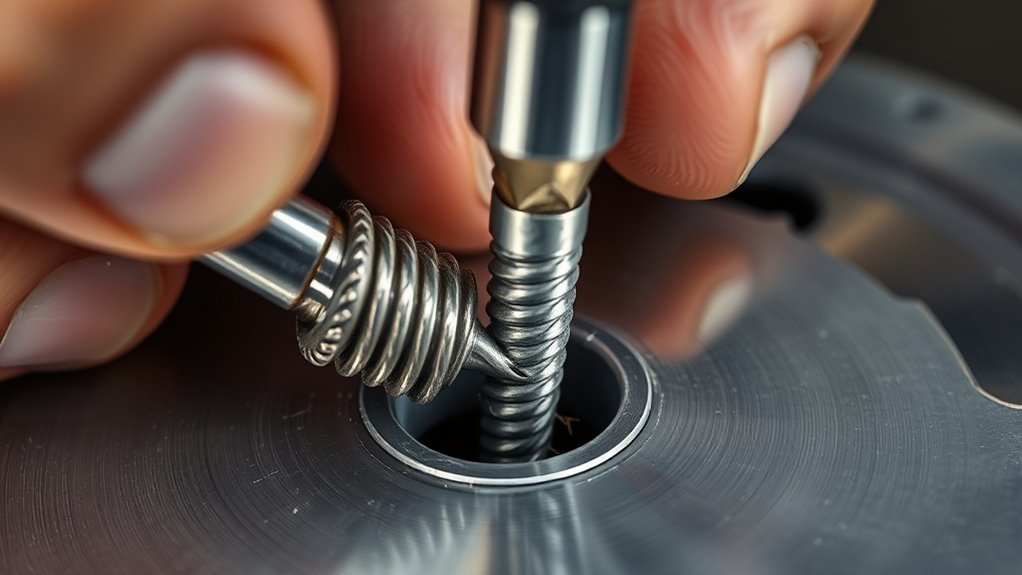
A tap and die set is an essential tool for creating and repairing threads on metal surfaces. Whether you’re fixing a stripped bolt or preparing a new hole for threading, understanding how to properly use these tools is key to successful thread repair. The first step in this process is choosing the right tool for the job, which involves careful tool selection. You need to consider the size and type of thread you’re working with, as well as the material of the workpiece. Selecting the correct tap or die ensures that you don’t damage the existing threads or create new problems, like cross-threading or oversizing.
When engaging in thread repair, tool selection becomes even more critical. For instance, if the threads are damaged but still mostly intact, a smaller or more precise tap might be sufficient. Conversely, if the threads are severely stripped, you might need a tap designed for rethreading or one that matches the original thread specifications exactly. Using the wrong size or type can make matters worse, creating loose or overly tight threads that compromise the part’s integrity. Before starting, you should examine the damaged area carefully, measure the existing threads if possible, and select a tap or die that matches those specifications.
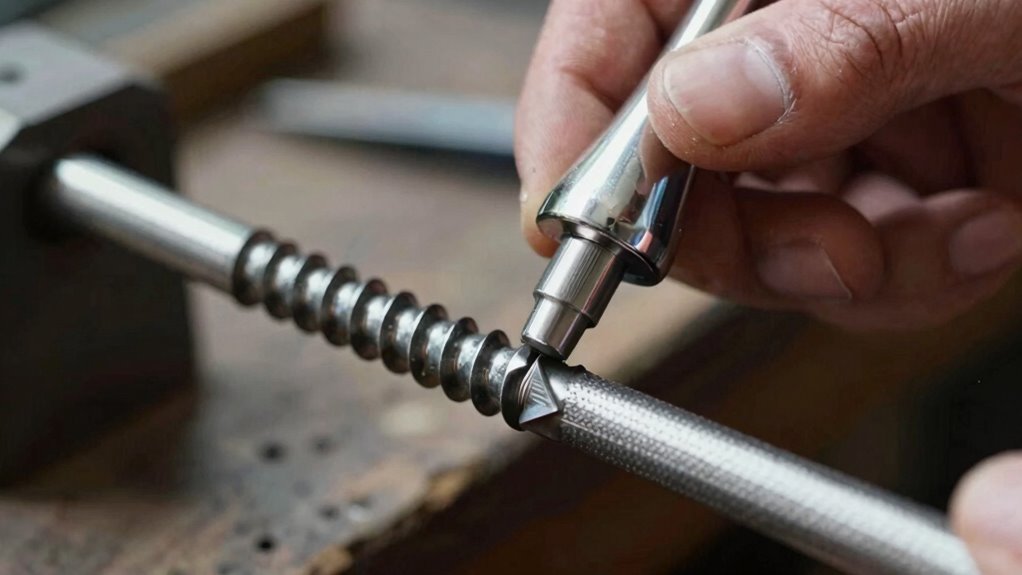
Once you’ve chosen the appropriate tool, proper technique is crucial to avoid worsening the problem. When using a tap for thread repair, turn it slowly and steadily, applying consistent pressure to cut new threads without forcing it. Lubrication is fundamental here; a good cutting oil reduces friction and prevents the tool from binding or breaking. For die use, ensure the die is aligned properly with the existing threads before turning it. Keep the tool perpendicular to the surface to avoid creating uneven or crooked threads. If you encounter resistance, back off slightly, clear away any debris, and then continue carefully. Rushing or applying excessive force can damage both the tool and the workpiece, making the repair more complicated. Additionally, understanding the principles of auditory processing can help in training your senses to detect subtle changes in resistance or sound that indicate proper tool engagement.
Frequently Asked Questions
Can I Reuse a Tap or Die Multiple Times Safely?
You can reuse a tap or die multiple times for thread repair, but it depends on how well you maintain the tool. Always clean and inspect it after each use to prevent wear and damage. Proper lubrication also extends tool longevity, ensuring your thread repair remains precise. Avoid forcing the tool through hardened or damaged threads, as that can shorten its lifespan. With good care, you’ll get the most out of your tap and die.
What Are the Signs of a Damaged Tap or Die?
You’ll notice thread damage or tool wear if the tap or die starts to produce uneven, chipped, or distorted threads. Excessive force, rounded edges, or a loose fit also indicate damage. When these signs appear, it’s best to substitute the tool, as using a worn or damaged tap or die can worsen thread damage and lead to poor results. Regular inspection helps prevent thread issues and ensures cleaner, more precise cuts.
How Do I Choose the Right Size for My Repair?
Suppose you’re fixing a stripped bolt in your motorcycle; choosing the right size guarantees a proper repair. To do this, match the thread size of your tap or die to the existing threads, considering thread size matching and repair compatibility. Measure the damaged threads or check the original specifications. Using the correct size prevents further damage and guarantees a secure, durable fix. Always verify before starting your repair work.
Are There Safety Precautions When Using Tap and Die Tools?
When using tap and die tools, you should always wear protective gear like safety glasses to shield your eyes from metal shavings. Make certain your workspace safety by securing the workpiece firmly to prevent slips or accidents. Keep your hands clear of the cutting area and work slowly, checking your progress regularly. Proper lighting and a clean, organized area also help prevent mishaps and ensure precise, safe threading.
Can Tap and Die Tools Be Used on Plastic or Softer Materials?
Yes, you can use tap and die tools on plastic or softer materials, but you need to take into account plastic compatibility and softer material considerations. Use sharp, appropriate-sized tools to prevent cracking or damaging the material. Apply gentle pressure and turn slowly to avoid deforming the threads. Lubricate the tools lightly to reduce heat and friction. Always test on a scrap piece first to ensure your tap or die works well with the material.
Conclusion
Mastering tap and die techniques isn’t just about fixing threads; it’s about restoring confidence in your work. Many believe that attempting repairs without proper tools can worsen damage, but that’s only true if you’re careless. With the right knowledge and care, you can save damaged threads and avoid costly replacements. Trust in these basics, and you’ll see that even mistakes are just opportunities to learn and improve. Your confidence grows, and your projects become stronger.
Fall Picks
fall essentials
As an affiliate, we earn on qualifying purchases.