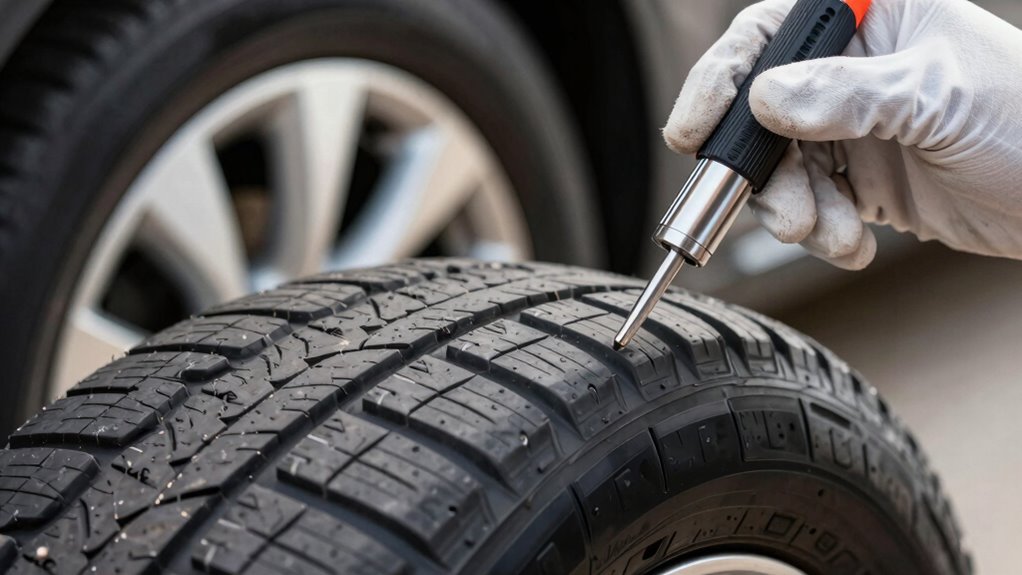
To measure your tire tread depth correctly, use a tread depth gauge or a penny. Insert the tool into the tire grooves with the numbers facing you; if you see the top of Lincoln’s head, it’s time to replace the tire. A depth of 2/32 inch is the legal minimum, but replacing at 4/32 inch is safer. Knowing what these numbers mean helps keep your vehicle safe—you’ll discover more helpful tips as you continue.
Key Takeaways
- Use a tread depth gauge or a penny to measure the depth accurately; insert into the tread and note the reading.
- Ensure the measuring tool is placed evenly across the tire’s tread to get a consistent reading.
- Interpret the numbers: 2/32 inch or less indicates the tire is legally worn out; 4/32 inch or less suggests replacement is advisable.
- Remember that higher measurements (e.g., 6/32 inch) indicate deeper tread, offering better traction and safety.
- Regularly monitor tread depth, especially in different tire zones, to maintain safety and prevent premature tire replacement.
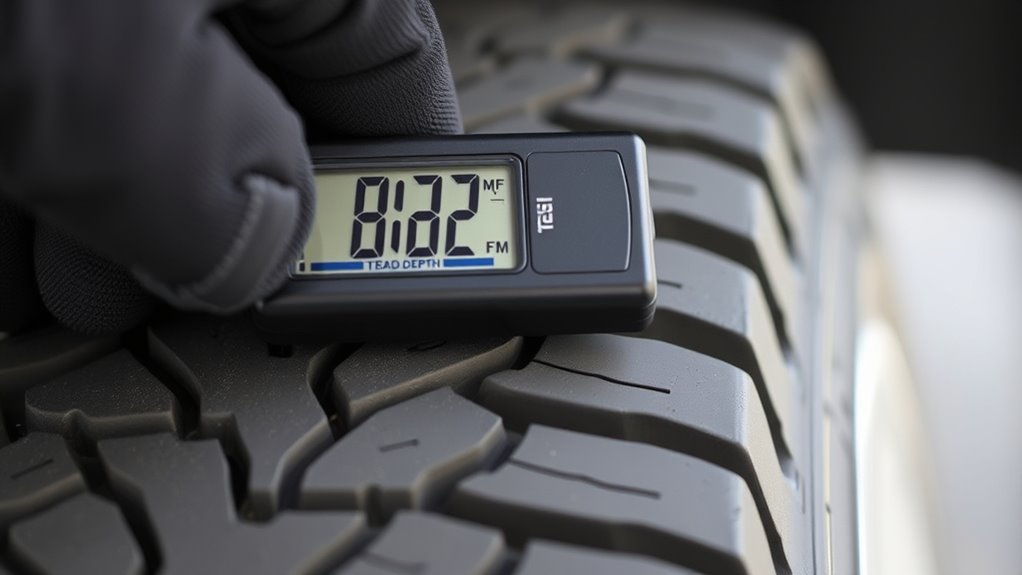
Knowing how to accurately measure your tire tread depth is essential for ensuring your vehicle’s safety and performance. Your tires are the only contact point between your vehicle and the road, so understanding their condition can prevent accidents and costly repairs. One of the most effective ways to assess tire health is by examining tire wear patterns and comparing tread depth to standard guidelines. Recognizing the telltale signs of uneven or excessive wear helps you catch problems early before they compromise your safety.
Measuring tire tread depth is vital for safety and vehicle performance.
Tire wear patterns can reveal a lot about your vehicle’s alignment, suspension, or inflation issues. For example, if you notice your tread is wearing more on one side or in the center, it indicates specific problems like misalignment or overinflation. Conversely, wear on the outer edges may point to underinflation or suspension issues. By understanding these patterns, you can address underlying problems before they worsen. Checking the tread depth regularly offers a more precise measure of tire health than just visual inspection, which can sometimes miss subtle signs of deterioration.
Tread depth standards serve as a benchmark for determining whether your tires are still safe to use. Most experts agree that a minimum tread depth of 2/32 inch is the legal limit in many regions, but for better safety, replacing tires around 4/32 inch is advisable. When your tread reaches these depths, your tires lose their ability to channel water, increasing the risk of hydroplaning in wet conditions. Using a simple tread depth gauge or a penny, you can quickly measure how much tread remains. Insert the penny into the tread with Lincoln’s head upside down; if the top of Lincoln’s head is visible, it’s time to replace the tires.
Measuring your tread depth isn’t just about complying with standards—it’s about maintaining optimal grip and braking performance. Low or uneven tread can considerably reduce traction, especially in adverse weather. Remember, tires with worn tread patterns are more prone to slipping and skidding, which can be dangerous at high speeds. Regularly checking your tire wear patterns and matching your measurements against the tread depth standards allows you to plan timely replacements, ensuring your vehicle remains safe and reliable. Additionally, modern tire technology with dynamic contrast ratios can influence how well you perceive the quality of your tires’ grip and performance.
Ultimately, understanding how to measure your tire tread depth correctly empowers you to take proactive steps for vehicle safety. It’s a straightforward process that provides crucial insights into your tires’ condition. By paying close attention to wear patterns and adhering to tread depth standards, you keep yourself protected on the road and extend the life of your tires. Being proactive with tire maintenance is a simple yet vital aspect of responsible vehicle ownership.

Tire Tread Depth Gauge,Tire Tread Gauge Color Coded,Tread Depth Gauge in 1/32 inch(Pack of 2)
1.Accurate and Efficient: Different colors on the bar represents different scopes, the red range on bar: 0 -…
As an affiliate, we earn on qualifying purchases.
As an affiliate, we earn on qualifying purchases.
Frequently Asked Questions
How Often Should I Check My Tire Tread Depth?
You should check your tire tread depth at least once a month, especially before long trips or if road conditions are rough. Regularly inspecting helps you spot uneven wear or low tread that can affect tire inflation and safety. Also, check your tires after hitting potholes or rough terrain. Staying proactive ensures your tires maintain ideal grip, fuel efficiency, and overall safety on various road conditions.
Can Uneven Tread Wear Affect My Tire’s Safety?
Uneven tread wear definitely impacts your tire’s safety by reducing traction and increasing the risk of blowouts. Regular tire rotation helps prevent uneven wear, especially if your tread pattern design causes certain areas to wear faster. By addressing uneven tread wear early, you maintain better grip, handling, and braking performance, keeping you safer on the road. Always inspect your tires and rotate them as recommended to avoid dangerous, uneven wear patterns.
What Tools Are Best for Measuring Tire Tread Depth?
Think of measuring your tire tread depth like checking the heartbeat of your car’s safety. You’ll want a reliable tread depth gauge or a coin test for quick results. A digital or analog tread pattern inspection tool provides precise readings, especially for comparing tire brands. These tools help you spot uneven wear early, ensuring you choose the best tires for longevity and performance. Always keep safety at the forefront.
Does Tread Depth Impact Fuel Efficiency?
Yes, tread depth impacts fuel efficiency because worn tires increase rolling resistance, making your engine work harder. When your tires have proper tread and tire pressure, they grip the road better, especially in varied road conditions, reducing drag. Maintaining ideal tire pressure also helps preserve tread life, ensuring you get the best fuel economy. So, check your tread and tire pressure regularly, especially before long trips or adverse road conditions.
When Should I Replace My Tires Based on Tread Depth?
You should replace your tires when the tread depth reaches 2/32 inch, as part of regular tire maintenance. Check for uneven tread wear patterns, which can indicate alignment issues or other problems. Don’t wait until the tread is nearly smooth; replacing tires early guarantees safety and peak performance. Regularly inspecting your tires helps you catch wear patterns and maintain proper tread depth, keeping your vehicle safe on the road.

ZIMISI LCD Display Tire Tread Depth Gauge, Digital Tire Depth Gauge with Inch/MM Conversion of 0-1 Inches, Tread Checker Tester Measuring Gauge Tool for Car Motorcycle Truck SUV (Silver)
【Size Specifications】: The digital tire tread depth gauge has dimensions of 4.43×2.37 inches, the compact and lightweight design…
As an affiliate, we earn on qualifying purchases.
As an affiliate, we earn on qualifying purchases.
Conclusion
Now that you know how to measure your tire tread depth, you can stay safe on the road, avoid costly repairs, and guarantee ideal performance. Keep an eye on those numbers, check regularly, and replace your tires when needed. Remember, proper maintenance means better grip, improved fuel efficiency, and peace of mind. Stay vigilant, stay proactive, and keep your tires in top shape—because safety starts with knowing exactly what those numbers mean.

GODESON Tire Tread Depth Gauge,Digital Tire Tread Depth Gauge in 1Inch/25.4mm with Color-Coded Bar, Easy Read Tire Depth Gauge for Cars, Trucks, Motorcycles
1. Accuracy: Accurately measure your tire tread depth in both inches and millimeters with depth gauge. Range: 0-25.4mm/0-1inch,…
As an affiliate, we earn on qualifying purchases.
As an affiliate, we earn on qualifying purchases.

LUMITECO Tire Tread Depth Gauge, Dial Type Tire Depth Gauge Reads in 1/32" for Tread Wear, Professional Pocket Tire Gauge with Case for Truck, Motorcycle, Car and Bus Tyre in 32nds
EASY TO READ AND ACCURATE: LUMITECO tire tread depth gauge has an easy-to-read 32nds scale, maximum tread depth…
As an affiliate, we earn on qualifying purchases.
As an affiliate, we earn on qualifying purchases.