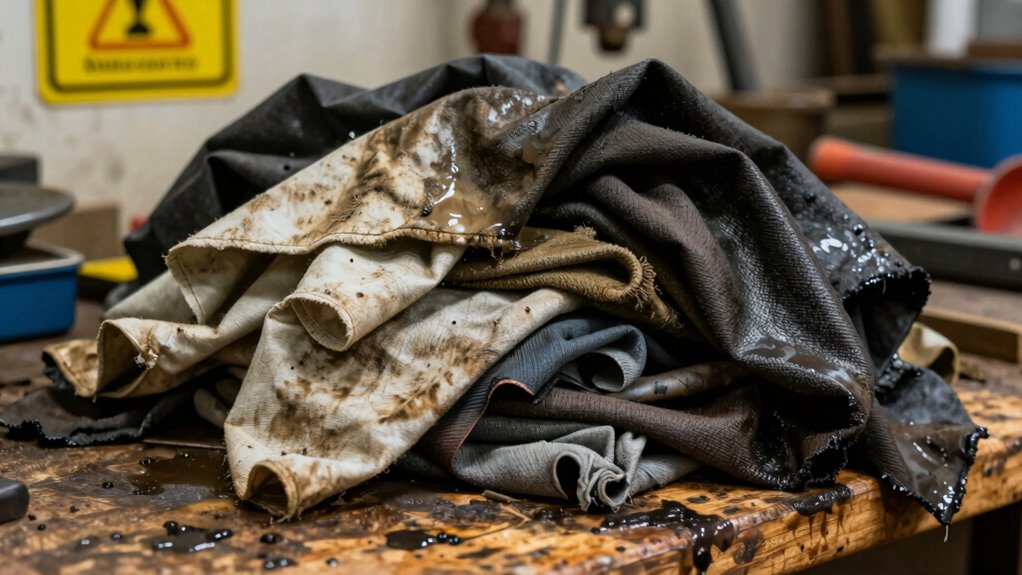

Oily rags can self-heat and ignite because of spontaneous combustion, which happens when the oils and solvents on the rags oxidize over time, generating heat. If left in piles or stored improperly, this heat can build up and cause a fire. To prevent this, store used rags in fire-safe metal containers with tight lids and dispose of them following local hazardous waste regulations. Keep exploring to learn more ways to stay safe with shop rags.

Get garage and car supplies delivered free — and shop member deals
- Fast, free delivery on millions of items
- Access to Prime Big Deal Days deals on October 6–7
- Prime Video, Amazon Music and more included
Key Takeaways
- Oily rags can self-heat due to oxidation of absorbed oils, leading to spontaneous combustion.
- Heat buildup occurs gradually and can ignite rags without external sparks or flames.
- Proper storage in fire-safe containers prevents heat accumulation and reduces fire risk.
- Dispose of used rags promptly according to regulations to avoid spontaneous ignition.
- Regularly inspect and handle rags carefully to prevent heat buildup and ensure safety.
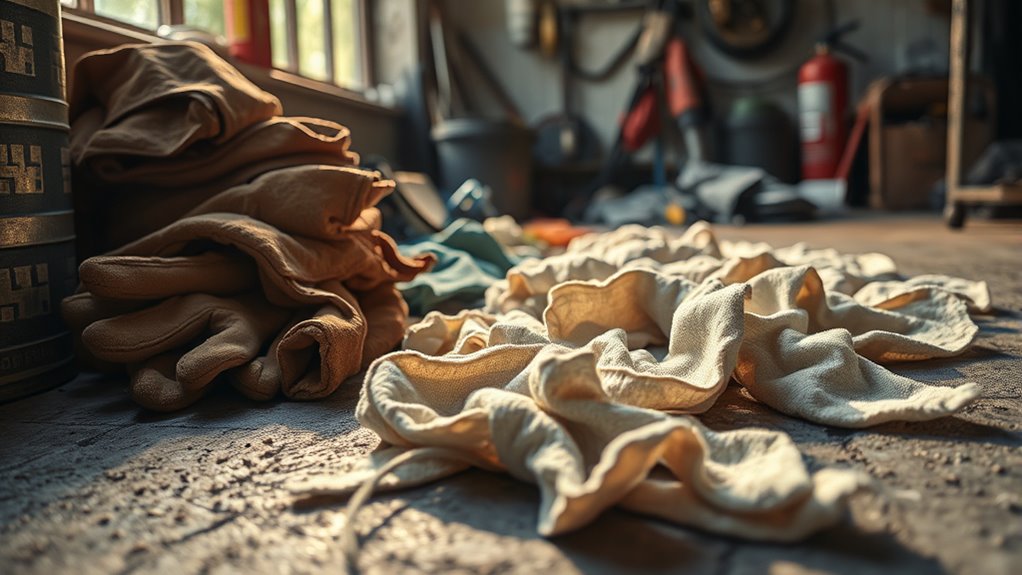
Have you ever thought about the hazards posed by shop rags? Many people overlook the risks associated with oily or solvent-soaked rags lying around a workspace. These rags can be a significant fire hazard if not handled properly. When oils, paints, or solvents are absorbed by rags, they can slowly heat up over time, especially if left in a pile or a container. This process, known as spontaneous combustion, occurs because the oxidation of the oils generates heat. Without proper oversight, this heat can build up to a point where it ignites the rag, sparking a fire that could quickly spread and cause extensive damage or injury. Proper storage methods are essential to prevent self‑heating and ensure safety.
To prevent this dangerous situation, it’s essential to practice proper disposal. Never leave oily rags lying around on surfaces or in open trash bins, as they can ignite if the heat builds up enough. Instead, designate a specific, fire-safe container for used rags, such as a metal container with a tight-fitting lid that’s designed to contain any combustion. When the container is full or at the end of the day, make sure to dispose of the rags safely by following local regulations and guidelines. Many communities have specific disposal methods for oily or solvent-soaked rags, often requiring them to be taken to hazardous waste facilities. Proper disposal minimizes the risk of spontaneous combustion and reduces the potential for fires in your workspace.
Handling shop rags with care isn’t just about safety; it’s also about maintaining a safe environment. Always check your rags regularly and avoid leaving them in piles or in containers that aren’t ventilated or designed for combustible materials. If your workspace doesn’t have a designated disposal system, consider using absorbent pads or specially treated rags that are less prone to self-heating. Remember, the goal is to eliminate the conditions that promote spontaneous combustion—namely, heat buildup, oxygen exposure, and the presence of flammable materials.
As an affiliate, we earn on qualifying purchases.
Frequently Asked Questions
How Do I Identify if a Rag Has Started to Self-Heat?
You can tell if a rag has started to self-heat by looking for temperature indicators like a warm or hot surface, which suggests ongoing chemical reactions. Feel the rag carefully—if it’s unexpectedly warm or hot to the touch, it’s a sign of self-heating. Also, watch for any signs of smoke or a strong odor. Promptly remove and safely dispose of the rag to prevent fire hazards.
What Types of Oils Pose the Highest Risk for Self-Heating?
Imagine oily rags absorbing thick, sticky oils that ignite dangerous chemical reactions. Highly flammable oils like linseed, tung, and drying oils pose the highest risk for self-heating because their chemical composition accelerates oxidation during oil absorption. These oils release heat as they react with air, increasing the chance of spontaneous combustion. Always handle these rags carefully, store them in proper containers, and dispose of them safely to prevent fires.
Can Using Certain Fabrics Reduce the Risk of Self-Heating?
Using certain fabrics can reduce the risk of self-heating because some materials are less combustible and better at dissipating heat. Opt for fabric choices like cotton or specialized fire-resistant materials that prioritize material safety. These fabrics are less likely to ignite or retain heat, helping you prevent dangerous self-heating situations. Always choose fabrics designed for safety in oily or chemical environments to keep yourself protected.
Are There Specific Storage Methods to Prevent Spontaneous Combustion?
Think of oily rags as tiny fires waiting to happen—your best defense is proper storage. Use flame-proof safety containers designed for flammable storage to keep these rags from sparking spontaneous combustion. Store them in cool, well-ventilated areas away from heat sources, and never leave oily rags lying around. This way, you’re locking up the danger and keeping your shop safe from unexpected blazes.
How Often Should I Inspect Rags for Signs of Heat Buildup?
You should inspect oily rags daily for signs of heat buildup, such as a strong odor or warmth. Following proper storage safety and handling procedures, regularly checking rags helps prevent spontaneous combustion. Always store oily rags in a sealed metal container, and dispose of them properly if they show signs of heat or combustion risk. Consistent inspections are essential for maintaining a safe shop environment.
hazardous waste rag disposal container
As an affiliate, we earn on qualifying purchases.
As an affiliate, we earn on qualifying purchases.
Conclusion
Remember, handling shop rags with care keeps your workspace safe and your projects flowing smoothly. By giving oily rags the gentle attention they deserve—proper storage and disposal—you prevent the quiet, uninvited dance of self-heating from taking center stage. When you respect their subtle nature, you create an environment where productivity blooms, and risks stay tucked away. Embrace mindful practices, and you’ll find that safety becomes a natural part of your craftsmanship, whispering peace into every task.
flammable material storage container
As an affiliate, we earn on qualifying purchases.
As an affiliate, we earn on qualifying purchases.
As an affiliate, we earn on qualifying purchases.
Halloween Picks
halloween
As an affiliate, we earn on qualifying purchases.