Start by purchasing the right brake fluid for your vehicle—check your owner’s manual to pick the correct type like DOT 3, DOT 4, or DOT 5. Then, get essential tools such as a clear hose, a catch container, and a wrench for the bleeder valves. Consider a brake bleeder kit if you want to make the process easier. Once you have these essentials, you’re set to begin, but there’s more important info if you want a smooth, safe brake bleed.

Get business pricing on garage and car supplies
- Business-only prices and quantity discounts
- Tax-exempt purchasing
- Multiple users, one account, clear invoices
Key Takeaways
- Purchase the correct brake fluid type specified in your vehicle’s owner’s manual first.
- Get a clear hose and catch container for safe fluid collection during bleeding.
- Acquire a wrench to open and close bleeder valves before starting.
- Consider a brake bleeding kit or pump if you want to simplify the process.
- Additional tools like gloves and safety glasses can wait until you begin the actual bleeding process.
If you’re planning to bleed your brakes, knowing what to buy first can save you time and frustration. The process might seem straightforward, but having the right tools and supplies on hand makes all the difference. Your first priority should be understanding the different brake fluid types. Brake fluid is vital for proper brake function, and using the wrong type can cause damage or unsafe driving conditions. Most vehicles require DOT 3, DOT 4, or DOT 5.1 brake fluids, which are glycol-based and compatible with most brake systems. DOT 5, a silicone-based fluid, is less common and typically used in specific applications. Check your vehicle’s owner’s manual to identify the correct brake fluid type, and buy enough for a complete flush and bleeding process. It’s wise to purchase a quality brand to guarantee optimal performance and prevent moisture contamination, which can lead to brake failure over time. Additionally, brake fluid quality can significantly impact the longevity and safety of your braking system, so choose a reputable brand.
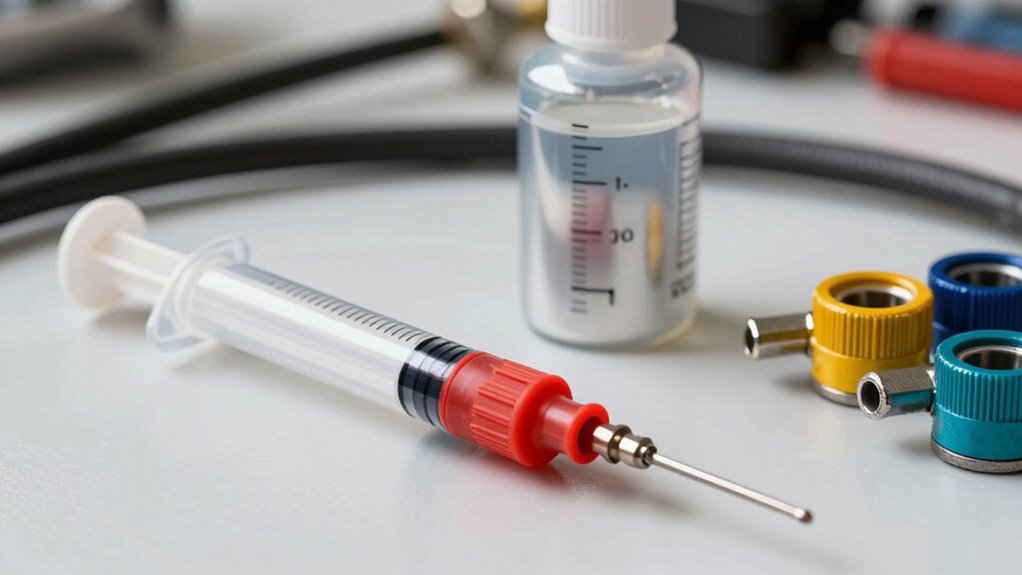
Beyond brake fluid, you’ll need to gather the bleeding system components. These include a clear hose that fits snugly over the brake caliper or wheel cylinder bleeder valves, a catch container to collect old fluid, and a wrench to open and close the bleeder valves. You might also want a brake bleeder kit, which often combines several tools and makes the process easier, especially if you’re new to it. A vacuum or pressure brake bleeder can considerably speed things up and reduce the mess, but manual bleeding with a hose and container works fine if you prefer a hands-on approach. Make sure the system components are in good condition and compatible with your vehicle’s brake setup. For example, some bleeding kits are designed for specific vehicle types or brake configurations, so double-check before buying. Additionally, understanding the different brake fluid types and their properties can help you choose the most suitable product for your vehicle’s needs.
As an affiliate, we earn on qualifying purchases.
Frequently Asked Questions
Can I Use Household Tools for Brake Bleeding?
You can use household tools for brake bleeding, but you should exercise caution. Make certain your tools are clean, appropriate, and in good condition to avoid damaging brake components. Safety precautions are essential—wear gloves and eye protection, work in a well-ventilated area, and follow proper procedures. While household tools might work temporarily, investing in specific brake bleeding tools guarantees safety and efficiency in the long run.
How Often Should I Bleed My Brakes?
Brake bleeding basics beckon a balanced blend of timing and technique. You should bleed your brakes whenever brake fluid types become contaminated or after replacing brake components—generally every 2 to 3 years or as recommended. Regularly check fluid levels, and follow proper bleeding procedures to prevent pedal pulsation. Keeping your brakes pristine and precise guarantees safety, so don’t delay—schedule periodic brake flushes and bleeding to maintain maximum performance.
Is It Necessary to Replace Brake Fluid During Bleeding?
Yes, you should replace the brake fluid during bleeding. Old, contaminated brake fluid can cause brake system corrosion and reduce braking efficiency. Bleeding your brakes flushes out moisture and contaminants that lead to brake fluid contamination. This process helps prevent corrosion within the brake system, ensuring smooth operation and extending component life. Regularly replacing brake fluid during bleeding is essential for maintaining safe, reliable braking performance.
Can I Bleed Brakes Without a Partner?
Yes, you can bleed brakes solo with patience and the right tools. Use a clear hose and a catch container, following the proper bleeding sequence to avoid air pockets. Whether you’re working with DOT 3, DOT 4, or DOT 5 brake fluid types, keep an eye on fluid levels. Remember, a steady hand and careful attention make the process smoother, even when flying solo.
What Signs Indicate Brake Fluid Needs Replacing?
You should replace brake fluid if it turns dark or murky, indicating contamination. Check the brake fluid color—fresh fluid is usually clear or light amber, while old fluid looks darker. Additionally, if you notice a burnt smell when opening the reservoir, it’s a sign to change it. Ignoring these signs can compromise your braking performance, so regularly inspecting color and smell helps maintain safe, effective brakes.
As an affiliate, we earn on qualifying purchases.
Conclusion
So, when you’re starting with brake bleeding, prioritizing the right tools makes all the difference. You don’t need every gadget right away—just the essentials to get you going. As you gain confidence, you can add more advanced tools. Remember, isn’t it better to master the basics before diving into complex setups? With patience and the right gear, you’ll have your brakes feeling firm in no time. Ready to get started?
As an affiliate, we earn on qualifying purchases.
As an affiliate, we earn on qualifying purchases.
Halloween Picks
halloween
As an affiliate, we earn on qualifying purchases.