
Power loss through drivetrain components reduces your vehicle’s efficiency and performance by wasting energy during power transfer. Factors like incorrect gear ratios, poor lubrication, and wear and tear increase resistance and heat, causing more energy to dissipate before reaching the wheels. Regular maintenance and proper lubrication help minimize these losses, extending your vehicle’s lifespan. To discover ways to optimize your drivetrain and boost efficiency further, keep exploring the key factors involved.

Get business pricing on garage and car supplies
- Business-only prices and quantity discounts
- Tax-exempt purchasing
- Multiple users, one account, clear invoices
Key Takeaways
- Power loss occurs during energy transfer through gears, bearings, and lubricants, reducing overall vehicle efficiency.
- Incorrect gear ratios increase resistance, leading to higher power dissipation before reaching the wheels.
- Proper lubrication minimizes friction, heat, and wear, thereby decreasing power loss in drivetrain components.
- Regular maintenance and replacement of worn parts prevent excessive friction and sustain optimal power transmission.
- Adequate component alignment and advanced lubrication systems enhance efficiency and reduce energy dissipation.

Understanding drivetrain power loss is essential because it directly impacts a vehicle’s efficiency and performance. When your car moves, power generated by the engine must transfer through various components like the transmission, driveshaft, and differentials. Along this path, some energy inevitably dissipates, reducing the overall power delivered to the wheels. Recognizing where and why this loss occurs helps you optimize your vehicle’s operation and maintain peak performance.
One of the key factors influencing power loss is the gear ratio within your transmission. The gear ratio determines how engine torque is multiplied before reaching the wheels. If the ratio isn’t ideal for your driving conditions or if it’s set improperly, you’ll notice increased power loss. For example, mismatched gear ratios can cause your engine to work harder than necessary, leading to inefficiencies. Choosing the correct gear ratio ensures smoother power transfer and minimizes unnecessary energy dissipation. This not only improves acceleration and fuel economy but also reduces stress on drivetrain components, extending their lifespan.
Proper gear ratio selection optimizes power transfer and reduces drivetrain stress.
Lubrication efficiency also plays a pivotal role in controlling power loss. Proper lubrication reduces friction between moving parts, allowing for smoother operation and less energy wasted overcoming resistance. If your drivetrain components aren’t adequately lubricated, increased friction leads to higher power losses. Over time, degraded or insufficient lubrication can cause components like gears, bearings, and shafts to operate less efficiently, generating excess heat and wear. Regular maintenance, including using the right type of oil and ensuring proper lubrication levels, keeps these parts moving freely. When lubrication efficiency is optimized, the drivetrain operates more smoothly and with less energy loss, translating into better performance and fuel economy. Additionally, modern lubrication systems can further enhance this process by automatically maintaining optimal lubrication levels and reducing manual maintenance efforts.
Furthermore, incorporating advanced lubrication systems can further reduce power losses by ensuring consistent and optimal lubrication across all drivetrain components. Regular inspection and replacement of worn parts, such as gears and bearings, are essential, as wear and tear increases friction and energy dissipation over time. This maintenance helps preserve the gear ratio and lubrication efficiency, ensuring minimal power loss. Proper alignment and balance of drivetrain components prevent unnecessary resistance, further reducing power losses.
automotive drivetrain lubrication kit
As an affiliate, we earn on qualifying purchases.
As an affiliate, we earn on qualifying purchases.
Frequently Asked Questions
How Does Temperature Affect Drivetrain Power Loss?
Temperature effects your drivetrain power loss by influencing how well components operate. When it’s cold, lubricants thicken, increasing friction and reducing efficiency. Conversely, higher temperatures can cause lubricants to thin, which might lead to inadequate lubrication and wear. You should regularly check your lubricant influence and temperature conditions to optimize performance. Keeping the drivetrain within ideal temperature ranges minimizes power loss, ensuring smoother, more efficient operation.
Are Electric Drivetrains More Efficient Than Traditional Ones?
Imagine you’re driving a sports car, but instead of losing power through the engine, an electric drivetrain keeps more energy in your hands. Electric drivelines are more efficient than traditional ones because they convert more stored energy into motion, reducing losses. Features like regenerative braking help preserve battery longevity by recapturing energy during deceleration. Overall, electric drivetrains provide a smoother, more efficient ride with less power wastage, making them a smarter choice.
Can Lubricant Type Influence Drivetrain Efficiency?
Yes, lubricant type can influence drivetrain efficiency. You should consider lubricant viscosity, as lower viscosity reduces resistance but might not protect well under high loads. Additionally, lubricant additives can minimize wear and friction, enhancing performance. Using the right combination guarantees your drivetrain operates smoothly, with less power loss. Choose a lubricant that balances viscosity and benefits from additives suited for your specific drivetrain components, optimizing efficiency and longevity.
How Does Drivetrain Design Impact Energy Loss?
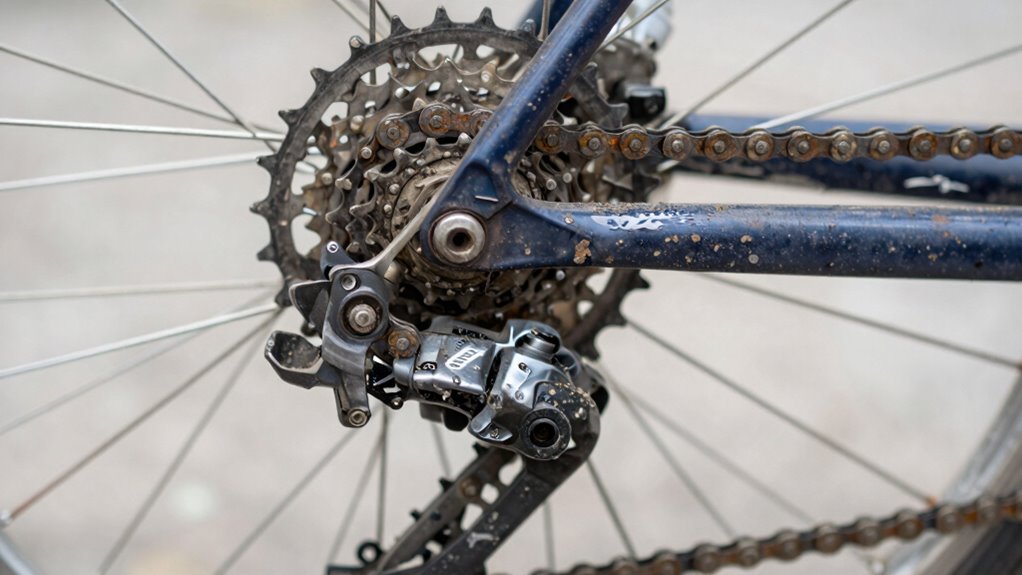
Your drivetrain design is the engine of efficiency, and it can cut energy loss like a hot knife through butter. Choosing ideal gear ratios ensures smooth power transfer, while material selection—like lightweight yet durable metals—reduces friction and weight. A well-designed drivetrain minimizes energy loss by aligning components precisely, allowing you to ride farther and faster without wasting precious power. Every detail counts in maximizing your bike’s performance.
What Maintenance Practices Reduce Power Loss?
You can reduce power loss by practicing proper maintenance. Regularly apply correct lubrication techniques to keep components smooth and minimize friction. Guarantee proper component alignment, such as chain, gears, and sprockets, to prevent unnecessary strain and energy waste. Check for wear and tear, replacing parts as needed. Keeping your drivetrain clean and well-maintained helps maintain efficiency, reducing power loss and improving overall performance.
vehicle gear ratio adjustment tools
As an affiliate, we earn on qualifying purchases.
As an affiliate, we earn on qualifying purchases.
Conclusion
Understanding how power loss occurs through drivetrain components helps you optimize your vehicle’s efficiency. By minimizing these losses, you enhance performance and save fuel. Regular maintenance and mindful driving can make a significant difference. Isn’t it worth taking a few simple steps to keep your drivetrain running smoothly and maximize every bit of power you’ve got? Remember, small improvements can lead to big gains—so why not start today?
As an affiliate, we earn on qualifying purchases.
automatic lubrication system for cars
As an affiliate, we earn on qualifying purchases.
As an affiliate, we earn on qualifying purchases.
Halloween Picks
halloween
As an affiliate, we earn on qualifying purchases.