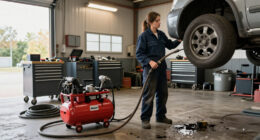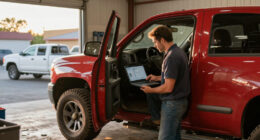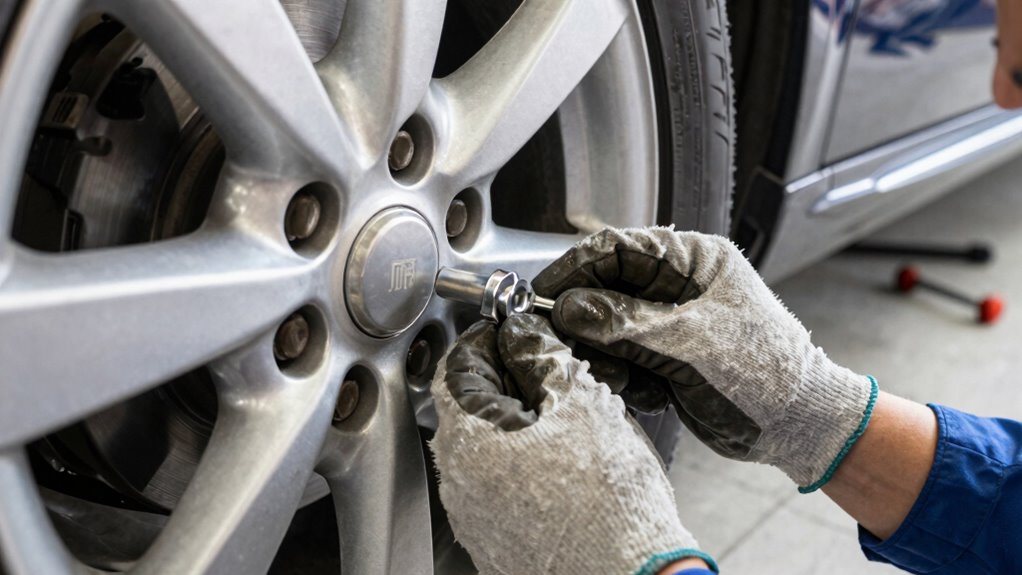

Re-torquing your wheel lug nuts after installation is essential because it guarantees they stay tight as the components settle. If they loosen over time, uneven pressure can cause the rotor to warp, leading to vibrations and braking issues. By checking and tightening the lug nuts after 50 to 100 miles, you help maintain proper alignment and prevent damage. Keep going to discover more tips on keeping your wheels and brakes in top shape.

Get business pricing on garage and car supplies
- Business-only prices and quantity discounts
- Tax-exempt purchasing
- Multiple users, one account, clear invoices
Key Takeaways
- Re-torquing ensures lug nuts remain properly tightened after initial installation, preventing uneven pressure on the rotor.
- It allows the wheel components to settle, reducing the risk of rotor warping caused by loose lug nuts.
- Proper re-torque maintains consistent clamping force, minimizing stress and distortion on the rotor over time.
- Re-torquing after driving helps identify and correct any loosening that could lead to rotor vibrations.
- Regular re-torquing extends wheel and rotor lifespan by preventing uneven wear and warping.
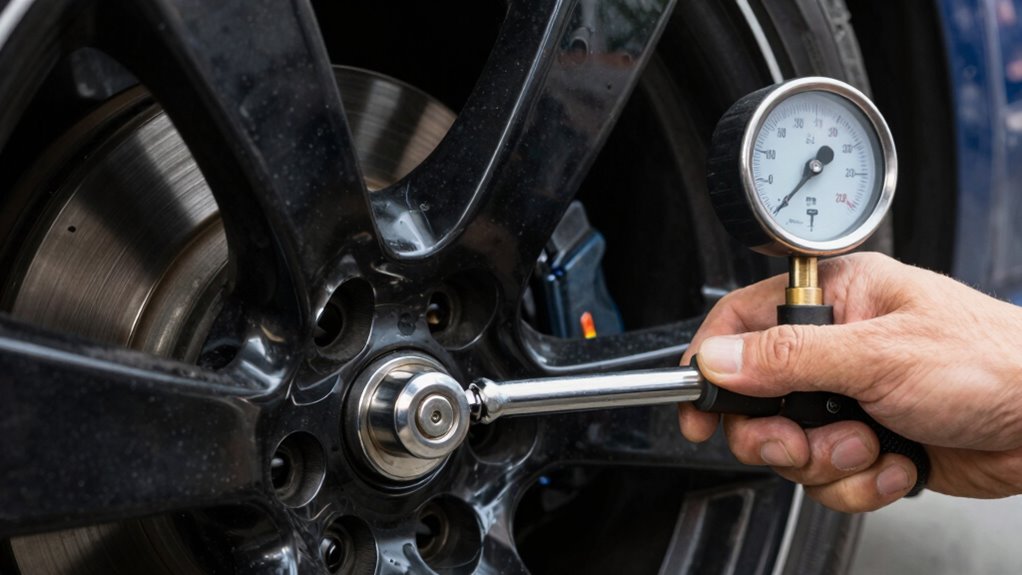
Understanding wheel torque is vital for proper vehicle maintenance and safety. When you’re installing or replacing a wheel, paying attention to lug nut tightening is essential. The key is to follow the manufacturer’s torque specification, which is the precise amount of force needed to secure the wheel without causing damage. If you tighten the lug nuts too loosely, the wheel won’t be properly secured, increasing the risk of it coming loose while driving. Conversely, overtightening can lead to warped rotors, uneven wear, or even cracked wheels. That’s why adhering to the recommended torque specification guarantees that the lug nuts are tightened just right, providing a secure fit that lasts. Proper torque also helps prevent rotor warping, which is a common issue caused by excessive tightening.
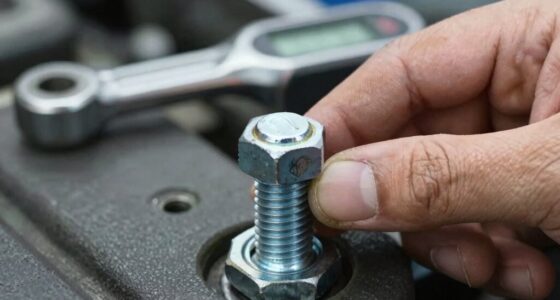
When you’re working on your vehicle, it’s tempting to tighten lug nuts as much as possible for peace of mind. However, over-tightening can create problems because excessive force puts undue stress on the wheel components. For example, if the lug nuts are tightened too forcefully, they can cause the rotor to warp during installation or retorque, especially if the rotor is already stressed from previous use. This warping then leads to vibrations when braking, which is a clear sign that something’s wrong. Properly torquing the lug nuts to the recommended specification helps prevent this issue. It’s best to use a torque wrench, which provides consistent, accurate readings, rather than relying on a regular wrench. This way, you can be confident that each lug nut is secured correctly.
Re-torque is an important step after initial installation because some small amount of lug nut settling occurs as the wheel and hub come into contact. Many mechanics recommend checking and re-torquing the lug nuts after driving about 50 to 100 miles. Doing so guarantees that the lug nuts maintain their proper tightness and that the wheel remains secure. This process also helps prevent uneven pressure on the rotor, which can lead to warping. Additionally, proper installation techniques are crucial to ensuring the longevity of your wheel assembly and avoiding uneven stress. If you ignore re-torquing, you might experience issues like uneven brake pad wear or vibrations during braking, both signs of rotor distortion. Regular inspections and proper wheel installation techniques contribute to overall vehicle safety and longevity. Additionally, understanding the correct torque specifications for your vehicle can help prevent premature wear on wheel components. Maintaining proper fluid management and tools can also play a role in ensuring safe and efficient maintenance practices.
Products Worth Considering

Milwaukee M18 FUEL 18V Lithium-Ion Brushless Cordless 1 in. Impact Wrench Extended Reach D-Handle Kit with Two 12.0 Ah Batteries

DEWALT 20V MAX Cordless 1/2-Inch Impact Wrench Kit (DCF900P1)

Chemical Guys 16-Piece Arsenal Builder Car Wash Kit with Foam Cannon & Bucket
As an affiliate, we earn on qualifying purchases.
Frequently Asked Questions
How Often Should Re-Torquing Be Performed on Vehicle Wheels?
You should re-torque your vehicle’s wheels after about 50 to 100 miles of driving, especially if you’ve had recent wheel alignment or tire rotation. This guarantees the lug nuts stay tight and prevents rotor warp. Regular re-torquing maintains proper wheel alignment and even tire wear, reducing the risk of brake issues. Check your vehicle’s manual for specific recommendations, but doing it periodically helps keep your wheels secure and performance at its best.
Can Over-Torquing Cause Rotor Warping?
Over-torquing can indeed cause rotor deformation, leading to warping issues. When you apply too much torque, it disrupts proper torque calibration, putting uneven stress on the rotor. This excess pressure can cause the rotor to warp over time, especially during use. To prevent this, always follow the manufacturer’s torque specifications and re-torque the wheels as recommended, ensuring even pressure and avoiding deformation.
What Tools Are Best for Re-Torquing Wheels?
Imagine a wheel lug whispering, “I need just the right hug.” You’ll want a quality torque wrench to give that perfect snugness. These tools guarantee you apply the correct torque, preventing uneven pressure that can warp rotors. A good torque wrench is precise, easy to handle, and durable. Avoid guessing or using makeshift tools; instead, trust a reliable torque wrench to keep your wheels securely fastened and your ride smooth.
Does Re-Torquing Improve Braking Performance?
Yes, re-torquing your wheels can improve braking performance by ensuring proper rotor alignment and ideal contact with the brake pad. When wheels are correctly torqued, it prevents rotor warping, which can cause uneven brake pad wear and reduced braking efficiency. Regular re-torquing maintains consistent pressure on the rotor, enhancing braking response and safety, especially after wheel removal or installation.
Are Re-Torque Specifications Different for Alloy and Steel Wheels?
A stitch in time saves nine, and the same applies to wheel re-torque specs. For alloy wheels, torque specs are often lower due to their delicate nature, while steel wheels can usually handle higher torque. Always follow your vehicle’s manufacturer guidelines, as torque differences are essential to prevent damage or warping. Re-torque guarantees even pressure, keeping your braking system safe and effective regardless of wheel material.
Conclusion
So, next time you tighten those lug nuts, remember—re-torquing isn’t just a boring chore; it’s your secret weapon against warped rotors. Ironically, neglecting this simple step could lead to costly repairs and endless frustration. Who knew that a little extra turn could save you from a warped nightmare? So, tighten up, re-torque, and enjoy the smooth ride you’ve just guaranteed yourself—because, after all, a little torque goes a long way.