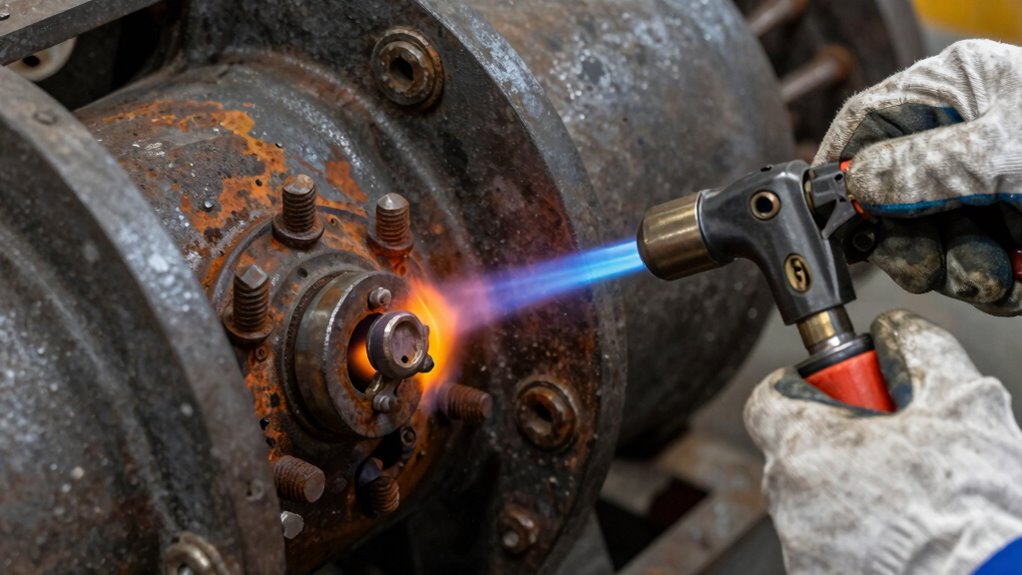

When applying heat to loosen a stuck bolt, focus on the bolt’s head or threaded area, but avoid heating nearby plastics, rubber parts, or components sensitive to heat. Use a controlled tool like a propane torch, keeping the flame moving evenly to prevent damage. Never overheat, especially if electrical parts or delicate materials are nearby. Want to guarantee your approach is safe and effective? Keep exploring for expert tips on targeting the right spot.

Get garage and car supplies delivered free — and shop member deals
- Fast, free delivery on millions of items
- Access to Prime Big Deal Days deals on October 6–7
- Prime Video, Amazon Music and more included
Key Takeaways
- Focus heat on the bolt’s head or threaded area for effective expansion.
- Avoid heating surrounding plastic, rubber, or sensitive components to prevent damage.
- Do not apply heat to embedded or inaccessible bolts that could harm nearby parts.
- Keep the flame moving evenly to prevent overheating and weakening the bolt.
- Use caution around electrical parts, as heat may cause damage or safety hazards.
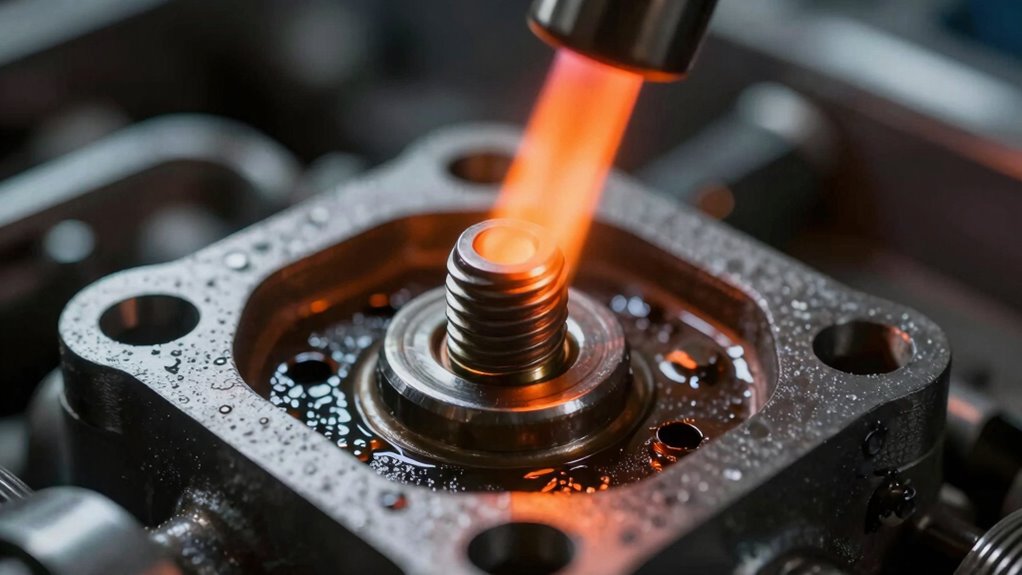
Have you ever struggled to loosen a stubborn bolt that just won’t budge? Sometimes, applying heat can be the game-changer you need. When you heat a bolt correctly, you take advantage of thermal expansion—metal expands when heated, which can help break the rust or corrosion that’s holding it tight. But knowing where to heat and where not to is essential. You don’t want to damage surrounding parts or weaken the bolt itself. Before cranking up the heat, it’s wise to try lubrication techniques first. Applying penetrating oil or WD-40 can seep into threads, making the bolt easier to turn. Let it sit for a while, and then attempt to loosen the bolt again. If that doesn’t work, then controlled heating can be your next step.
When you decide to heat, focus on the bolt’s head or the threaded area. Using a propane torch or heat gun, carefully apply heat to these parts. As the metal warms up, it expands slightly—sometimes enough to free up stubborn corrosion. Keep the flame moving around evenly to avoid overheating one spot, which could weaken the bolt or damage nearby components. Remember, heat affects the bolt’s material differently than the surrounding parts. For example, steel and aluminum expand at different rates, so be cautious around sensitive materials. Avoid heating nuts or bolts that are embedded in plastic or rubber components, as these materials can melt or deform easily. This targeted approach guarantees you’re applying heat where it’s most effective without risking damage to other parts. Proper heat application and careful technique are crucial for success.
While heat can be effective, it’s not a universal remedy. If the bolt is in a delicate environment or connected to electrical components, heating might pose risks. In such cases, other methods like penetrating oil, impact wrenches, or even mechanical extraction tools might be safer options. Always consider the environment and material properties before proceeding. Also, after heating, it’s helpful to let the bolt cool slightly before attempting to turn it again. This quick cooling can sometimes cause the bolt to contract and loosen further. Combining thermal expansion with proper lubrication techniques often yields the best results. Knowing metal properties and how different materials respond to heat can help you make safer, more effective decisions.
propane torch for loosening bolts
As an affiliate, we earn on qualifying purchases.
As an affiliate, we earn on qualifying purchases.
Frequently Asked Questions
Can Heating Damage Surrounding Materials or Components?
Heating can damage surrounding materials or components if they’re sensitive to heat or prone to thermal expansion. You should be cautious because materials sensitivity varies; plastics, rubber, and some metals may warp, crack, or weaken when exposed to high temperatures. Properly controlling heat application minimizes risks, ensuring you don’t unintentionally cause damage. Always consider the thermal expansion properties of nearby parts before applying heat, especially in delicate assemblies.
What Tools Are Best for Applying Heat Safely?
Think of yourself as a chemist in a lab, carefully handling delicate reactions. Use heat-resistant gloves to protect your hands and guarantee proper ventilation to avoid fumes. A propane torch or a heat gun offers precise control, allowing you to apply heat safely without damaging surrounding parts. Always keep a fire extinguisher nearby and work in a well-ventilated area to prevent accidents.
How Long Should I Apply Heat to a Stuck Bolt?
You should apply heat to a stuck bolt for about 1 to 2 minutes, focusing on proper heat duration to prevent damage. Use a controlled flame or heat gun, and avoid overheating. If the bolt remains stuck, consider alternative heating methods like induction heating or applying heat gradually. Always monitor the temperature closely, and stop once the bolt expands slightly to facilitate loosening without risking damage.
Is There a Risk of Injury When Heating Bolts?
Think of heating bolts as walking a tightrope—you risk falling if you’re not careful. Yes, there’s a risk of injury when heating bolts, especially if you overlook personal safety or fire hazards. Burns from hot metal and accidental fires can happen if you don’t wear protective gear or if sparks ignite flammable materials nearby. Always use caution, keep your work area clear, and handle heat sources responsibly to stay safe.
Can Heating Cause Bolts to Weaken or Break?
Heating bolts can weaken or break them if you use improper heating techniques or heat for too long. The bolt material plays an essential role; softer metals like aluminum are more susceptible to damage, while hardened steel can withstand higher temperatures. To prevent weakening, apply controlled heat carefully, avoid overheating, and use appropriate tools. Proper technique guarantees you loosen stuck bolts without compromising their integrity or risking failure.
As an affiliate, we earn on qualifying purchases.
Conclusion
Remember, applying heat can free stubborn bolts, like a gentle sun melting ice, but too much heat risks damaging surrounding parts, much like a wildfire spiraling out of control. Use your torch wisely, targeting only the bolt and avoiding nearby materials. Think of it as a delicate dance—balance the heat just right, so you loosen the bolt without scorching the job, leaving your work safe and sound, ready to withstand whatever comes next.
penetrating oil for rusted bolts
As an affiliate, we earn on qualifying purchases.
As an affiliate, we earn on qualifying purchases.
As an affiliate, we earn on qualifying purchases.
Halloween Picks
halloween
As an affiliate, we earn on qualifying purchases.