Understanding brake fluid types is essential for your vehicle’s safety. DOT 3, 4, and 5.1 are glycol-based and absorb moisture over time, which lowers boiling points and can lead to brake failure. In contrast, DOT 5 is silicone-based, resists water absorption, and isn’t compatible with glycol fluids. Choosing the right type depends on your vehicle’s needs, and knowing the differences helps you maintain peak braking performance—keep exploring to learn more about making the right choice.

Get business pricing on garage and car supplies
- Business-only prices and quantity discounts
- Tax-exempt purchasing
- Multiple users, one account, clear invoices
Key Takeaways
- DOT 3, 4, and 5.1 are glycol-based, hygroscopic fluids, while DOT 5 is silicone-based and non-hygroscopic.
- DOT 3 and 4 absorb moisture, lowering boiling points; DOT 5 resists water contamination.
- DOT 5 is incompatible with glycol-based fluids; mixing can damage brake systems.
- Higher boiling points in DOT 4 and 5.1 suit high-performance vehicles; DOT 3 is suitable for regular use.
- Always use the brake fluid specified by the vehicle manufacturer for safety and optimal performance.

Have you ever wondered what different brake fluid types are and why they matter for your vehicle’s braking performance? The answer comes down to brake fluid composition and compatibility with brake systems. Brake fluids are specially formulated liquids that transfer force from your brake pedal to the brake components, enabling smooth and dependable stopping power. However, not all brake fluids are the same, and choosing the right type is crucial for safety and peak performance.
Choosing the right brake fluid is essential for safe, reliable vehicle stopping power.
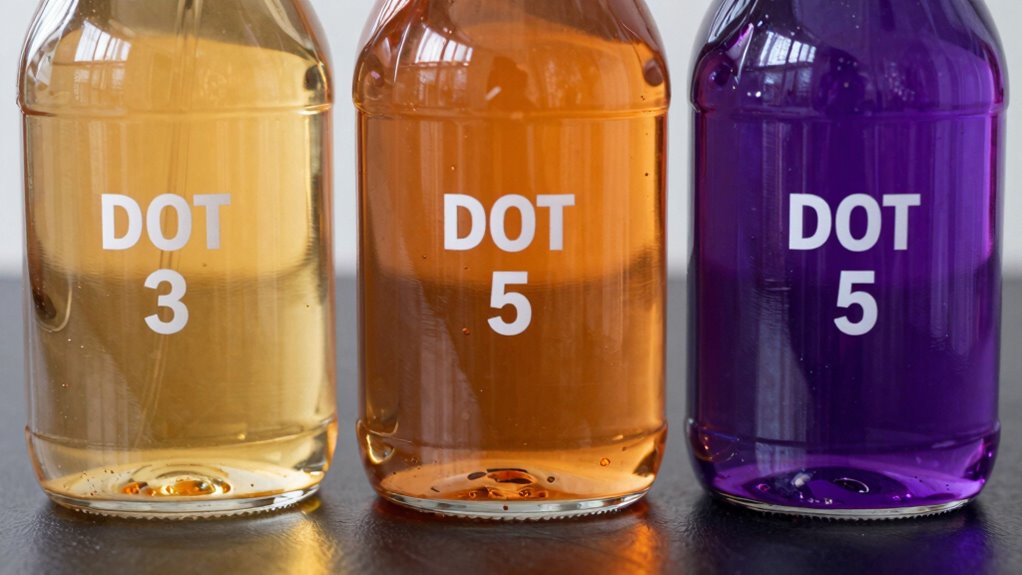
The most common brake fluids are DOT 3, DOT 4, and DOT 5.1. These are glycol-based fluids, meaning they share similar chemical properties and are generally compatible with each other. Their brake fluid composition includes glycol ethers, which have specific boiling points suited for different driving conditions. DOT 3 and DOT 4 fluids are hygroscopic, meaning they absorb moisture from the air over time. This moisture absorption lowers their boiling points, which can lead to vapor lock—a dangerous situation where the fluid vaporizes and causes brake failure under heavy use. DOT 5.1, however, has a higher boiling point than DOT 3 and DOT 4, making it suitable for high-performance or heavy-duty vehicles that generate more heat during braking. Additionally, understanding the boiling point differences helps in selecting the appropriate fluid for various driving environments.
On the other hand, DOT 5 is quite different. It’s a silicone-based brake fluid, which means its brake fluid composition is chemically distinct from the glycol-based DOT 3, 4, and 5. Because of this, DOT 5 is not compatible with the other types and should never be mixed. Its main advantage is that it’s non-hygroscopic, so it doesn’t absorb moisture, reducing the risk of vapor lock. It also resists water contamination better and maintains its properties longer. Additionally, the chemical properties of DOT 5 make it ideal for specific applications like vintage cars or military vehicles, where its unique benefits are prioritized over other factors. Furthermore, the compatibility issues associated with DOT 5 emphasize the importance of proper system maintenance and adherence to manufacturer recommendations. Choosing the correct brake fluid type and understanding its application-specific benefits can greatly enhance vehicle safety and longevity. However, DOT 5 is typically used in specialized applications like vintage cars or military vehicles, where its unique properties are prioritized over other factors, such as difficulty in bleeding the system or compatibility issues with certain rubber components.
Understanding the differences in brake fluid composition and compatibility with brake systems helps you make informed decisions. Using the wrong type can lead to decreased braking efficiency, damage to brake components, or even complete brake failure. Always consult your vehicle’s owner manual or a professional mechanic to ensure you’re selecting the appropriate brake fluid type. Proper maintenance and timely fluid changes keep your braking system reliable, safe, and ready to perform whenever you need it.
As an affiliate, we earn on qualifying purchases.
Frequently Asked Questions
Can I Mix Different Brake Fluid Types Safely?
You shouldn’t mix different brake fluid types because of brake compatibility and fluid mixing risks. Mixing DOT 3, DOT 4, or DOT 5.1 with DOT 5 can cause chemical reactions that reduce braking performance or damage your system. Always stick to the manufacturer’s recommended brake fluid to guarantee safety and peak function. If you need to change types, fully flush the system first to avoid mixing incompatible fluids.
How Often Should Brake Fluid Be Replaced?
You should replace your brake fluid every 2 to 3 years or whenever your vehicle’s maintenance schedule recommends it. Brake fluid lifespan can vary depending on driving conditions and fluid type. Regular maintenance tips include checking the fluid’s color and level, and flushing the system if it appears dirty or contaminated. Staying proactive guarantees your braking system remains safe and functional, preventing costly repairs down the line.
What Are Signs of Brake Fluid Contamination?
You might notice brake fluid contamination symptoms like spongy brake pedal, reduced braking power, or strange noises when braking. Contaminated brake fluid can cause corrosion and damage to your brake system. To prevent this, regularly check the fluid’s color and consistency, and replace it as recommended. Staying vigilant helps you catch contamination early, ensuring your brakes function safely and efficiently.
Is DOT 5 Compatible With ABS Systems?
Yes, DOT 5 brake fluid is compatible with ABS systems, but you need to take into account its unique brake fluid properties. DOT 5 is silicone-based and doesn’t mix well with other types like DOT 3, 4, or 5. Compatibility considerations include ensuring your vehicle’s manufacturer approves DOT 5 for your ABS system. Always check your owner’s manual or consult a professional before switching to avoid potential damage or reduced braking performance.
How Does Climate Affect Brake Fluid Choice?
Climate impact can dramatically influence your brake fluid choice. Cold temperatures cause brake fluid to thicken, increasing viscosity and potentially impairing braking performance. Conversely, hot weather can cause fluid to thin, risking vapor lock and reduced effectiveness. You must select a brake fluid that maintains ideal viscosity across temperature ranges, ensuring your braking system responds reliably in any climate. Don’t underestimate how climate impacts safety—choose wisely to stay in control.
As an affiliate, we earn on qualifying purchases.
Conclusion
Think of brake fluid as the lifeblood of your car’s braking system—each type a different kind of medicine, crafted for specific needs. Just like choosing the right remedy ensures good health, selecting the proper brake fluid maintains your brakes reliable and safe. Whether you opt for DOT 3, 4, 5.1, or DOT 5, knowing their roles helps you navigate your vehicle’s health with confidence. Keep your brake system well-maintained, and it’ll serve you faithfully, mile after mile.
As an affiliate, we earn on qualifying purchases.
As an affiliate, we earn on qualifying purchases.
Halloween Picks
halloween
As an affiliate, we earn on qualifying purchases.