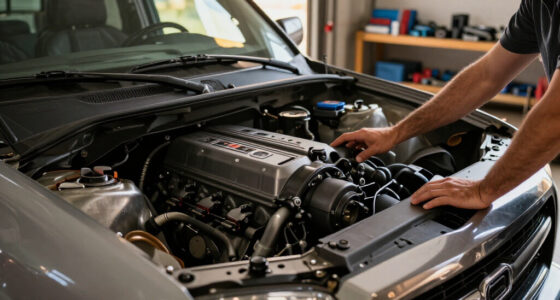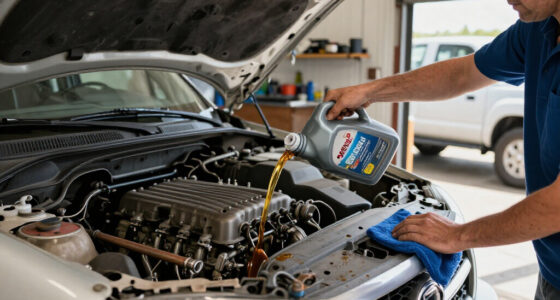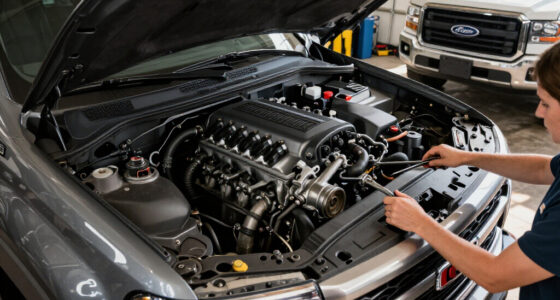
In high-performance cars, efficient cooling systems are key to maintaining ideal engine temps during intense driving. These systems use larger radiators with advanced materials, multi-pass designs, and better airflow to improve heat dissipation. Coolant technology has also evolved, offering reliable performance across extreme temperatures. Proper maintenance ensures these systems function smoothly, preventing overheating. If you want to find out how these innovations work together to boost performance, there’s more to discover below.

Get business pricing on garage and car supplies
- Business-only prices and quantity discounts
- Tax-exempt purchasing
- Multiple users, one account, clear invoices
Key Takeaways
- High-performance car cooling systems feature larger radiators with advanced core layouts for efficient heat dissipation.
- They utilize lightweight, specialized materials to enhance durability and reduce overall vehicle weight.
- Multi-pass radiator designs increase coolant contact, improving thermal transfer during high engine loads.
- Advanced coolant formulations resist extreme temperatures, ensuring reliable engine performance under demanding conditions.
- Regular maintenance, including radiator cleaning and coolant replacement, optimizes cooling efficiency and engine longevity.
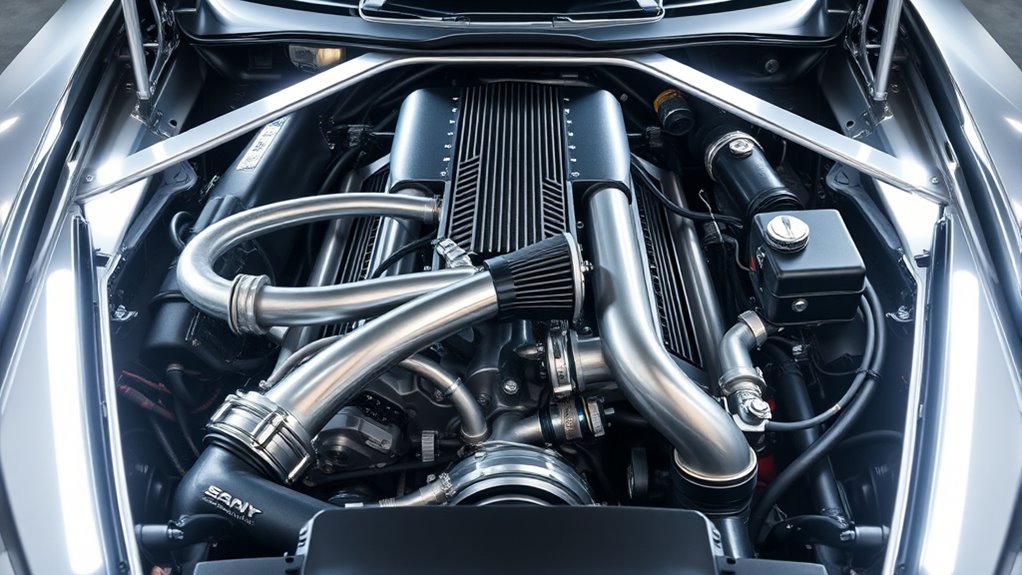
Have you ever wondered how high-performance cars keep their engines from overheating during intense driving? The secret lies in their sophisticated cooling systems, which are carefully engineered to handle extreme heat without sacrificing performance. At the heart of this system is the radiator, an essential component that dissipates heat from the engine coolant. The radiator design in high-performance cars often features a larger surface area, more efficient core layouts, and better airflow management. These enhancements maximize cooling efficiency, guaranteeing that heat is quickly transferred from the coolant to the surrounding air. Some models incorporate lightweight materials or multi-pass designs that increase contact time between coolant and radiator surfaces, further boosting heat transfer. By refining radiator design, manufacturers strike a balance between cooling capacity and aerodynamic stability, preventing overheating while maintaining high speeds and rapid acceleration. Additionally, radiator materials play a crucial role in optimizing heat transfer and corrosion resistance, contributing to the overall effectiveness of the cooling system. Innovations in cooling system components also contribute to maintaining engine performance under demanding conditions. Furthermore, advancements in coolant technology have led to the development of specialized fluids that significantly improve thermal management in high-performance vehicles. These coolants are formulated to operate efficiently across a wide temperature range, resisting freezing in cold climates and boiling over in intense heat, therefore providing reliable performance at all times. The selection of coolant types is also critical, as different formulations are better suited for specific radiator materials and engine designs. Proper maintenance, including regular coolant replacement and radiator cleaning, guarantees that these carefully engineered systems continue performing at their peak. Regular inspections of the cooling system help prevent potential failures and ensure optimal heat dissipation. When you understand how radiator design and coolant types contribute to engine health, you gain appreciation for the intricate engineering that keeps high-performance cars running smoothly, even under the most demanding conditions.
As an affiliate, we earn on qualifying purchases.
Frequently Asked Questions
How Do Cooling Systems Affect Overall Vehicle Aerodynamics?
Cooling systems influence your vehicle’s aerodynamics by shaping airflow optimization around the car. A well-designed radiator improves airflow, reducing drag and enhancing stability at high speeds. You’ll notice that radiator placement and size are vital, as they direct airflow efficiently while cooling the engine. When these elements are optimized, your car maintains better aerodynamics, which can lead to improved performance, fuel efficiency, and handling during high-speed driving.
What Are the Latest Innovations in Cooling Technology?
Ironically, the latest innovations in cooling technology make your high-performance car even more efficient. Electric cooling systems now harness advanced nanotechnology coatings, which improve heat dissipation and reduce weight. These cutting-edge coatings prevent corrosion and enhance thermal management, pushing performance boundaries. So, while it might seem like just tech upgrades, these innovations actually redefine how your vehicle stays cool under pressure, ensuring peak performance with minimal fuss.
How Often Should High Performance Car Cooling Systems Be Serviced?
You should service your high-performance car’s cooling system every 1 to 2 years, or as recommended by the manufacturer. Regular coolant maintenance is essential to prevent overheating, so check coolant levels and quality regularly. Additionally, perform radiator inspections during service, looking for leaks, corrosion, and blockages. Keeping these components in top shape ensures your engine stays cool and performs at its best under high stress.
Can Aftermarket Cooling Upgrades Improve Car Performance?
Yes, aftermarket cooling upgrades can improve your car’s performance. Upgrading your radiator boosts cooling efficiency, preventing overheating during intense driving. Better cooling helps maintain ideal engine temperatures, which enhances horsepower and throttle response. Radiator upgrades also reduce heat soak, allowing your high-performance car to run smoothly even under stress. Investing in these upgrades guarantees your vehicle stays cool, performs better, and lasts longer on the road or track.
What Environmental Factors Most Impact Cooling System Efficiency?
Environmental factors like temperature, humidity, and airflow most impact your cooling system’s efficiency. Hot weather can cause your radiator design to struggle, while high humidity can reduce cooling effectiveness. Poor airflow, whether from slow driving or obstructions, hampers heat dissipation. You can improve performance by choosing the right coolant composition and ensuring your radiator design promotes ideal airflow, keeping your engine cooler under various conditions.
multi-pass radiator cooling system
As an affiliate, we earn on qualifying purchases.
As an affiliate, we earn on qualifying purchases.
Conclusion
As you’ve seen, effective cooling systems are vital for high-performance cars to run smoothly. Remarkably, many of the innovations in these systems often come from racing technology, proving that the pursuit of speed and efficiency go hand in hand. When you choose a high-performance vehicle, you’re not just getting raw power but also a cooling system designed through years of racing expertise. It’s a perfect coincidence that performance and cooling always seem to race together.
advanced coolant for high performance cars
As an affiliate, we earn on qualifying purchases.
As an affiliate, we earn on qualifying purchases.
As an affiliate, we earn on qualifying purchases.
Fall Picks
fall essentials
As an affiliate, we earn on qualifying purchases.