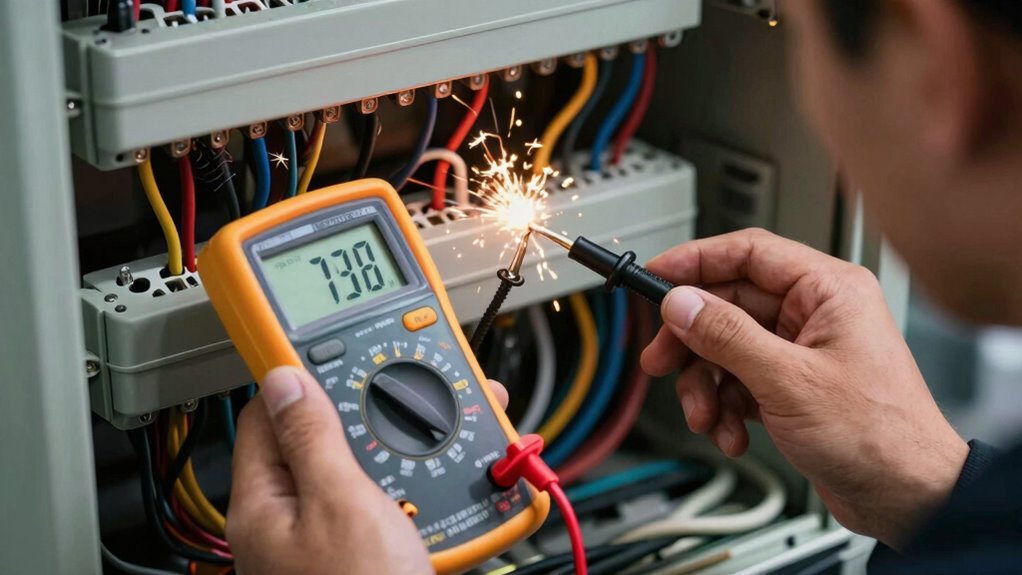

To find a short to ground quickly, use a multimeter set to resistance or continuity mode. Disconnect power and follow a wiring diagram, testing along the circuit path by placing one probe on ground and moving the other along the wiring. Look for a beep or a near-zero resistance reading, which indicates a short. Systematically narrow down the problem area, and you’ll save hours of guesswork—keep going to learn even more effective troubleshooting tips.

Get garage and car supplies delivered free — and shop member deals
- Fast, free delivery on millions of items
- Access to Prime Big Deal Days deals on October 6–7
- Prime Video, Amazon Music and more included
Key Takeaways
- Set your multimeter to resistance or continuity mode and disconnect power before testing.
- Use a wiring diagram to systematically trace and test circuit segments for low-resistance readings.
- Place one multimeter probe on ground and move the other along the circuit to locate shorts.
- Isolate suspected areas by disconnecting components and testing sections individually.
- Confirm the short location before repairing to save time and prevent unnecessary part replacements.

When troubleshooting an electrical system, finding a short to ground is often the first step to resolving the problem. This process requires careful circuit analysis and an understanding of troubleshooting techniques to pinpoint the issue efficiently. Using a multimeter is one of the most effective tools at your disposal, allowing you to quickly identify where the short occurs without unnecessary disassembly or guesswork.
Begin by setting your multimeter to the continuity or resistance mode. You want to test various points in the circuit to see if there’s an unintended path to ground. Since a short to ground creates a low-resistance path, your multimeter will beep or show a near-zero reading when you touch the probes across a shorted segment. This method is fast and reliable, especially when combined with systematic troubleshooting techniques. Start by disconnecting power to the circuit to prevent any damage or false readings. Once safe, you can check different sections of the wiring and components by placing one probe on the ground and moving the other along the circuit.
Set multimeter to resistance, disconnect power, and systematically test circuit points for unintended ground paths.
Your circuit analysis skills come into play here. You should have a wiring diagram or a clear understanding of the circuit layout. Follow the wiring path logically, testing each segment for continuity to ground. This step-by-step approach ensures you don’t overlook potential short points. Keep an eye out for damaged insulation, burnt components, or loose connections, as these are common causes of shorts. When you find a low-resistance reading where it shouldn’t be, you’ve likely located the short to ground. Additionally, understanding home electrical safety is crucial to prevent hazards during troubleshooting.
Troubleshooting techniques involve eliminating variables to narrow down the problem area. For instance, disconnecting components one at a time can help identify if a specific part is causing the short. Once you isolate the shorted section, you can focus your repair efforts more efficiently. Remember, patience and methodical testing are key. Rushing through the process may lead to missed faults or unnecessary replacements.
Using your multimeter in this way saves hours compared to more invasive methods, like replacing entire wiring harnesses or components blindly. It’s a precise, non-destructive approach that relies on solid circuit analysis and proven troubleshooting techniques. As you gain experience, you’ll develop a better sense of where shorts typically occur and how to quickly verify your suspicions. Ultimately, mastering this method empowers you to troubleshoot electrical issues confidently, saving time and reducing guesswork in your repair projects.
digital multimeter for electrical troubleshooting
As an affiliate, we earn on qualifying purchases.
As an affiliate, we earn on qualifying purchases.
Frequently Asked Questions
Can I Use a Multimeter on Live Circuits Safely?
You can use a multimeter on live circuits for voltage measurement and current testing, but you need to exercise caution. Always set your multimeter to the correct setting before testing, wear insulated gloves, and keep one hand away from the circuit to avoid shocks. Make certain the multimeter’s probes are in good condition, and never touch exposed wires while testing. Safety first—if unsure, consult a professional.
What Are Common Causes of Short to Ground in Electronics?
You often encounter a ground fault or wiring defect as common causes of a short to ground in electronics. These issues happen when insulation wears out, a wire frays, or connections become loose, allowing current to take an unintended path to ground. Such faults can create a direct short, causing device malfunction or damage. Regular inspection and proper wiring practices help prevent these issues and guarantee safety and reliable operation.
How Do Temperature Changes Affect Multimeter Readings?
Temperature changes can dramatically affect your multimeter readings, almost like a rollercoaster ride for your device. As thermal expansion occurs, components expand and resistance varies, causing fluctuations in measurements. When it’s hot, expect higher resistance and skewed readings; when cold, resistance drops unexpectedly. You might think your readings are unreliable, but understanding thermal expansion and resistance variation helps you interpret these fluctuations accurately, ensuring precise troubleshooting every time.
What Safety Precautions Should I Follow When Troubleshooting?
When troubleshooting, you should always wear personal protective equipment like insulated gloves and eye protection. Confirm the circuit is de-energized before testing to prevent shocks or damage. Verify power is off with your multimeter before touching any components. Never work on live circuits unless absolutely necessary and trained. Taking these safety precautions helps protect you from electrical hazards and ensures accurate readings during troubleshooting.
How Often Should I Calibrate My Multimeter?
You should calibrate your multimeter at least once a year to guarantee ideal device accuracy. Investigating the theory that calibration frequency impacts measurement precision reveals that regular checks minimize errors caused by drift or wear. If you use your multimeter heavily or in demanding environments, consider calibrating every 3 to 6 months. Regular calibration maintains measurement reliability, helping you troubleshoot effectively and avoid costly mistakes.
continuity tester for circuit testing
As an affiliate, we earn on qualifying purchases.
As an affiliate, we earn on qualifying purchases.
Conclusion
So, next time you’re sweating over that mysterious short to ground, remember the multimeter method. It’s surprisingly simple and saves hours of frustration—who would’ve thought? Instead of tearing apart your entire wiring, a quick test can pinpoint the problem fast. Ironically, what seems like a complex mystery often has a straightforward fix. So, keep your multimeter handy; sometimes, the simplest tools solve the biggest headaches.
resistance multimeter for shorts
As an affiliate, we earn on qualifying purchases.
As an affiliate, we earn on qualifying purchases.
As an affiliate, we earn on qualifying purchases.
Fall Picks
fall essentials
As an affiliate, we earn on qualifying purchases.