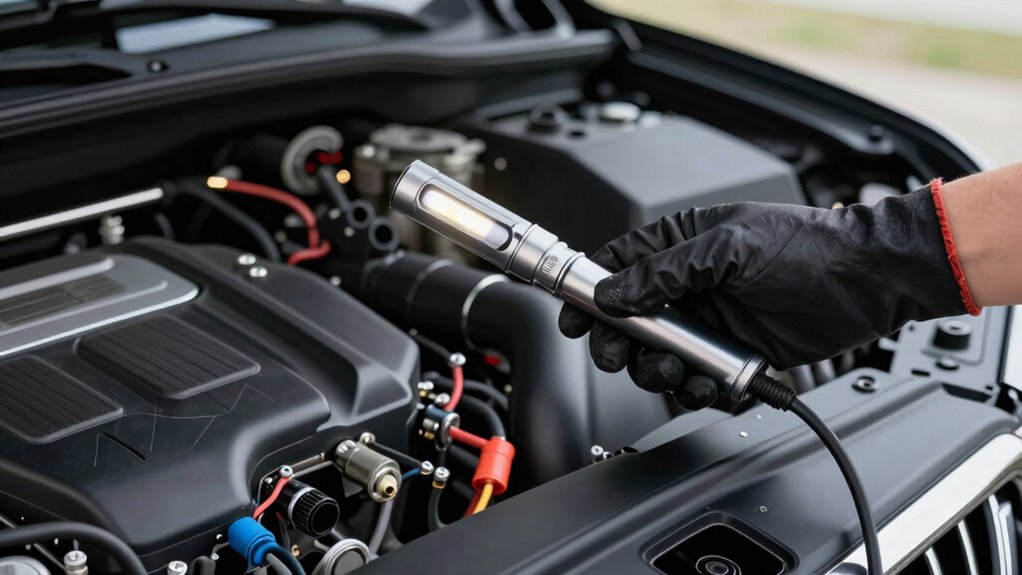
When using a test light on modern cars, always disconnect the negative terminal or turn off the ignition first. Use a high-quality, properly rated test light and double-check wiring diagrams to connect correctly. Be gentle and avoid forcing the test light into tight spots, which can cause shorts or damage. Wearing safety gear and inspecting your tools helps prevent accidents. To keep electronic modules safe and avoid costly repairs, follow these best practices—more helpful tips await if you keep going.

Get business pricing on garage and car supplies
- Business-only prices and quantity discounts
- Tax-exempt purchasing
- Multiple users, one account, clear invoices
Key Takeaways
- Always disconnect the negative terminal or turn off the ignition before testing to prevent accidental shorts.
- Use a high-quality, properly rated test light to avoid damaging sensitive modules or electronics.
- Verify circuit connection points and wiring diagrams to ensure correct testing procedures.
- Handle test lights carefully, probing gently to prevent shorts or damage to wiring and modules.
- Limit test light contact time and avoid applying excessive voltage to protect vehicle electronics.
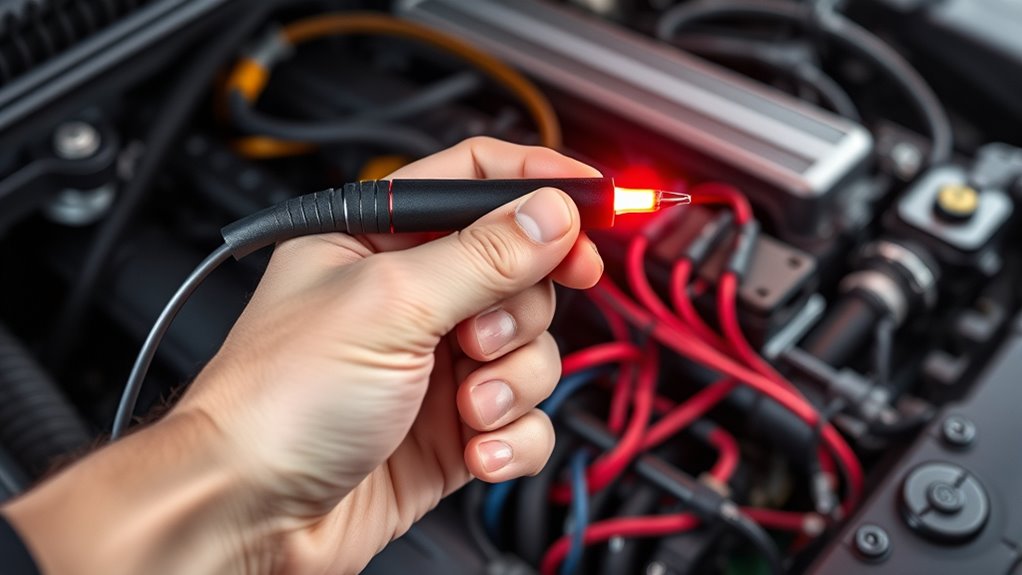
Testing the light circuits on modern cars can be straightforward, but it’s essential to prioritize safety. When working with electrical systems, you need to ensure proper circuit protection to prevent accidental damage and avoid personal injury. One of the biggest risks during testing is blowing a sensitive module or damaging other components, which can be costly and time-consuming to repair. To minimize these risks, always use a quality test light and handle it correctly. Make sure your test light is rated for automotive voltage levels and is in good working condition. Using an improper or faulty test light can lead to false readings or, worse, damage to the vehicle’s electronics.
Before you begin testing, disconnect the negative terminal of the battery or turn off the ignition to eliminate voltage spikes. This simple step helps protect the vehicle’s modules from unexpected power surges. When probing circuits, avoid applying excessive pressure or making contact with unintended components. It’s vital to be precise and gentle, as modern cars have tightly packed wiring and delicate electronic modules. Always verify your test light’s connection points, ensuring you’re testing the correct circuit. Accidental contact with the wrong wire or terminal can cause a short or blow a module.
Disconnect the battery or turn off ignition before testing to prevent damage from power surges.
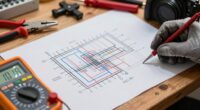
Maintaining technician safety is equally important. Wear insulated gloves and safety glasses to shield yourself from potential sparks or accidental short circuits. Keep your workspace clean and free of clutter to prevent accidental slips or contact with other electrical parts. Carefully read the vehicle wiring diagrams before testing, so you understand which circuits are safe to probe and which require extra caution. Remember that modern cars often have integrated modules that are highly sensitive; applying incorrect voltage or creating a short can wipe out these modules, leading to costly repairs. Proper circuit protection is crucial to avoid such damage.
When testing, use your test light judiciously—don’t leave it connected longer than necessary. If the light indicates a fault, double-check your findings before proceeding with repairs. Avoid “fishing” with the test light or forcing it into tight spaces—this can damage connectors or wiring. Always follow proper procedures and manufacturer guidelines to reduce the risk of circuit damage. Ultimately, by practicing circuit protection and prioritizing technician safety, you can effectively diagnose electrical issues without risking damage to the vehicle’s delicate electronic systems. This careful approach not only saves money but also ensures your safety and the vehicle’s reliability during and after testing.
As an affiliate, we earn on qualifying purchases.
Frequently Asked Questions
Can Test Lights Damage Sensitive Electronic Modules?
Test lights can damage sensitive electronic modules if you’re not careful. Using a test light with poor compatibility or one that delivers too much current risks frying electronic component sensitivity. Always choose a test light designed for automotive use and confirm it’s compatible with modern vehicle electronics. By doing so, you protect your vehicle’s modules from unintended electrical surges, keeping your repairs safe and preventing costly damage.
Are There Specific Test Light Types Safer for Modern Vehicles?
Yes, certain test lights are safer for modern vehicles. LED test lights offer better durability and are less likely to cause damage compared to incandescent ones, which can generate higher voltage spikes. When you choose a test light, opt for LED types to reduce the risk of blowing sensitive modules. Always use a test light with proper insulation and low current to keep your vehicle’s electronics safe during testing.
What Precautions Should Be Taken Before Testing Electrical Systems?
Ever wonder if you’re doing enough before testing? You should always check your grounding precautions and select the right test light to prevent damage. Make sure the vehicle is turned off, disconnect the negative battery terminal if necessary, and wear proper safety gear. Confirm your test light is compatible with modern electronics, avoiding high voltage or current that could blow modules. Are you taking these essential steps to stay safe?
How Do I Identify the Correct Testing Points on a Vehicle?
You identify the correct testing points by consulting the vehicle’s service manual and wiring diagrams. Follow proper testing procedures, ensuring the vehicle is powered off when needed, and use your test light carefully to avoid short circuits. Always prioritize vehicle safety; wear protective gear and double-check connections. Confirm the testing points are labeled or documented, so you don’t accidentally damage sensitive modules or components during your electrical diagnostics.
What Are the Signs of a Blown Module After Testing?
A blown module shows signs like flickering or non-functioning lights, just like a broken switch. After diagnostic procedures and electrical system inspection, you might notice erratic engine behavior, warning lights on the dash, or no response from certain components. These symptoms indicate you should recheck your testing points, as a blown module disrupts normal vehicle operation. Always proceed carefully to avoid further damage during electrical system inspection.
high quality automotive circuit tester
As an affiliate, we earn on qualifying purchases.
As an affiliate, we earn on qualifying purchases.
Conclusion
Remember, testing lights on your modern car is like walking a tightrope—you need focus and caution. A single spark can blow a module, leaving you stranded in the dark. Stay steady, follow safety steps, and treat your vehicle’s electronics like delicate glass. With each careful check, you’re not just avoiding damage—you’re safeguarding the heartbeat of your car. Keep your hands steady, your mind alert, and let safety be your guiding light in every test.
car electrical wiring testing tool
As an affiliate, we earn on qualifying purchases.
As an affiliate, we earn on qualifying purchases.
As an affiliate, we earn on qualifying purchases.
Halloween Picks
halloween
As an affiliate, we earn on qualifying purchases.