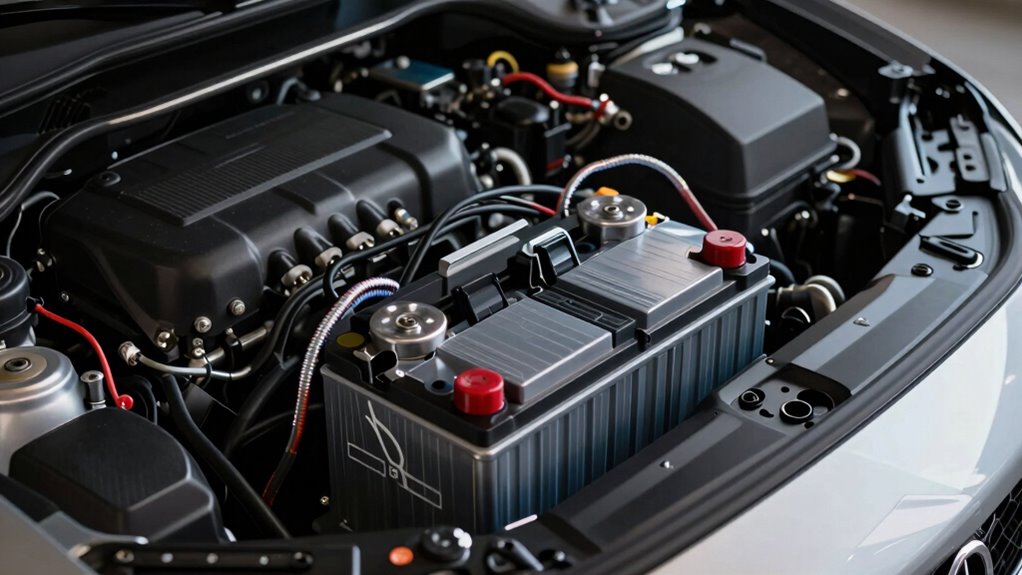

To add a second battery without creating a drain path, you need to install a high-quality automatic isolator or smart relay that manages charging and prevents discharge when the vehicle is off. These devices connect the batteries only during charging, ensuring no current flows back into the main battery when parked. Proper component selection, wiring, and ratings are essential for safety and efficiency. Keep exploring for detailed steps to set up a reliable dual-battery system.
Key Takeaways
- Use a high-quality automatic or smart battery isolator to prevent backflow of current when the engine is off.
- Ensure the isolator is properly rated for your second battery’s capacity and accessory load.
- Install the isolator close to the batteries to minimize wiring length and voltage drops.
- Regularly inspect and maintain the isolator to ensure it functions correctly and prevents parasitic drain.
- Properly wire accessories to the second battery to avoid creating unintended current paths.
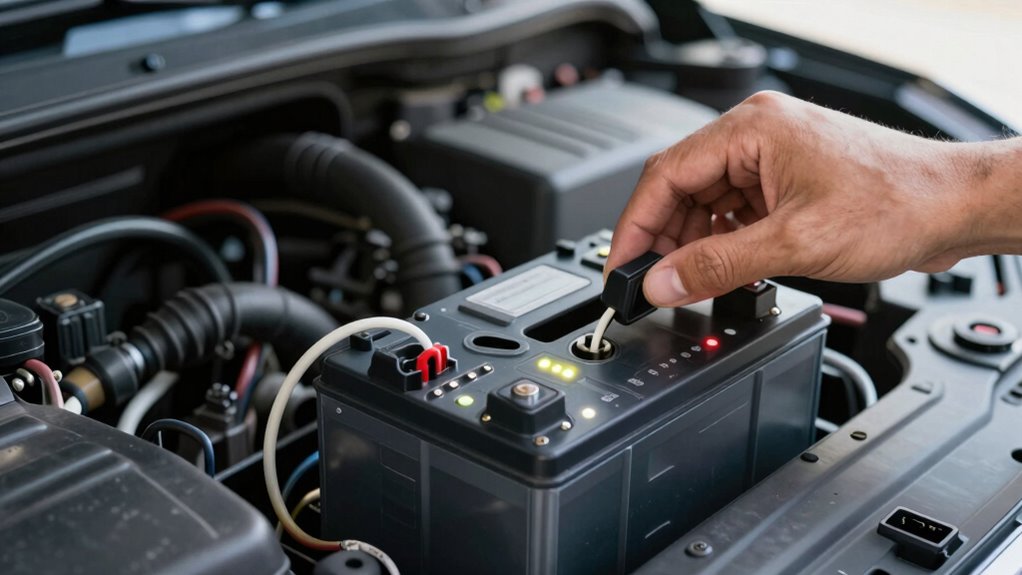
If you’re running multiple accessories or heavy-duty equipment, adding a second battery can considerably improve your vehicle’s power capacity. It allows you to run accessories, such as lights, winches, or audio systems, without draining your primary battery or risking engine start issues. But to do this effectively, you need to set up your second battery correctly, ensuring it won’t create a drain path that could harm your system. The key is understanding how battery capacity and alternator load interact and designing your setup to prevent unintended power losses.
When installing a second battery, you want to make sure it complements your vehicle’s existing electrical system without overloading the alternator. The alternator load is a critical factor because it determines how much power your engine’s electrical system can generate to charge both batteries and supply accessories. If you install a second battery without considering this, you could inadvertently increase the alternator load too much, causing strain on your engine and potential overheating or early failure. To avoid this, choose a battery with the right capacity for your needs — not too large that it demands excessive charging current, but sufficient to support your accessories reliably.
To prevent creating a drain path, you need a proper isolator or a smart relay system between your batteries. These devices ensure that your second battery charges when the engine runs but remains isolated when the engine is off. This setup prevents current from flowing back into the primary battery when you’re parked, avoiding a drain path that could deplete your main battery overnight. When selecting a battery isolator, opt for a high-quality, automatic model that can handle the current your accessories require, and make sure it’s rated for your battery capacity to avoid overloading the system. Additionally, understanding alternator load and how it impacts your system can help you choose the right components for a safe and efficient setup. Proper system design is essential for optimizing performance and durability, ensuring your electrical system remains reliable under various conditions. Using the right wiring practices also helps prevent voltage drops and ensures efficient charging, further protecting your electrical system from unintended drain paths.

VEVOR Split Charge Relay Kit, 6mtr 12V, Automatic Dual Battery Isolator Kit with 140AMP Voltage Sense Relay VSR, Compatible with RV Marine Car Vehicle Truck Caravan Camper Yacht ATV UTV Boats Workshop
Dual Battery Isolator: The smart battery isolator cuts in at 13.3 volts and cuts out at 12.8 volts…
As an affiliate, we earn on qualifying purchases.
As an affiliate, we earn on qualifying purchases.
Frequently Asked Questions
Can I Add a Second Battery to Any Vehicle?
Yes, you can add a second battery to most vehicles, but you need to ensure proper wiring configurations and battery isolation. Using appropriate isolators ensures your batteries don’t drain each other, especially when one is not in use. Carefully plan your wiring setup to prevent any drain paths, and choose a system compatible with your vehicle’s electrical demands. Proper installation guarantees reliable power without risking battery drain or electrical issues.
What Tools Are Needed for Installing a Second Battery?
You’ll need a few key tools to install your second battery smoothly. Grab a battery isolator to prevent drainage, a wrench set to tighten connections, and a voltmeter to check your alternator capacity. Wire cutters and crimpers help with clean connections. Think of these tools as your toolkit for building a reliable power system—each one essential to keep your battery life as steady as the beat of a drum.
How Do I Choose the Right Type of Second Battery?
You should choose a second battery with a similar voltage compatibility to your main battery, guaranteeing proper operation without risking damage. Also, check the battery capacity; selecting one with adequate capacity guarantees it can handle your power needs without draining quickly. Opt for a high-quality, deep-cycle type if you need sustained power, and match the brand or specifications as closely as possible to your primary battery for peak performance.
Will Adding a Second Battery Affect My Vehicle’s Warranty?
You might think adding a second battery will void your warranty, but that’s often a misconception. If you guarantee battery compatibility and install it properly, most vehicle warranties remain intact. However, some manufacturers might see modifications as a risk, so check your warranty terms first. To avoid warranty issues, use quality components, follow proper installation procedures, and consider professional help. This way, you can add a second battery without jeopardizing your warranty.
How Often Should I Check the Second Battery’s Health?
You should check your second battery’s health at least once a month. Regular battery maintenance includes inspecting the terminals for corrosion and ensuring the voltage remains around 12.6 volts when the vehicle is off. Use a voltmeter for accurate voltage monitoring, and keep an eye on any signs of weakness or irregularities. Consistent checks help prevent unexpected failures and extend your second battery’s lifespan, keeping your vehicle reliable.
VEVOR Split Charge Relay Kit, 6mtr 12V, Automatic Dual Battery Isolator Kit with 140AMP Voltage Sense Relay VSR, Compatible with RV Marine Car Vehicle Truck Caravan Camper Yacht ATV UTV Boats Workshop
Dual Battery Isolator: The smart battery isolator cuts in at 13.3 volts and cuts out at 12.8 volts…
As an affiliate, we earn on qualifying purchases.
As an affiliate, we earn on qualifying purchases.
Conclusion
Imagine your vehicle’s power system as a quiet river, flowing smoothly without any unwanted currents. By adding a second battery carefully, you create a resilient reservoir of energy, ready to power your adventures without draining the main source. With the right setup, your journey remains uninterrupted, like a boat gliding effortlessly across calm waters. Keep these tips in mind, and you’ll enjoy a reliable, steady power supply that keeps your travels smooth and worry-free.

Dual Battery Isolator Kit 12V – 140 Amp Voltage Sensitive Relay (VSR) for Dual Battery Setup
Advanced Dual Battery Isolator 12V Kit – Designed for superior performance, this dual battery kit ensures efficient power…
As an affiliate, we earn on qualifying purchases.
As an affiliate, we earn on qualifying purchases.

Nilight – 90015A Battery Switch 12-48V Waterproof Heavy Duty Battery Power Cut Master Switch Disconnect Isolator for Car Vehicle RV and Marine Boat (On/Off),2 Years Warranty
Heavy Duty: ABS plastic housing, durable made for safety use, rear cover insulates terminals against any short of…
As an affiliate, we earn on qualifying purchases.
As an affiliate, we earn on qualifying purchases.