
To perform a quick five-minute starter cable check, start by inspecting both ends of the cable for corrosion, tight connections, and any visible damage or insulation issues. Clean any corrosion with a wire brush or baking soda solution. Use a multimeter to check for electrical continuity—connect probes to each end and look for low resistance. If you find high resistance, the cable may be compromised. Keep going to discover simple steps to guarantee reliable engine starts.

Get business pricing on garage and car supplies
- Business-only prices and quantity discounts
- Tax-exempt purchasing
- Multiple users, one account, clear invoices
Key Takeaways
- Inspect both ends of the cable for tight connections and corrosion deposits, cleaning as needed.
- Check the cable insulation for cracks, cuts, or brittleness to prevent resistance and short circuits.
- Use a multimeter to test electrical continuity, ensuring low resistance for proper power flow.
- Look for discoloration or buildup along the cable, indicating potential internal damage or corrosion.
- Perform these checks quickly to identify hidden resistance and maintain reliable engine starting.
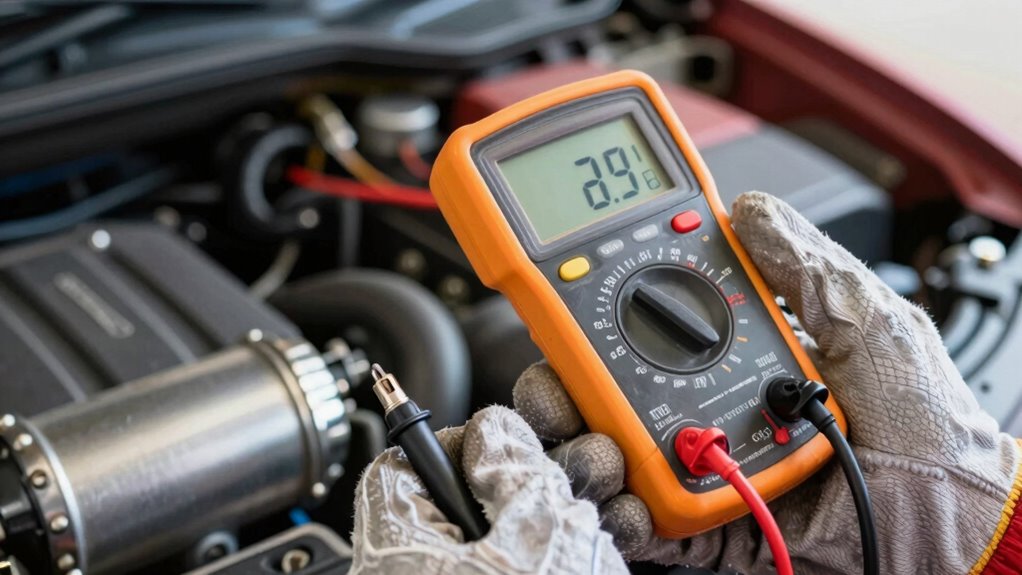
When your vehicle struggles to start, a faulty starter cable could be the culprit. This small component plays a big role in delivering the necessary power from your battery to your starter motor. Over time, issues like battery corrosion and damaged cable insulation can create hidden resistance, making it difficult for your engine to turn over smoothly. That’s why performing a quick, five-minute starter cable check can save you time and money by catching problems early.
Begin by inspecting the cable connections at both ends. Look for signs of battery corrosion—white, powdery deposits around the terminals and cable clamps. Corrosion acts like a barrier, preventing efficient electrical flow and increasing resistance. If you see corrosion, clean the terminals and clamps thoroughly with a wire brush or a mixture of baking soda and water. After cleaning, ensure the connections are tight and secure, as loose fittings can also cause resistance issues. Keep in mind that corrosion isn’t just on the battery terminals; check along the length of the cable for any buildup or discoloration that could hinder conductivity.
Next, examine the cable insulation for damage. Cracks, cuts, or worn spots expose the metal inside, risking further corrosion or short circuits. Damaged insulation can also increase resistance, making it harder for current to reach the starter motor efficiently. If you notice any compromised sections, replace the affected cable promptly. When inspecting, gently bend the cable to see if the insulation cracks or splits; sometimes, heat or age causes brittleness that isn’t immediately obvious. Additionally, understanding cable insulation deterioration can help you recognize early signs of potential failure before it worsens. Regular cable maintenance is essential for preventing electrical issues in your vehicle. Properly maintained cables reduce the risk of internal corrosion that can be difficult to detect without testing. Also, keep in mind that internal corrosion within the cable can sometimes only be detected through testing, emphasizing the importance of electrical testing.
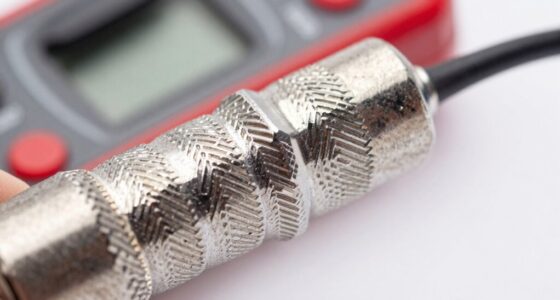
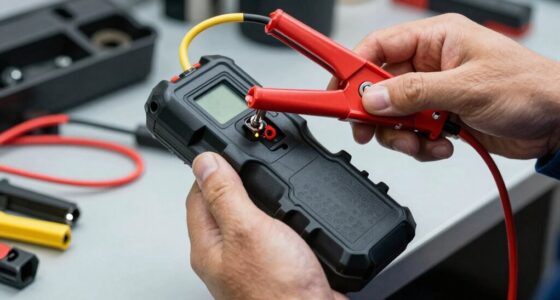
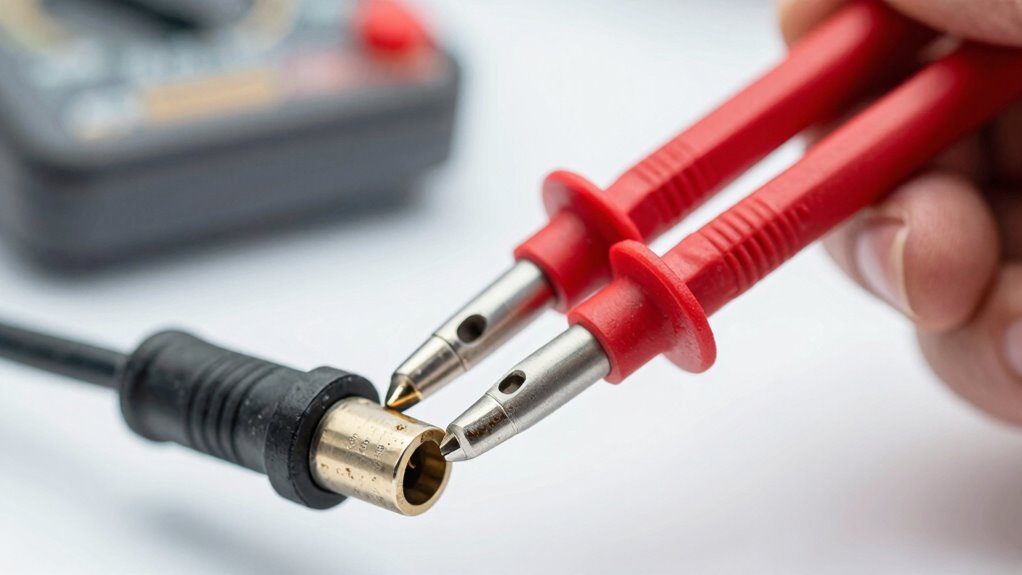
Once you’ve checked the connections and insulation, test the cable’s electrical continuity with a multimeter set to the lowest ohms setting. Disconnect the cable from both ends to prevent false readings. Place one probe on the terminal near the battery and the other on the terminal at the starter. A reading close to zero ohms indicates good conductivity, while a high reading signals resistance, which could be due to corrosion or internal damage. If the resistance is high, replacing the cable is usually the most straightforward fix.
Performing this quick check helps you identify hidden resistance caused by battery corrosion or compromised cable insulation. These issues often go unnoticed but can significantly impair your vehicle’s starting power. By keeping your starter cable clean, intact, and properly connected, you ensure that electricity flows smoothly when you turn the key. This simple, five-minute routine can prevent frustrating starting problems and extend the life of your ignition system.
As an affiliate, we earn on qualifying purchases.
Frequently Asked Questions
Can This Test Diagnose All Types of Cable Faults?
No, this test can’t diagnose all cable faults. It mainly detects hidden resistance caused by issues like degraded cable insulation or connector integrity problems. However, it doesn’t identify faults such as broken conductors or insulation breakdowns that require more thorough testing methods. To guarantee your cables are fully functional, consider combining this quick check with other diagnostic techniques, especially if you suspect complex or internal damage.
What Equipment Is Needed for the Quick Check?
You need a reliable multimeter or a dedicated cable tester for a quick check. Before testing, make certain your equipment is properly calibrated to guarantee accurate results. Always prioritize cable safety by disconnecting power and inspecting cables for visible damage. Using calibrated equipment helps detect hidden resistance that could cause faults. A simple, quick test with the right tools can identify potential issues early, preventing costly failures and ensuring safe operation.
How Often Should I Perform This Cable Check?
You should perform this cable check regularly, ideally before each use or at least once a month, to guarantee safety and reliability. During the check, inspect the cable insulation for any damage and perform voltage testing to identify hidden resistance. Regular testing helps catch issues early, preventing unexpected failures and maintaining peak performance. Staying consistent with these checks keeps your equipment safe and functioning efficiently.
Does Temperature Affect the Resistance Reading?
Yes, temperature impact can affect resistance readings, causing variability. When temperatures rise, resistance usually increases, while colder conditions tend to lower it. This resistance variability means you should perform cable checks in consistent conditions or account for temperature changes for accurate results. Understanding this helps you get a clearer picture of your starter cable’s health, ensuring you catch hidden resistance issues before they cause problems.
Can This Method Be Used on Underwater Cables?
You can use this method on underwater cables, but you need to account for underwater insulation and marine corrosion. Water, especially saltwater, can affect resistance readings, making it tricky to interpret results accurately. Marine corrosion can also cause hidden resistance issues. Make sure your testing equipment is waterproof and properly insulated, and consider additional assessments specific to marine environments to get reliable results on underwater cables.
multimeter for automotive testing
As an affiliate, we earn on qualifying purchases.
As an affiliate, we earn on qualifying purchases.
Conclusion
Now that you’ve completed this quick starter cable check, you’ve revealed the secret pathway to a reliable connection. Think of it as a detective’s keen eye catching the tiniest clues before they become big problems. With just five minutes, you’ve become the guardian of your engine’s heartbeat, ensuring it purrs smoothly without hidden resistance lurking in the shadows. Keep this simple ritual in your toolbox—your vehicle will thank you with every start, ready to roar to life whenever you need it.
As an affiliate, we earn on qualifying purchases.
starter cable insulation repair kit
As an affiliate, we earn on qualifying purchases.
As an affiliate, we earn on qualifying purchases.
Fall Picks
fall essentials
As an affiliate, we earn on qualifying purchases.