

To test your fridge’s power, start by measuring its energy use over a typical week with a power meter. Record the daily consumption and note any irregularities, like increased noise or longer cooling times. Check and maintain door seals, coils, and temperature settings regularly to keep it efficient. Monitoring these factors helps spot issues early and optimize performance. Keep exploring to discover more tips for maintaining your fridge’s efficiency and longevity.

Get business pricing on garage and car supplies
- Business-only prices and quantity discounts
- Tax-exempt purchasing
- Multiple users, one account, clear invoices
Key Takeaways
- Measure the fridge’s power consumption over a typical day using a plug-in power meter.
- Record temperature fluctuations to ensure optimal cooling efficiency during real-world operation.
- Observe noise levels and cycling patterns to identify signs of inefficiency or maintenance needs.
- Track energy use during different load conditions, such as full vs. partial fridge contents.
- Compare actual energy consumption with manufacturer specifications to assess real-world performance.
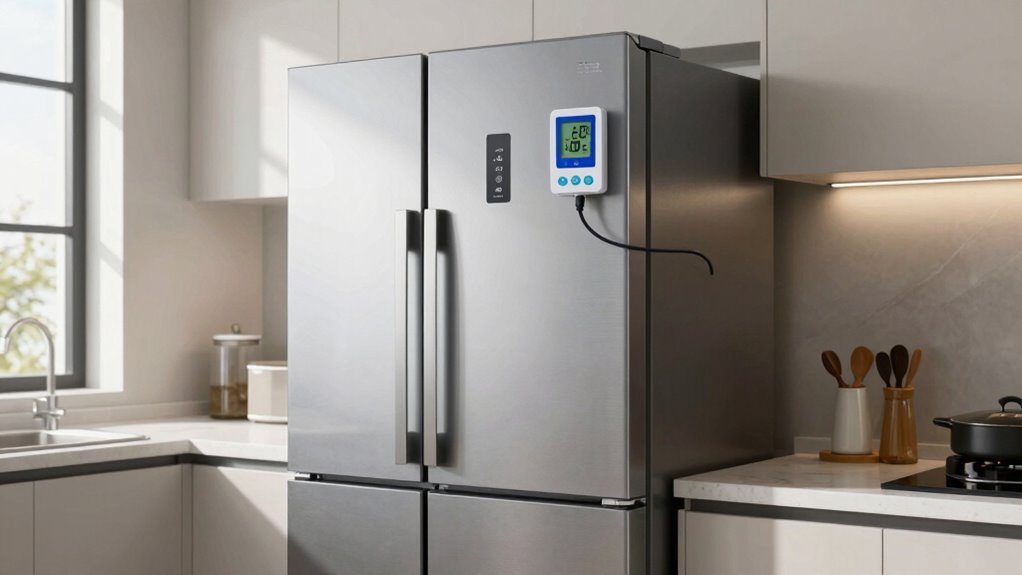
Have you ever wondered how much power your fridge consumes and whether it’s operating efficiently? Understanding this is key to managing your energy costs and guaranteeing your appliance lasts longer. The real-world test for fridge power planning involves more than just glancing at your energy bill; it requires observing your fridge’s behavior over time and making adjustments based on its performance. Energy efficiency isn’t just a marketing buzzword—it’s about how well your fridge uses power to do its job. A highly energy-efficient fridge can save you money and reduce your carbon footprint, but to maintain that efficiency, you need to stay on top of maintenance scheduling. Regularly monitoring your appliances’ performance can help identify issues early and ensure they operate at peak efficiency.
Monitoring your fridge’s performance over time helps maintain efficiency and extend its lifespan.
The first step is to track how often your fridge runs. If it’s constantly cycling on and off, it might be a sign that it’s working harder than it should be. This could be due to poor insulation, dirty coils, or a faulty door seal. By scheduling regular maintenance, you keep these issues in check and keep your appliance running smoothly. Cleaning the coils every six months, for example, can substantially improve energy efficiency. A dirty coil forces the compressor to work harder, consuming more power and increasing wear and tear. Similarly, inspecting door seals ensures that cold air stays inside, preventing your fridge from overworking to maintain the desired temperature. Proper refrigeration system maintenance can also improve overall cooling performance and energy use. Additionally, understanding how energy-efficient appliances operate can help you make more informed decisions about your appliance choices and usage habits.
Next, you should pay attention to the temperature settings. Setting your fridge too cold wastes energy, while too warm can compromise food safety. The ideal temperature for most fridges is around 37°F (3°C). Use a thermometer to verify the internal temperature periodically, adjusting the thermostat as needed. This simple step can make a big difference in energy consumption and help you avoid unnecessary expenses. Knowing the energy consumption patterns of your appliances can give you insights into how to optimize their efficiency further.
Monitoring your fridge’s performance over time also involves observing its noise level and cooling efficiency. If your fridge suddenly starts making louder noises or takes longer to cool, it’s a sign that maintenance might be overdue. Addressing these issues promptly through scheduled inspections can prevent costly repairs and extend its lifespan. Remember, proactive maintenance is more cost-effective than reactive fixes.
As an affiliate, we earn on qualifying purchases.
Frequently Asked Questions
How Often Should I Recalibrate My Fridge’s Energy Usage?
You should recalibrate your fridge’s energy usage every year or after any significant changes, like relocating the appliance or replacing parts. Conducting an energy audit and usage monitoring helps you identify efficiency issues. Regular recalibration guarantees accurate energy tracking, saving you money and extending your fridge’s lifespan. Keep an eye on your utility bills and performance, and recalibrate when you notice unusual increases or after maintenance to stay on top of efficiency.
What Environmental Factors Most Affect Fridge Power Consumption?
Ambient temperature and humidity levels are the main environmental factors affecting your fridge’s power consumption. When temperatures rise, your fridge works harder to maintain its cool interior, increasing energy use. High humidity adds to this load by making the compressor run longer to remove excess moisture. To save energy, keep your fridge in a cool, dry spot away from direct sunlight and heat sources, and guarantee proper ventilation.
Can Power Planning Improve Fridge Lifespan?
Power planning can indeed improve your fridge’s lifespan. Studies show that optimizing energy use reduces wear and tear, leading to a 15% increase in appliance longevity. By focusing on energy optimization, you not only extend your fridge’s life but also enjoy significant cost savings over time. Proper power management minimizes strain on components, helping your appliance run efficiently longer and saving you money on repairs and replacements.
What Are Common Mistakes in Fridge Power Testing?
You often make mistakes in fridge power testing by skipping a thorough energy audit first. Without analyzing your fridge’s actual power consumption, you might misjudge its efficiency. Relying solely on theoretical calculations can lead to incorrect power optimization. Make certain you measure real-world usage, compare it with manufacturer specs, and avoid assumptions. This way, your testing becomes accurate, helping you optimize power usage and potentially extend your fridge’s lifespan.
How Do I Interpret Test Results for Real-World Efficiency?
You quickly realize that interpreting test results hinges on understanding energy consumption and efficiency metrics. When you compare data, look for lower energy use indicating higher efficiency. Watch for anomalies or spikes, which could mean issues. Track over multiple tests to spot patterns. If results show consistent, low energy consumption, your fridge operates efficiently in real-world conditions. This insight guides your decisions on energy savings and appliance performance.
refrigerator coil cleaning brush
As an affiliate, we earn on qualifying purchases.
As an affiliate, we earn on qualifying purchases.
Conclusion
As you navigate the fridge power planning test, remember it’s like steering a ship through unpredictable waters, where foresight keeps you afloat. By understanding your energy needs, you’re charting a course through the storm, avoiding unseen icebergs of wasted power. With careful planning, your fridge becomes a steady lighthouse, guiding you safely toward efficiency. Embrace this challenge, and like a seasoned sailor, you’ll master the art of balancing power and practicality on your journey.
As an affiliate, we earn on qualifying purchases.
As an affiliate, we earn on qualifying purchases.
Halloween Picks
halloween
As an affiliate, we earn on qualifying purchases.