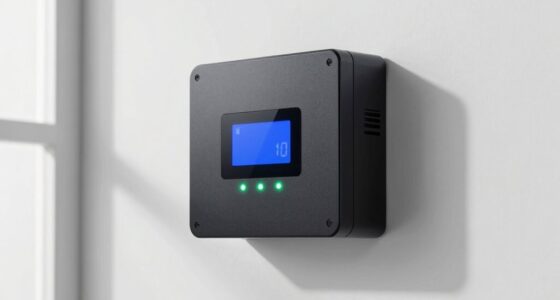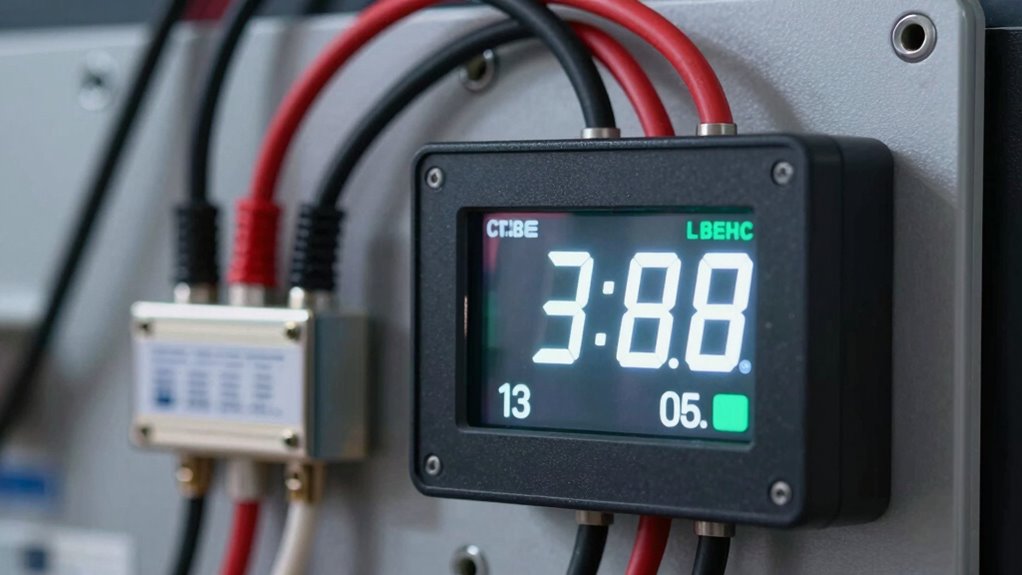

A shunt meter measures current flow by passing a small, precise resistor (the shunt) in series with your battery. When current moves through the shunt, it creates a tiny voltage drop that sensors detect, providing real-time data on how much energy is being used or supplied. Unlike voltage alone, this method shows recent energy activity, helping you understand battery health and performance more accurately. Keep exploring to discover how this enhances your battery monitoring system.

Get business pricing on garage and car supplies
- Business-only prices and quantity discounts
- Tax-exempt purchasing
- Multiple users, one account, clear invoices
Key Takeaways
- Shunt meters measure current flow by detecting voltage drops across a precise resistor, revealing information voltage alone cannot provide.
- They capture small, rapid current changes, enabling detection of recent high-current draws or uneven discharge patterns.
- Shunt-based sensing enhances battery health assessment by providing real-time current data, supplementing voltage readings.
- Unlike voltage measurements, shunt meters directly quantify actual current, offering more accurate insights into energy usage.
- Integrating shunt measurements allows for better energy management, lifespan extension, and more reliable battery monitoring.
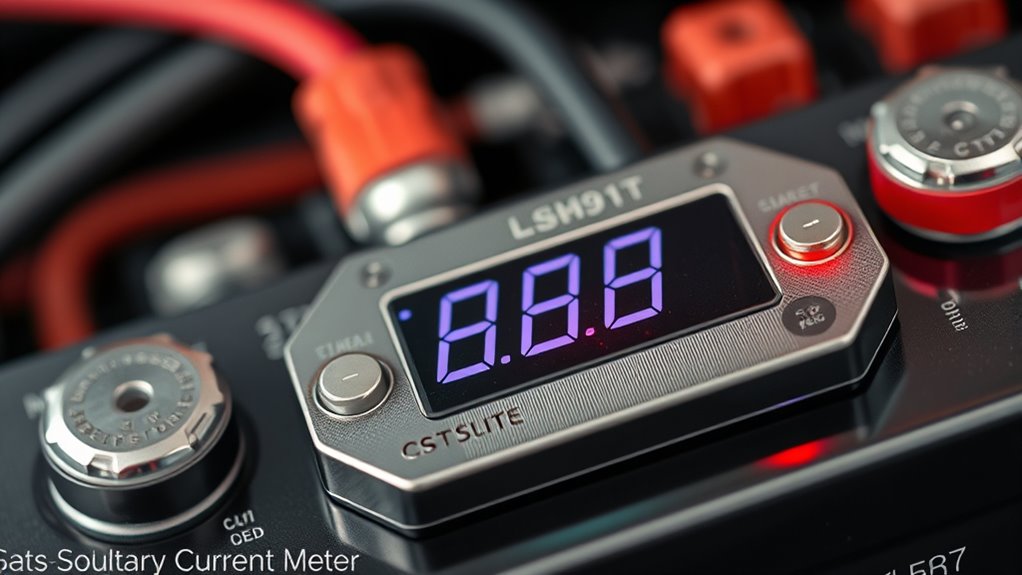
Understanding how current sensing works also helps you interpret your monitor’s readings better. If you notice the state of charge doesn’t match your expectations, it might be due to factors like uneven discharge or recent high-current draws. Knowing that your monitor relies on current sensing rather than voltage alone helps you trust its readings and adjust your usage accordingly. Plus, because most shunt-based systems are highly accurate and sensitive, they can detect even small changes in current that voltage readings might miss. Additionally, understanding the difference between SACC vs BTU can help you optimize your energy management strategies for various applications. In essence, a battery monitor that uses current sensing through a shunt resistor provides a much clearer, more reliable picture of your battery’s health. It bridges the gap that voltage measurements often leave, giving you the confidence to manage your power resources effectively. By understanding the role of current sensing in tracking the state of charge, you can make smarter decisions, extend your battery’s lifespan, and guarantee your power system runs smoothly.
Frequently Asked Questions
How Long Do Shunt Meters Typically Last?
Shunt meters usually last around 10 to 15 years, depending on their quality and usage. Their lifetime expectancy can be prolonged with regular calibration, ideally once a year, to guarantee accuracy. You should also check for corrosion or damage periodically. Proper maintenance and choosing a high-quality shunt meter can maximize its lifespan, helping you get reliable readings and avoid costly replacements down the line.
Can Shunt Meters Be Used With All Battery Types?
Did you know shunt meters are compatible with most battery types? You can use them with various battery chemistries like lead-acid, lithium-ion, and AGM. Just keep in mind, temperature effects can influence readings, so monitor battery temperature for accuracy. While shunt meters are versatile, always check manufacturer guidelines to guarantee compatibility with your specific battery chemistry, especially if you’re working with specialized or sensitive batteries.
What Maintenance Is Required for Shunt Meters?
You need to regularly check your shunt meter’s calibration and guarantee it stays accurate. Follow proper installation procedures, like securely connecting it to the battery system and avoiding loose wiring, to keep it functioning properly. Periodic calibration is essential, especially if you notice inconsistent readings. Keep the shunt clean and inspect it for corrosion or damage, and consult the manufacturer’s manual for specific maintenance guidelines to prolong its lifespan.
How Accurate Are Shunt Meters Over Time?
Shunt meters remain quite accurate over time if you regularly check calibration accuracy and account for environmental effects. Factors like temperature fluctuations or vibrations can impact readings, so you should periodically calibrate your device and keep it in a stable environment. Proper maintenance and awareness of these influences help guarantee your shunt meter provides reliable measurements, giving you confidence in your battery system’s performance over the long term.
Are There Any Safety Concerns When Installing Shunt Meters?
When installing shunt meters, you should prioritize installation safety to prevent electrical hazards. Always disconnect the power source before starting, wear appropriate protective gear, and follow the manufacturer’s instructions carefully. Avoid working on live circuits to reduce the risk of shocks or short circuits. Properly secure wiring and ensure connections are tight to prevent overheating. Taking these precautions helps you avoid electrical hazards and guarantees a safe, effective installation.
Conclusion
By mastering the basics of battery monitors, you’ll better balance and boost your battery’s brilliance. Shunt meters show you what voltage can’t, saving space and sparking smarter decisions. With a little knowledge, you’ll confidently control current, clarify conditions, and conquer common concerns. Keep keen, stay savvy, and see how simple, steady monitoring sustains your system’s strength. Embrace the essentials, enhance your understanding, and enjoy the empowering experience of effective energy management.
Halloween Picks
halloween
As an affiliate, we earn on qualifying purchases.