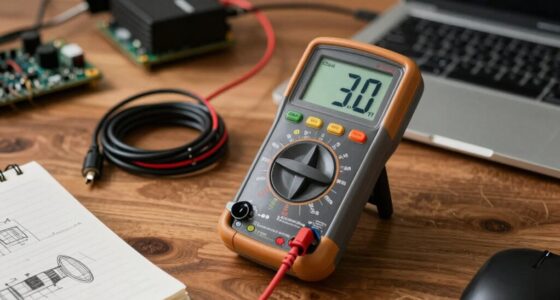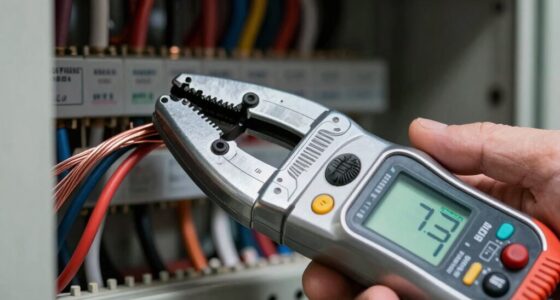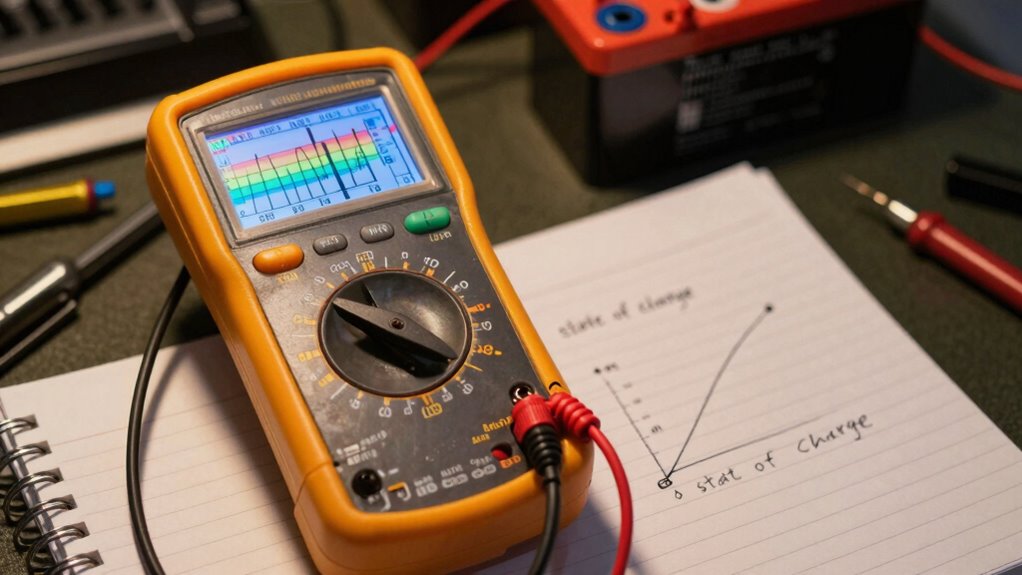

When you check shunt data, amps measure real-time blood flow, while amp-hours show the total volume passed over time. ‘State of charge’ drifts occur due to environmental factors, device aging, or sensor shifts, which can mislead your readings. Regular battery calibration helps keep data precise by resetting system baselines. If you want to understand how these factors affect your measurements and guarantee reliable results, learn more about maintaining measurement accuracy.

Get business pricing on garage and car supplies
- Business-only prices and quantity discounts
- Tax-exempt purchasing
- Multiple users, one account, clear invoices
Key Takeaways
- Amps indicate real-time blood flow through the shunt, while amp-hours measure total blood volume over time.
- ‘State of Charge’ drift results from environmental factors, device aging, or sensor misalignment affecting measurement accuracy.
- Regular battery calibration resets measurement baselines, preventing drift and ensuring data reflects actual physiological changes.
- Fluctuations in readings can stem from patient activity, sensor placement, or device sensitivity, necessitating proper calibration and positioning.
- Consistent calibration and correct sensor placement are essential for reliable interpretation of shunt data and blood flow assessment.
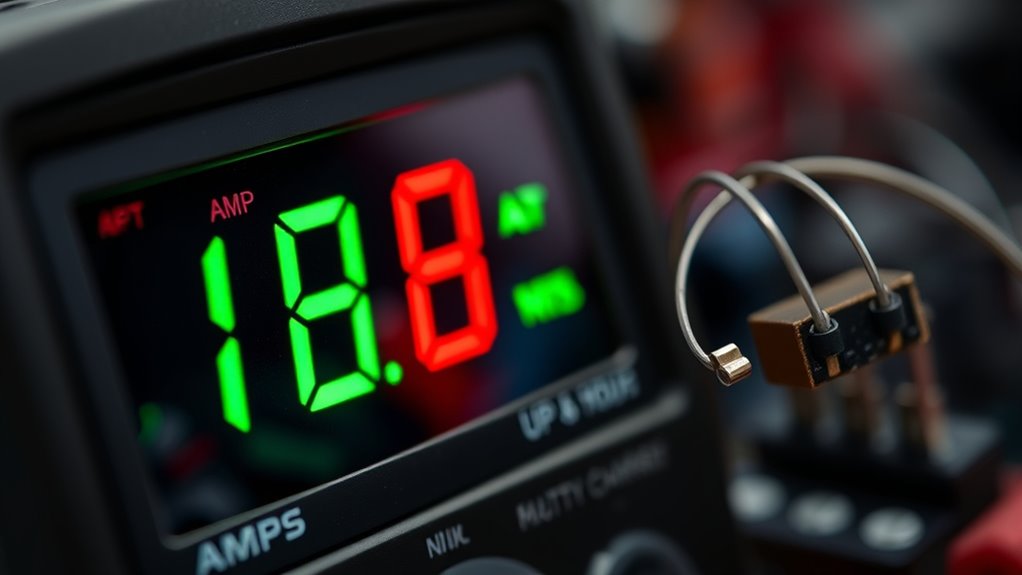
Understanding how to read shunt data is essential for accurately evaluating blood flow and diagnosing cardiovascular conditions. Shunt data provides critical insights into the movement of blood through various parts of the circulatory system, and interpreting this data correctly can make the difference between a proper diagnosis and missed warning signs. To do this effectively, you need to understand the importance of battery calibration, especially if your measurement system relies on electronic sensors or devices that depend on accurate power sources. Battery calibration ensures that the data you collect is precise, preventing errors caused by voltage fluctuations or inaccurate readings due to a miscalibrated power supply. When you keep your device well-calibrated, you’ll have confidence that the amps and amp-hours recorded truly reflect the blood flow rates, making your data interpretation more reliable.
As you analyze shunt data, pay close attention to the readings of amps and amp-hours. Amps indicate the current flow, which correlates directly with the volume of blood passing through a shunt in real time. Amp-hours, on the other hand, measure the total amount of charge transferred over a period, giving you an overall picture of blood flow over time. When interpreting these values, consider that fluctuations can occur due to various factors, including patient activity, measurement device sensitivity, or even sensor placement. It’s vital to understand that small variations are normal, but consistent drifts in the data may signal issues such as sensor drift or device malfunction. Regularly calibrating your measurement device — especially after periods of heavy use or transport — helps minimize these drifts, ensuring your readings stay accurate. Additionally, understanding the role of navigation and mapping in sensor placement can improve measurement accuracy and data reliability.
You must also understand why the ‘state of charge’ can drift during measurements. While this term is often associated with batteries, in the context of blood flow monitoring, it refers to the overall status of the measurement system, which can fluctuate due to environmental factors, device aging, or changes in patient physiology. Drifting ‘state of charge’ can lead to misinterpretation of the flow data, making it seem like blood flow is increasing or decreasing when it isn’t. To prevent this, you should regularly perform battery calibration procedures, which reset the system’s baseline and help maintain data accuracy. Proper calibration and vigilant data interpretation allow you to distinguish genuine physiological changes from measurement artifacts, providing a clearer picture of the patient’s cardiovascular health.
battery calibration device for medical sensors
As an affiliate, we earn on qualifying purchases.
As an affiliate, we earn on qualifying purchases.
Frequently Asked Questions
How Do Temperature Changes Affect Shunt Readings?
Temperature changes can cause shunt readings to drift, affecting accuracy. You should use temperature compensation techniques and calibration methods to rectify this. When temperatures rise or fall, the shunt’s resistance may change, skewing current measurements. Regular calibration, especially under different temperature conditions, helps ensure your readings stay accurate. By applying these methods, you can maintain reliable shunt data regardless of temperature fluctuations, ensuring precise monitoring of your system.
Can Shunt Data Predict Battery Failure?
Predicting battery failure with shunt data is like catching a whisper before it turns into a roar. By tracking changes in current, amp-hours, and voltage, you can spot early signs of deterioration. This monitoring accuracy helps extend battery lifespan, but it isn’t foolproof. Keep a close eye on trends, and you might prevent a sudden failure—making your system safer and more reliable.
What’s the Best Way to Calibrate a Shunt?
To calibrate a shunt effectively, you should start by measuring a known current, then compare it to the shunt’s reading. Adjust for voltage offsets and verify your measurement setup is stable. Use precise equipment, record the readings, and apply calibration factors to correct any discrepancies. Regularly repeat this process to maintain accuracy, especially if your system experiences temperature changes or other environmental shifts that might affect the shunt’s performance.
How Do You Troubleshoot Inconsistent Shunt Readings?
To troubleshoot inconsistent shunt readings, start by checking for voltage fluctuations that might cause erratic data. Confirm wiring quality is solid—loose or corroded connections can lead to inaccuracies. Use a multimeter to verify voltage levels at the shunt and confirm all connections are tight and clean. If issues persist, test the shunt with a known good one or re-calibrate to rule out equipment faults.
Are There Digital Shunts With Built-In Diagnostics?
Yes, there are digital shunts with built-in diagnostics that enable smart monitoring. These devices automatically check their connections, detect faults, and provide real-time data on performance, making troubleshooting much easier. With digital diagnostics, you get clearer insights into your battery system’s health and efficiency, helping you avert issues before they escalate. Investing in a smart monitoring shunt ensures more accurate readings and simplifies maintenance, giving you peace of mind.
blood flow monitoring shunt system
As an affiliate, we earn on qualifying purchases.
As an affiliate, we earn on qualifying purchases.
Conclusion
So, now you know why your battery’s “state of charge” keeps drifting—blame the sneaky shunt. It’s not magic; it’s just science, or maybe a bit of witchcraft. Next time your readings seem to wander off, remind yourself it’s all about amps and amp-hours playing tricks. Embrace the chaos, because understanding your shunt’s antics keeps you one step ahead in the battery game—until it decides to surprise you again. Stay vigilant, and don’t trust that little box too much!
electronic sensor calibration tools
As an affiliate, we earn on qualifying purchases.
As an affiliate, we earn on qualifying purchases.
As an affiliate, we earn on qualifying purchases.
Halloween Picks
halloween
As an affiliate, we earn on qualifying purchases.