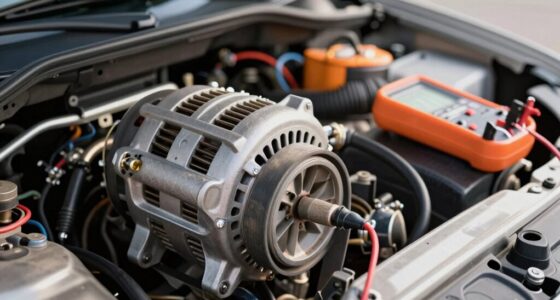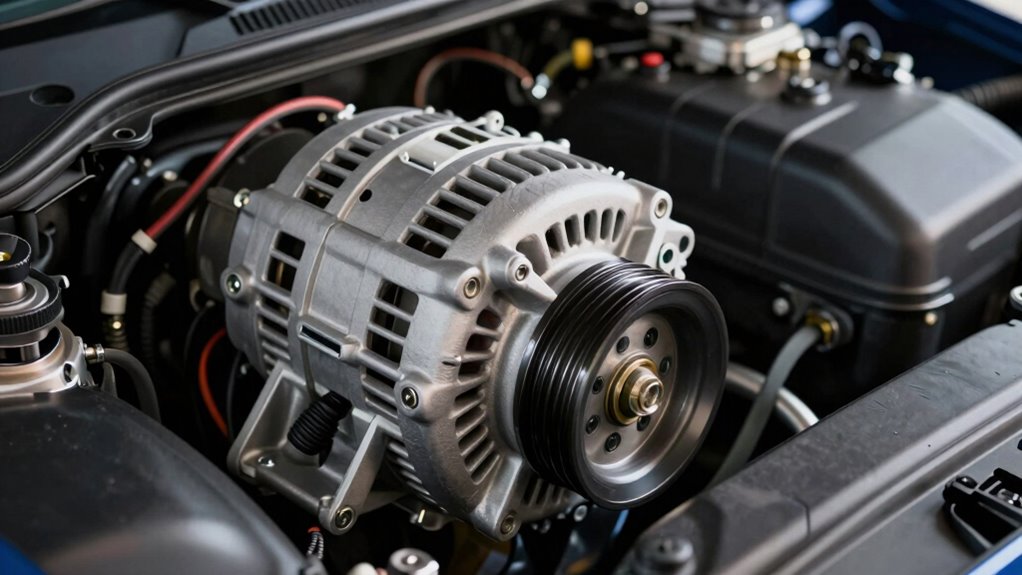

Alternator amperage ratings show how much current your vehicle’s electrical system can produce at once. A higher rating means your system can handle more accessories like sound systems, lights, or other gadgets without flickering or failure. It’s important because your alternator needs to supply enough power during startup and high-demand situations. If your system isn’t properly matched, you might experience electrical issues or battery drain. Keep going to learn how to choose the right alternator for real-world loads.

Get business pricing on garage and car supplies
- Business-only prices and quantity discounts
- Tax-exempt purchasing
- Multiple users, one account, clear invoices
Key Takeaways
- Alternator amperage ratings indicate the maximum current it can generate under ideal conditions, not always the actual output during real loads.
- Real-world electrical demands fluctuate; the alternator adjusts its output to meet current needs, ensuring stable vehicle operation.
- Higher amperage ratings support additional accessories and prevent electrical system strain during high-demand situations.
- An undersized alternator may struggle to power all components, leading to dimming lights, battery drain, or electrical failures.
- Proper alternator sizing ensures efficient charging, reliable performance, and prevents premature battery or component failure.

Have you ever wondered how your vehicle’s alternator keeps all your electrical components running smoothly? The answer lies in understanding alternator amperage ratings. These ratings tell you how much current, measured in amps, the alternator can generate to power your electrical system and charge your battery simultaneously. When your engine runs, the alternator acts as the heart of your vehicle’s electrical system, ensuring your battery stays charged and your electronic devices operate reliably.
Understanding your vehicle’s alternator amperage ratings helps ensure reliable power and battery health during operation.
A higher amperage rating generally means your alternator can produce more electrical current. This becomes especially important if you have added accessories like a powerful sound system, additional lighting, or electronic devices that draw extra power. If your alternator’s capacity isn’t sufficient for your needs, your battery may struggle to stay charged, and electrical components could flicker or malfunction. Conversely, a higher-rated alternator can handle increased loads with ease, providing steady power and reducing strain on your battery.
It’s vital to recognize that the rated amperage isn’t just about maximum output. It indicates the maximum current the alternator can safely supply under ideal conditions. In real-world driving, the actual current delivered fluctuates based on your electrical demands. For example, if you’re using the headlights, defrosters, and a high-performance audio system simultaneously, your alternator’s output will ramp up to meet these demands. If the load exceeds your alternator’s capacity, your battery might compensate temporarily, but this can lead to quicker battery drain over time. That’s why choosing an alternator with an appropriate amperage rating for your vehicle’s electrical system is essential to guarantee reliable operation.
Understanding alternator ratings also helps you make informed decisions during upgrades or replacements. If you install new accessories, you may need a higher amperage alternator to prevent electrical issues down the line. Keep in mind that an alternator’s ability to charge the battery efficiently depends on its amperage capacity. A well-matched alternator ensures your battery charges properly while powering all your electronic needs, ultimately extending the lifespan of your battery and preventing unexpected failures. Additionally, proper alternator sizing can help you avoid unnecessary wear and tear on your vehicle’s electrical system, saving you money in the long run.
high amperage alternator for cars
As an affiliate, we earn on qualifying purchases.
As an affiliate, we earn on qualifying purchases.
Frequently Asked Questions
How Does Alternator Amperage Affect Fuel Efficiency?
Higher alternator amperage can improve fuel efficiency by better handling your electrical load, reducing battery drain, and preventing the alternator from working harder than necessary. When your electrical demands increase, a higher-rated alternator supplies power more efficiently, saving fuel. Conversely, a lower amperage alternator may struggle to meet your electrical needs, causing increased engine effort and fuel consumption. Choose an alternator that matches your typical electrical load for ideal efficiency.
Can a Higher Amperage Alternator Damage My Vehicle’s Electrical System?
A higher amperage alternator won’t instantly destroy your vehicle’s electrical system, but it can cause serious issues if it leads to battery overload or wiring damage. Pushing your system beyond its limits risks overheating wires and damaging delicate components. You should verify your alternator’s rating matches your vehicle’s needs. Otherwise, you might be playing a dangerous game with your electrical system’s health, risking costly repairs down the line.
What Signs Indicate My Alternator Is Underperforming?
You’ll notice signs of an underperforming alternator through battery drain, especially if your battery keeps losing charge. Warning indicators like a dimming dashboard light or the battery warning light glowing are common. You might also experience electrical issues, such as flickering headlights or malfunctioning accessories. If these symptoms persist, it’s time to have your alternator tested, as it may not be providing enough power to meet your vehicle’s demands.
Is It Worth Upgrading to a Higher Amperage Alternator?
Upgrading to a higher amperage alternator can be worth it if you frequently run high-demand accessories, as it provides 20-30% more power. While the upgrade costs vary, a more powerful alternator can extend its lifespan by reducing strain. If you’re adding significant electrical loads, investing in a higher amperage alternator guarantees reliable performance and avoids premature failure, making it a smart long-term choice.
How Do Temperature Changes Impact Alternator Performance?
Temperature changes can considerably impact your alternator’s performance. As it heats up, thermal expansion occurs in internal components, which may reduce efficiency or cause wear over time. Cooler temperatures enhance cooling effects, helping keep the alternator running at its best. Conversely, high temperatures can lead to overheating and potential failure. To maintain performance, make sure proper ventilation and consider upgraded cooling systems if you operate under demanding conditions or in hot environments.
As an affiliate, we earn on qualifying purchases.
Conclusion
So, next time you see a shiny alternator boasting a high amperage rating, remember—it’s not a magic number for all your gadgets. Ironically, that hefty rating might be barely enough for your daily load, let alone future upgrades. Don’t be fooled by the numbers; real-world demands often surprise you. In the end, understanding what those ratings truly mean can save you from unexpected power struggles—because sometimes, more amps just aren’t enough.
As an affiliate, we earn on qualifying purchases.
auto electrical system accessories
As an affiliate, we earn on qualifying purchases.
As an affiliate, we earn on qualifying purchases.
Fall Picks
fall essentials
As an affiliate, we earn on qualifying purchases.