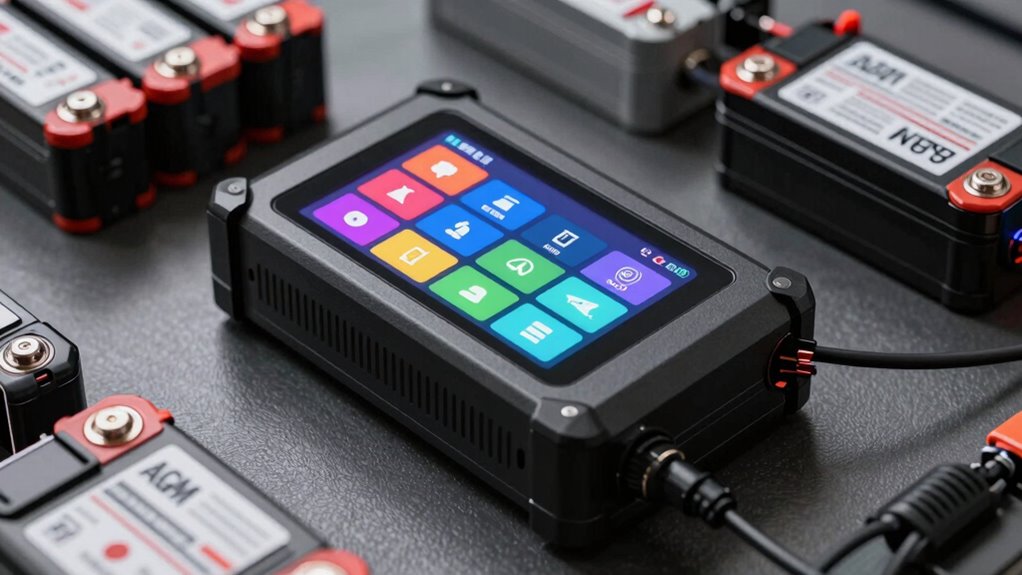

To properly set your battery maintainer, match the voltage and current to your battery type—around 14.4V–14.5V for AGM and slightly lower, like 13.6–13.8V, for lithium (LiFePO4). Keep current limits at 1-2% of capacity for maintenance, and avoid overcharging by using a charger with automatic shutoff. Maintaining correct settings prolongs battery life and safety. Continue exploring to learn precise configuration tips tailored to your batteries.
Key Takeaways
- Use smart chargers with three-stage profiles: bulk (14.4-14.5V), absorption, and float (≤13.6V) for AGM batteries.
- Set lithium maintainer float voltage at 13.6-13.8V and limit current to 1-2% of capacity for safe, effective maintenance.
- Match maintainer output to battery capacity, typically 1-2% for lithium and 5-10% for AGM, ensuring proper sizing and safety.
- Store batteries in a cool, dry place, fully charged, and periodically check voltage to prevent over- or undercharging.
- Maintain voltage and current limits per manufacturer specs, avoiding overvoltage and ensuring safety for both AGM and lithium batteries.
Understanding AGM Battery Charging Requirements
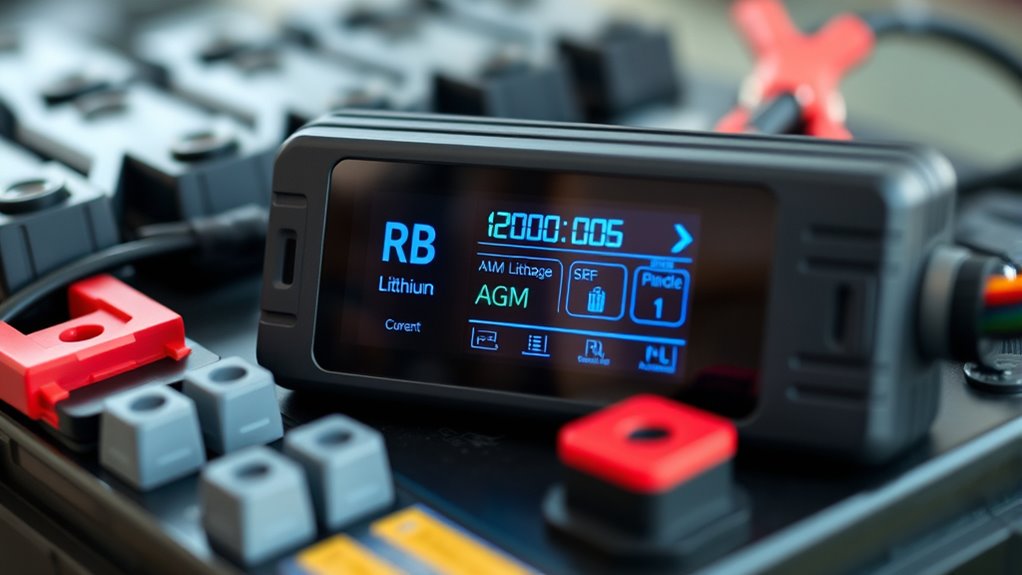
Understanding AGM battery charging requirements is essential to guarantee ideal performance and longevity. To start, always fully charge your AGM battery before first use to establish a solid baseline. Use a smart three-phase charger that includes bulk, absorption, and float stages. During bulk charging, deliver high current until the voltage reaches around 14.4V-14.5V, then switch to absorption to gradually top off the battery at that voltage. Once fully charged, switch to float mode at approximately 13.6V to maintain the charge without overcharging. Avoid excessive voltage, as it can cause overheating and safety valve activation. Ensure your charger’s capacity is 5-10% of your battery’s capacity for regular charging. Properly managing these charging requirements helps maximize your AGM battery’s lifespan and reliable performance. Additionally, understanding the contrast ratio of your projector can significantly enhance your viewing experience by providing deeper blacks and brighter whites, especially in dark scenes. Being aware of environmental factors, such as temperature and humidity, can also influence optimal charging practices and battery health. Maintaining optimal battery temperature during charging can prevent capacity loss and improve overall performance. Proper ventilation around the battery during charging helps dissipate heat and prolong battery life. Moreover, monitoring the state of charge regularly ensures you do not over-discharge the battery, preserving its capacity over time.
Optimal Settings for AGM Battery Maintainers
To guarantee your AGM battery stays healthy and performs reliably, setting your maintainer correctly is essential. First, ensure the maintainer provides a bulk charge at around 14.4V to 14.5V, followed by a controlled absorption phase. Keep the float voltage at or below 13.6V to prevent overcharging. Avoid exceeding 14.5V, as high voltage can cause overheating and venting issues. Use a charger with a smart three-phase cycle—bulk, absorption, and float—to optimize charging and prolong lifespan. Set the maintainer’s current output to about 5-10% of the battery’s capacity, typically around 3A for a 40-60Ah AGM. Regularly verify connections, keep terminals clean, and check that the charger is compatible with AGM chemistry for safe, effective maintenance. Proper charging protocols are vital for maintaining battery health and performance, especially considering the importance of correct voltage settings for AGM batteries. Additionally, selecting a maintainer with automatic shutoff features can help prevent overcharging and extend battery life. Ensuring proper airflow around the charger can also prevent overheating and maintain optimal operation.
Proper Charging Practices for Lithium Batteries
Proper charging practices for lithium batteries differ considerably from those used for AGM or lead-acid types. You should store lithium batteries at 40-60% charge and avoid fully charging or discharging them regularly. Use a charger specifically designed for lithium chemistry with selectable modes for LiFePO4. Set the maximum charge limit to 75-100% SoC to prolong battery life, unlike lead-acid batteries that benefit from full charges. Avoid overcharging, as it can damage the cells or cause safety issues. Keep the charger voltage within recommended limits, typically around 14.4V to 14.6V for LiFePO4. Always monitor temperature during charging; lithium batteries are sensitive to heat. Maintaining a consistent charging environment can help prevent temperature fluctuations that might harm the cells. Follow manufacturer guidelines precisely to ensure safe, efficient charging and maximize battery longevity. Additionally, understanding the importance of vetted wave and wind sources can enhance renewable energy integration with battery systems. Incorporating smart charging techniques can further optimize battery health and energy efficiency over time, especially when considering proper system sizing to match your energy demands. Recognizing the role of temperature management can also significantly extend the lifespan of your lithium batteries.
Configuring Maintainers for Lithium Iron Phosphate (LiFePO4)
When configuring a maintainer for Lithium Iron Phosphate (LiFePO4) batteries, it’s essential to set the charger’s voltage and current limits according to manufacturer specifications. Proper settings guarantee safety, longevity, and ideal performance. First, set the float voltage typically between 13.6V and 13.8V to prevent overcharging. Next, choose a current limit that’s 1-2% of your battery’s capacity for maintenance mode. Ensure the charger’s modes are compatible with LiFePO4 chemistry, including specific charging profiles. Verify the high voltage cutoff to avoid exceeding 14.6V. Additionally, understanding the charger’s capabilities can help optimize your setup for safety and efficiency. Properly configuring the style of maintainer ensures your battery remains in peak condition. Regularly check these settings and batteries’ temperature to keep your LiFePO4 battery healthy. Monitoring the batteries’ state of charge can prevent under- and over-discharge issues that affect lifespan.
Voltage and Current Guidelines for AGM and Lithium

When setting your maintainer, you need to follow specific voltage and current limits for AGM and lithium batteries to guarantee safety and longevity. AGM batteries should be charged with a maximum float voltage of around 13.5V and a full charge at least 14.5V, while lithium batteries require carefully controlled parameters to prevent damage. Understanding these guidelines helps you optimize your charging setup and avoid potential safety issues. Additionally, employing Free Floating techniques can improve the overall lifespan and performance of your batteries. Properly monitoring battery health and adjusting your settings accordingly is crucial for maintaining optimal performance over time. Incorporating smart charging strategies can further enhance battery efficiency and lifespan by adapting to usage patterns and environmental conditions. Recognizing the importance of charger compatibility ensures your charging system is appropriate for the type of battery you are maintaining.
AGM Voltage & Current Limits
Understanding the voltage and current limits for AGM and lithium batteries is essential to ensuring safe and efficient operation. You need to follow specific guidelines to prevent damage and maximize lifespan. For AGM batteries, keep the absorption voltage between 14.4V and 14.5V, and float at around 13.6V. Lithium batteries require different parameters, often set by the manufacturer, but generally involve lower voltages for storage and maintenance.
Remember to:
- Limit AGM charging current to 5-10% of capacity
- Avoid exceeding 14.5V during bulk or absorption
- Keep AGM float voltage below 13.6V
- For lithium, set charger to recommended voltage per manufacturer
- Never surpass manufacturer-specified limits to prevent damage
Lithium Charging Parameters
Properly setting charging parameters guarantees your lithium batteries operate safely and achieve maximum lifespan. For lithium, avoid overcharging by setting the voltage limit between 14.2V and 14.6V per cell (about 57V–58.4V for a 4S pack). Use a charger with a current limit of 0.5C to 1C, depending on capacity, to prevent stress. Here’s a quick guide:
| Parameter | Recommended Range |
|---|---|
| Charging Voltage | 14.2V – 14.6V per cell (57V–58.4V total) |
| Charging Current | 0.5C – 1C |
Keep within these limits to guarantee safety, longevity, and peak performance from your lithium batteries.
Storage Tips for AGM and Lithium Batteries
To guarantee your AGM and lithium batteries last longer, proper storage practices are essential. You should store them fully charged and check their voltage every few months to prevent self-discharge. Use a compatible maintainer to keep the batteries topped off, especially during extended storage. Remove the batteries from your vehicle or equipment to minimize parasitic drain and potential damage. Keep them in a cool, dry, and well-ventilated area to prevent overheating and moisture buildup. If the voltage drops below 12.5V for AGM or the recommended SOC for lithium, recharge promptly to avoid sulfation or capacity loss.
- Store in a cool, dry, ventilated space
- Check voltage periodically
- Recharge if voltage drops below recommended levels
- Remove batteries from equipment
- Use a suitable maintainer for long-term storage
Choosing the Right Maintainer Size for Your Batteries

Choosing the right maintainer size depends on your battery’s capacity, as a charger that’s too powerful can overheat or damage it. You should select a charging rate that safely matches your battery’s specifications to guarantee proper maintenance. Additionally, maintaining a safe voltage level is vital to prevent overcharging and extend your battery’s lifespan.
Battery Capacity Impact
Have you ever wondered how your battery’s capacity influences the size of the maintainer you should use? Larger batteries require more current to maintain their charge effectively, so choosing the right maintainer size is vital. Using a maintainer that’s too small can lead to inadequate charging, risking sulfation or deep discharge. Conversely, an oversized charger might cause overcharging or safety issues. Keep these points in mind:
- Match maintainer output to 1-2% of battery capacity for maintenance
- Use 5-10% of capacity for regular top-offs
- Larger batteries benefit from higher amperage maintainers
- Avoid chargers exceeding recommended current for safety
- Proper sizing ensures longevity and peak performance
Selecting the right size helps your batteries stay healthy and ready to perform when needed.
Appropriate Charging Rate
Ever wondered how to select the right maintainer size for your batteries? Picking an appropriate charging rate guarantees your batteries stay healthy without damage. For regular maintenance, aim for 5-10% of your battery’s capacity. Using a charger that’s too powerful can cause overheating, while too weak may not keep your battery topped off. Here’s a quick guide:
| Battery Capacity | Maintenance Rate | Fast Rate |
|---|---|---|
| 40Ah | 2A | 10A |
| 60Ah | 3A | 15A |
| 80Ah | 4A | 20A |
| 100Ah | 5A | 25A |
| 150Ah | 7.5A | 37.5A |
Choose a maintainer that matches these guidelines for satisfactory performance and longevity.
Maintaining Safe Voltage
Selecting the correct maintainer size isn’t just about matching capacity; it’s about maintaining safe voltage levels to protect your batteries from damage. Using an undersized charger can lead to undercharging, causing sulfation or reduced capacity. An oversized maintainer risks overvoltage, overheating, and safety hazards. To keep your batteries safe, consider these guidelines:
- Match maintainer voltage to your battery type (AGM, lithium)
- Use a charger with adjustable voltage settings
- Ensure float voltage doesn’t exceed 13.6V for AGM
- Avoid high voltage for long periods during storage
- Verify wiring is sufficient to prevent voltage drops
Proper sizing helps preserve ideal voltage, prevents damage, and extends battery life. Always check your battery’s specifications and follow manufacturer recommendations to keep your batteries safe and healthy.
Common Mistakes and How to Avoid Them

One common mistake is overcharging or undercharging your battery, which can shorten its lifespan or cause safety issues. To avoid this, always use a charger with proper voltage and current settings tailored to your battery type. For AGM batteries, verify the charger progresses through bulk, absorption, and float stages correctly, maintaining the right voltages—around 14.4V-14.5V for absorption and 13.6V for float. For lithium batteries, use a compatible charger and avoid full charges during storage. Overcharging can lead to overheating or venting, while undercharging accelerates sulfation or capacity loss. Regularly monitor voltage levels, and never leave batteries on a maintainer beyond recommended durations. Proper sizing and correct settings prevent damage, guaranteeing safety and extending your battery’s life.
Frequently Asked Questions
Can I Use the Same Maintainer for AGM and Lithium Batteries?
You can’t use the same maintainer for AGM and lithium batteries without adjustments. Lithium batteries require specific chargers with selectable modes and proper voltage settings to prevent overcharging, while AGM batteries need a charger with a float voltage around 13.5V and a different charging profile. Using the wrong maintainer can damage your batteries or shorten their lifespan. Always check your maintainer’s compatibility and settings before switching between types.
How Often Should I Check and Maintain My Batteries During Storage?
You should check your batteries every few months during storage to make sure they stay healthy. Don’t worry if it seems frequent; this helps prevent self-discharge damage and ensures they’re fully charged if needed. Keep them in a cool, dry place, and use a maintainer to keep the voltage stable. Regular inspections and recharges extend your batteries’ lifespan, saving you money and hassle in the long run.
What Are Signs of Overcharging or Undercharging My Batteries?
You can tell if your batteries are overcharged when their voltage exceeds 14.5V for AGM or 75-100% SoC for lithium, causing overheating or swelling. Undercharging shows as voltage below 12.2V for AGM or less than 25% SoC for lithium, leading to sulfation or reduced capacity. Regularly check voltage and avoid leaving your batteries on chargers that don’t match their chemistry to prevent these issues.
Is It Safe to Leave a Maintainer Connected Long-Term?
Yes, it’s generally safe to leave a maintainer connected long-term if you use the correct settings and a compatible charger. You should guarantee it has automatic shut-off or float mode to prevent overcharging. Regularly check the connection and battery voltage, especially if you’re using AGM or lithium batteries. This helps maintain ideal charge, prolong battery life, and prevent issues like overheating or sulfation.
How Do Temperature Variations Affect Maintainer Settings and Battery Health?
Temperature tweaks your battery’s health and maintainer’s harmony. When it’s hot, your battery’s internal chemistry speeds up, risking overheating and overcharging, so lower charger voltage or disconnecting during extreme heat helps. In cold, your battery’s capacity drops, requiring a slightly higher voltage or special cold-weather settings. Always monitor temperature, adjust your maintainer accordingly, and avoid neglecting these changes to protect your battery’s longevity and performance.
Conclusion
Remember, proper maintenance keeps your batteries running smoothly—like a well-oiled machine. By understanding AGM and lithium-specific settings, following best charging practices, and avoiding common mistakes, you’ll extend your batteries’ lifespan and ensure reliable performance. Think of it as the old saying: “A stitch in time saves nine.” Taking a little extra effort now pays off in the long run, keeping your batteries healthy and your projects on track.