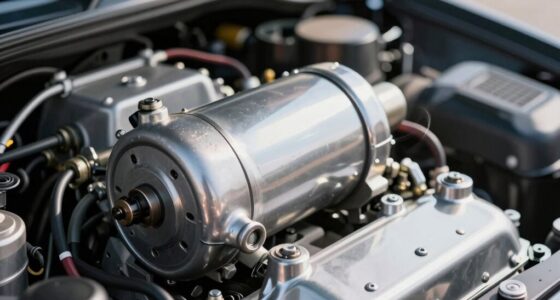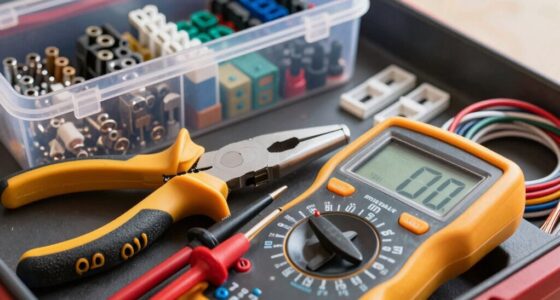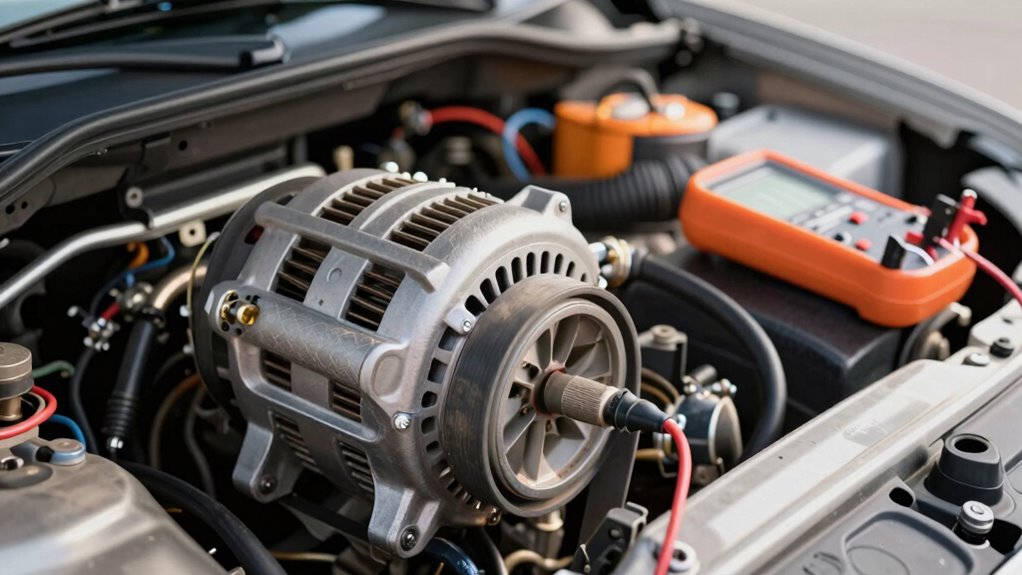

The most overlooked step when checking your alternator is inspecting the belt and pulleys. A loose, cracked, or slipping belt can instantly cause dim lights and early alternator failure by reducing its output. Worn or misaligned pulleys also lead to slippage, preventing proper charging. By skipping this basic check, you risk missing the root cause of electrical issues. Stay tuned to discover how to identify these problems and keep your charging system in top shape.

Get business pricing on garage and car supplies
- Business-only prices and quantity discounts
- Tax-exempt purchasing
- Multiple users, one account, clear invoices
Key Takeaways
- Many overlook inspecting the belt and pulley condition, which directly affects alternator output.
- Loose or cracked belts slip, causing insufficient charging and resulting in dim lights.
- Misaligned or worn pulleys can cause slippage, reducing voltage and dimming interior or headlamps.
- Regularly check belt tension and pulley alignment during diagnostics to prevent misdiagnosed issues.
- Proper belt and pulley inspection ensures the alternator functions correctly, instantly resolving dim light problems.
Understanding Your Vehicle’s Charging System
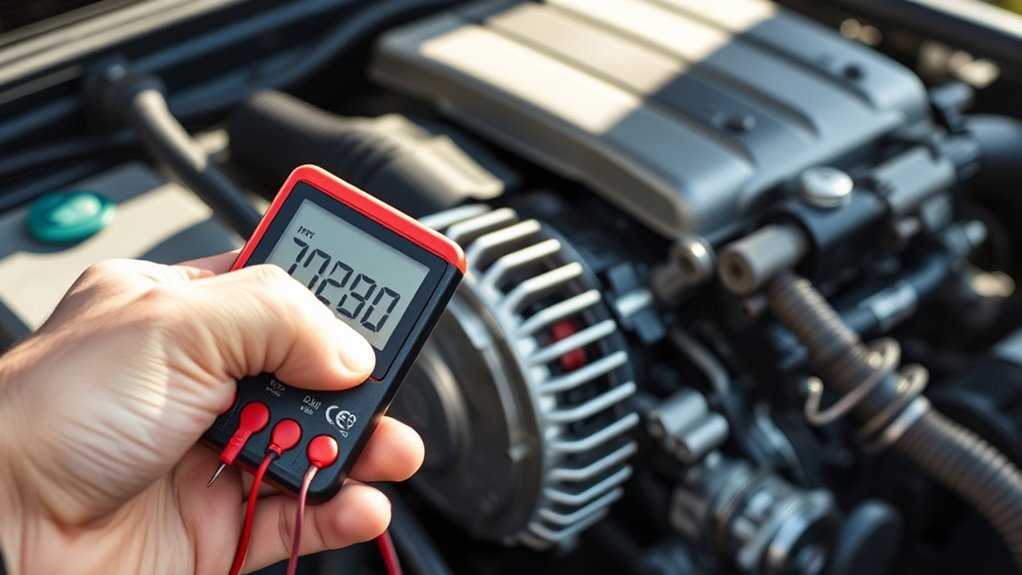
Your vehicle’s charging system is essential for keeping your car’s electrical components powered and your battery charged. It primarily relies on the alternator, which converts mechanical energy from the engine into electrical energy. As your engine runs, the alternator supplies power to systems like headlights, radio, and air conditioning, while also recharging the battery for the next start. This process ensures your vehicle remains operational without draining the battery. The alternator works continuously, generating electricity through its rotor and stator components, regulated by a voltage regulator to maintain a steady output. When functioning properly, it keeps your electrical system stable, preventing issues like dim lights or a dead battery. Proper maintenance of the alternator can extend its lifespan and prevent unexpected failures. Recognizing how this system works helps you identify potential problems early. Additionally, understanding the alternator’s operation can help diagnose electrical issues before they lead to a breakdown, especially since free floating conditions may cause inconsistent charging performance. Regular inspections and keeping the system clean can improve the efficiency of your electric power system, and implementing vetted wave and wind techniques can enhance overall energy stability and efficiency, helping you avoid costly repairs.
The Common Pitfall: Overlooking the Belt and Pulley Inspection

One of the most common mistakes in diagnosing alternator issues is neglecting to inspect the belt and pulley system. If the belt is loose, cracked, or slipping, it won’t spin the pulley effectively, reducing alternator output. Similarly, a worn or misaligned pulley can cause slippage or uneven rotation, leading to dim lights and electrical problems. To avoid this pitfall, check:
- The belt’s tension—ensure it’s tight enough without excessive slack.
- The belt’s condition—look for cracks, fraying, or glazing.
- Pulley alignment—verify it’s straight and properly seated.
- Pulley wear—inspect for rust, damage, or wobbling during rotation.
Skipping this step can mask underlying issues, making it seem like the alternator itself is faulty when the real problem lies in the belt or pulley system.
How to Properly Test Alternator Voltage Output

After inspecting the belt and pulley system, the next step is to verify the alternator’s voltage output to guarantee it’s functioning properly. Start your engine and keep it at a normal idle. Set your multimeter to DC voltage, and connect the red probe to the positive terminal of your battery. Touch the black probe to the negative terminal. A healthy alternator should produce between 13.5 and 14.5 volts. If the reading is below 13.5V, the alternator isn’t charging properly. If it’s above 14.5V, the voltage regulator may be faulty. Keep the engine running and rev the engine slightly; the voltage should stay within this range. Proper testing procedures are essential to avoid damage or injury during this process. Regularly monitoring alternator performance can help catch early signs of failure before it affects your vehicle’s electrical system. Being aware of common signs of alternator failure can also help you identify issues sooner. For example, net worth variations among individuals like Kate from Breaking Amish can reflect the importance of proper maintenance and reliable components in sustaining success. If you notice inconsistent voltage readings, it could indicate issues with the alternator’s internal components or wiring connections that require further investigation.
Recognizing Signs of a Failing Regulator or Rectifier

A failing regulator or rectifier can cause noticeable electrical issues that disrupt your vehicle’s performance. If you notice flickering or dimming lights, it’s a sign the voltage isn’t being properly controlled. You might also see the battery warning light come on unexpectedly, signaling irregular charging. Power accessories like the radio or windows may function intermittently, indicating inconsistent electrical flow. Finally, a sudden drop in battery charge or frequent stalls can point to a faulty rectifier or regulator. Here’s what to watch for:
- Flickering or dimming headlights
- Unexpected battery warning light
- Intermittent operation of electrical accessories
- Sudden battery drain or engine stalling
Recognizing these signs early helps prevent breakdowns and costly repairs.
Simple Steps to Confirm Your Alternator Is Charging Correctly

If you’ve noticed signs like flickering headlights or a dashboard warning light, it’s a good idea to verify whether your alternator is charging properly. First, start your engine and let it idle. Set your multimeter to measure volts, and place the probes on your battery terminals—red on positive, black on negative. A healthy alternator should produce between 13.5 to 14.5 volts. If it’s lower, your alternator might not be charging the battery correctly. Next, rev the engine slightly; the voltage should stay steady or slightly increase. If it drops or fluctuates considerably, there could be a problem with your alternator or voltage regulator. For an even clearer check, turn on electrical accessories (lights, radio) and see if the voltage remains stable. Regular alternator maintenance can help prevent these issues and extend your vehicle’s lifespan.
Frequently Asked Questions
Can a Bad Alternator Cause the Battery to Drain Quickly?
Yes, a bad alternator can cause your battery to drain quickly. When it malfunctions, it fails to recharge the battery properly, leading to insufficient power for your electrical systems. As a result, your battery gets depleted faster than normal, especially during long drives or frequent starts. If you notice dim lights or a warning light, it’s a sign your alternator isn’t keeping up, and your battery is working harder than it should.
How Often Should I Check My Alternator’s Output Voltage?
You should check your alternator’s output voltage at least once every few months or if you notice electrical issues like dim lights or a battery warning. Make sure the engine is running, then use a multimeter to measure voltage at the battery terminals. Aim for a steady 13.5-14.5 volts. Regular checks help catch problems early, preventing unexpected breakdowns and ensuring your electrical system stays reliable.
Is It Possible for the Belt to Be Slipping Without Visible Damage?
Yes, it’s possible for the belt to slip without visible damage. Over time, the belt can become glazed, hard, or lose tension, causing slipping even if it looks fine. You might notice signs like squealing sounds or inconsistent electrical performance. Regularly check the belt tension and listen for unusual noises. A slipping belt reduces alternator output, leading to dim lights and electrical issues, so keep an eye on its condition.
What Are the Risks of Ignoring Dim Headlights While Driving?
Ignoring dim headlights while driving puts you at risk of electrical failure, which can cause your vehicle to stall unexpectedly. Your alternator may not be charging the battery properly, leading to reduced power for critical systems. This can result in losing control, especially at night or in bad weather. If you notice dim lights, don’t delay—get your vehicle checked promptly to prevent breakdowns and ensure your safety on the road.
Can a Faulty Voltage Regulator Damage Other Electrical Components?
Think of the voltage regulator as the heart’s rhythm keeper; if it falters, chaos ensues. A faulty regulator can flood your electrical system with excess voltage, damaging sensitive parts like your computer, sensors, and gauges. This overcurrent acts like a storm, weakening or destroying components over time. Protect your vehicle by ensuring the regulator works correctly, preventing electrical storms inside your car that could leave you stranded or costly repairs.
Conclusion
Don’t overlook the heartbeat of your car—the alternator. Just like a steady pulse keeps a body alive, a consistent charge keeps your vehicle running smoothly. Regular checks act as your heartbeat monitor, catching issues early before they become life-threatening. Remember, skipping this crucial step is like ignoring a warning sign—trust your instincts and keep the current flowing. Keep your car’s life force strong, and it’ll serve you reliably for miles to come.
Halloween Picks
halloween
As an affiliate, we earn on qualifying purchases.