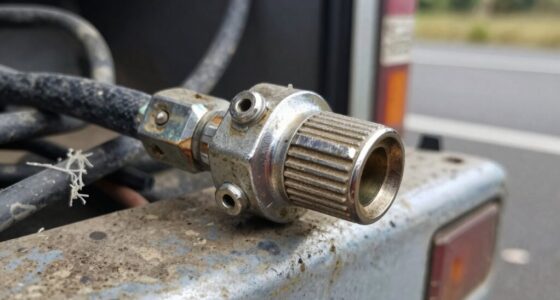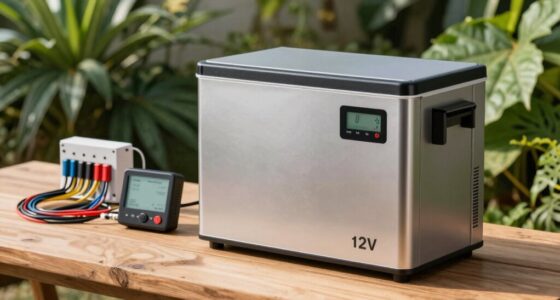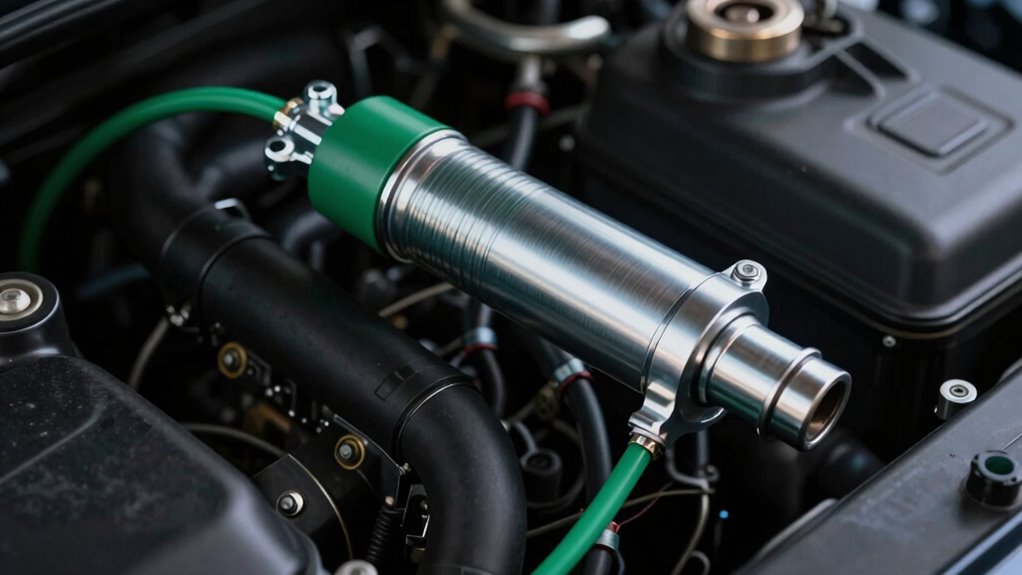

Isolators protect your starter battery by controlling electrical flow and quickly disconnecting faulty circuits when needed. They prevent issues like short circuits from spreading, which could damage your battery or other electrical components. This safeguards your system and keeps everything running smoothly. Isolators also make maintenance safer by allowing you to disconnect parts of the system without exposure to live wires. Learn more about how these simple devices keep your battery safe and your system reliable.
Key Takeaways
- Isolators control electrical flow to prevent battery drain and protect the starter battery during system faults.
- They act as safe barriers, disconnecting faulty circuits to prevent damage or safety hazards.
- Isolators enable safe maintenance by allowing parts of the system to be disconnected without live electricity.
- They regulate voltage, ensuring the battery remains within safe charge levels and prolongs its lifespan.
- Overall, isolators provide reliable protection and safety without using complex or “magical” mechanisms.

Have you ever wondered how electrical systems prevent faults from propagating or guarantee safety during maintenance? It’s a crucial question, especially when considering how your vehicle or backup power systems stay reliable. Isolators play a vital role here—they’re simple devices, but their purpose is essential. They help protect your starter battery and overall electrical setup by controlling how and when electrical current flows through the system. This regulation is key to maintaining your battery’s health and ensuring safety.
When your vehicle’s electrical system is working properly, the battery charge stays steady, and voltage regulation keeps everything running smoothly. But problems can arise—faults like short circuits or accidental contact can cause sudden surges or drops in voltage. Without proper safeguards, these faults could spread, damaging components or even causing safety hazards. That’s where isolators come in. They act as a barrier, preventing faults in one part of the system from affecting the rest.
Think of an isolator as a gatekeeper that opens or closes based on the system’s needs. During normal operation, it allows current to flow freely, maintaining the necessary battery charge and voltage regulation. But if a fault occurs—say, a short circuit or an overvoltage—the isolator swiftly disconnects the faulty circuit. This action prevents the fault from propagating further, protecting other parts of your electrical system and keeping your battery safe from over-discharge or damage.
An isolator acts as a gatekeeper, disconnecting faults to protect your system and battery from damage.
Another key benefit is during maintenance. When you need to service your system, isolators let you safely disconnect parts of the circuit without cutting power to the entire system. This ensures that maintenance workers or anyone working on the system won’t be exposed to live electrical hazards. It’s a simple yet effective way to guarantee safety without complex procedures or risking accidental shocks.
In addition to safety, isolators help preserve your battery charge. By preventing electrical faults from draining or damaging the battery, they maintain optimal voltage regulation, which prolongs your battery’s lifespan. Proper voltage regulation ensures your system operates within safe limits, avoiding premature wear or failure.
In essence, isolators aren’t magical devices—they’re straightforward, reliable tools designed to keep your electrical system safe, maintain proper battery charge, and ensure consistent voltage regulation. They work behind the scenes, silently protecting your system from faults and hazards, giving you peace of mind knowing your electrical setup is safeguarded by a simple yet effective component. Additionally, understanding the role of wave and wind in energy systems highlights the importance of reliable safety devices like isolators in renewable energy applications.
Frequently Asked Questions
Can Isolators Fail Over Time?
Yes, isolators can fail over time. Battery corrosion can develop around the terminals, causing poor connections, while voltage regulation issues might lead to inconsistent charging. These problems can weaken the isolator’s ability to protect your starter battery effectively. Regular maintenance, like cleaning terminals and checking voltage levels, helps prevent failure. If you notice charging issues or corrosion, it’s time to inspect and possibly replace the isolator to guarantee maximum protection.
Are Isolators Compatible With All Vehicle Types?
You might think isolators fit every vehicle, but compatibility varies. While many models work with different vehicle types, some require specific battery wiring setups or additional adjustments. To guarantee proper function, check your vehicle’s make, model, and electrical system. You don’t want a mismatch that hampers your battery protection. Always verify compatibility before installation, so your isolator effectively safeguards your starter battery without causing electrical issues.
What Maintenance Do Isolators Require?
You should regularly inspect your isolator for signs of corrosion and clean it with a wire brush or contact cleaner to prevent buildup. Check connections and tighten any loose terminals to guarantee proper operation. Proper maintenance helps extend your battery lifespan and prevents corrosion, which can impair isolator function. By keeping it clean and secure, you ensure your isolator continues protecting your starter battery effectively, reducing the risk of electrical issues.
Do Isolators Affect Starting Power?
No, isolators generally don’t affect your starting power if they’re properly installed. They optimize battery efficiency by preventing drain from auxiliary systems, ensuring your starter battery retains enough voltage for reliable starts. While some worry about voltage regulation issues, quality isolators are designed to maintain consistent voltage levels, so your vehicle’s starting power remains unaffected. Trust a good isolator to protect your battery without compromising performance.
How Do Isolators Handle High Electrical Loads?
Isolators handle high electrical loads by managing current draw through their load capacity, preventing excessive strain on your starter battery. When a high load occurs, the isolator directs power efficiently, ensuring the starter battery isn’t drained or damaged. This way, your batteries stay protected, and your vehicle maintains reliable starting power, even under demanding electrical demands. Properly rated isolators keep your system balanced during peak load situations.
Conclusion
Understanding how isolators protect your starter battery helps you appreciate their importance. Did you know that properly installed isolators can extend your battery lifespan by up to 50%? By preventing drain from accessories and ensuring your main battery stays charged, they keep your vehicle reliable and ready to go. So, next time you start your engine without a hitch, remember that isolators are quietly working behind the scenes—no magic, just smart technology.