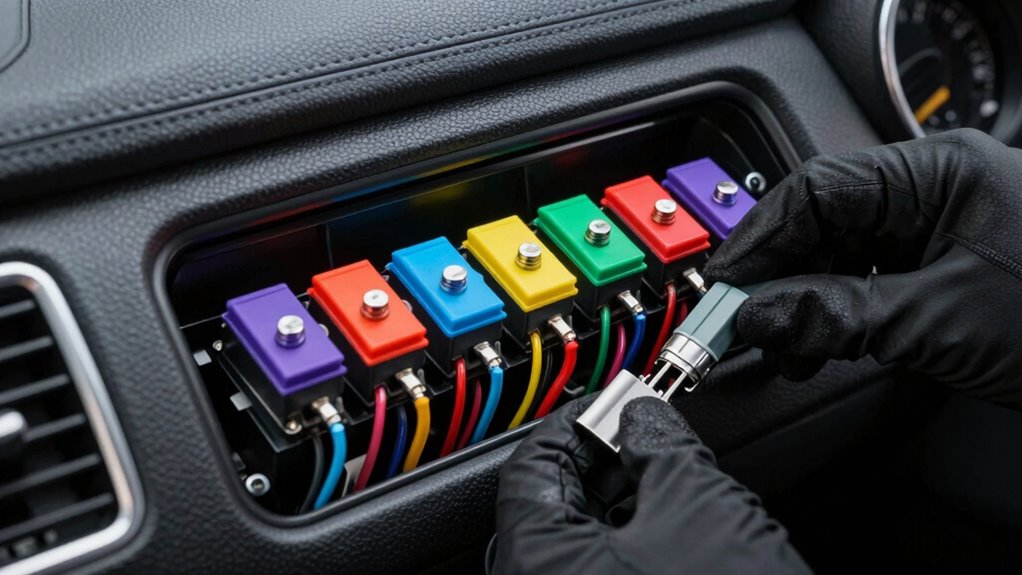

An accessory fuse panel helps you add multiple circuits to your vehicle neatly and safely. It keeps wiring organized and prevents clutter around your fuse box, while protecting your system from overloads. You’ll connect the panel directly to your battery using the right gauge wire and fuses rated slightly above your accessories’ current. Proper installation and safety steps are key to a reliable setup. Keep exploring to discover how to install yours the clean way.

Get business pricing on garage and car supplies
- Business-only prices and quantity discounts
- Tax-exempt purchasing
- Multiple users, one account, clear invoices
Key Takeaways
- Use an accessory fuse panel to organize and distribute power cleanly to multiple vehicle accessories.
- Select proper fuse ratings slightly above each accessory’s current draw to ensure safety.
- Connect the fuse panel directly to the battery via a relay or circuit breaker for reliable power supply.
- Wire accessories with appropriate gauge wiring, keeping connections secure and away from heat or moving parts.
- Label each circuit and fuse for easy troubleshooting and future upgrades, ensuring a neat and professional installation.
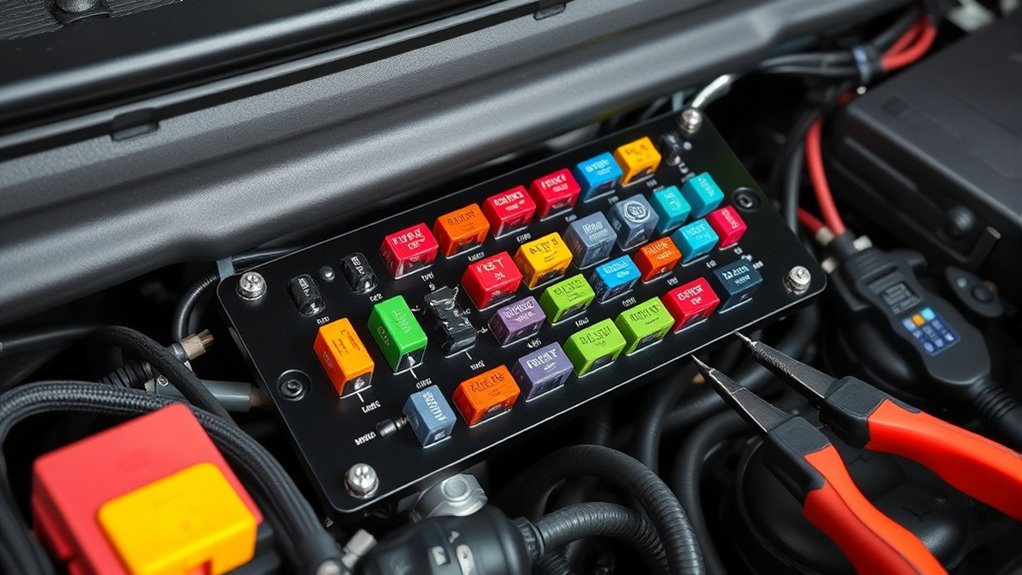
Have you ever wondered how to easily add extra electrical accessories to your vehicle? Using an accessory fuse panel is one of the cleanest, safest ways to do it. These panels let you distribute power to multiple devices without cluttering your main fuse box or risking damage to your vehicle’s electrical system. When planning your setup, it’s important to consider battery protection; you want to avoid overloading the battery or causing voltage drops that could damage sensitive electronics. This is where understanding fuse ratings becomes vital. Fuse ratings specify the maximum current a fuse can handle before it blows, acting as a safeguard for your circuit and vehicle.
Using appropriate fuse ratings protects your vehicle’s electrical system and prevents overloads.
To start, choose a fuse panel designed for automotive use, making sure it has enough slots for all your accessories. Before wiring, think about the total amperage your accessories will draw and match this with appropriate fuse ratings. For example, if your accessory consumes 10 amps, use a fuse rated slightly above this, like 15 amps—never go lower, as it might blow prematurely, or higher, which defeats the purpose of protection. Proper fuse ratings are necessary for battery protection because they prevent overcurrent situations that could cause wiring damage or even fire. When installing, connect the panel directly to the battery through a relay or a circuit breaker, which adds an extra layer of protection and allows you to disconnect power easily when needed.
It’s also wise to use the correct gauge wiring for your setup, matching the wire size to the fuse rating and current load. Thinner wires can overheat and cause shorts, so always verify compatibility. When wiring accessories, keep the circuit as short as possible and avoid running wires near heat sources or moving parts. Clearly label each fuse and circuit for easier troubleshooting in the future. It’s also beneficial to consider proper wiring techniques to ensure durability and safety in your installation. Once everything’s wired, double-check all connections and ensure fuses are correctly rated for each circuit. This not only keeps your accessories safe but also preserves your vehicle’s electrical system integrity.
Using an accessory fuse panel simplifies adding circuits, provides organized wiring, and enhances safety. Remember, selecting the right fuse ratings and protecting your battery are key to a reliable, long-lasting setup. With careful planning and proper installation, you’ll enjoy your new accessories without risking damage to your vehicle or compromising safety. This approach allows for a clean, professional-looking upgrade that’s both functional and secure, giving you peace of mind while expanding your vehicle’s capabilities.
As an affiliate, we earn on qualifying purchases.
Frequently Asked Questions
Can I Install an Accessory Fuse Panel Myself?
Yes, you can install an accessory fuse panel yourself if you’re comfortable working with wiring. To do it safely, use a fuse tap for adding circuits without cutting into the original wiring. Incorporate wireless monitoring to keep track of your system’s status easily. Make sure to follow proper wiring protocols, disconnect the battery, and double-check connections to prevent electrical issues. If unsure, consulting a professional is always a good idea.
What Tools Are Needed for Installing a Fuse Panel?
Did you know that using the right tools reduces installation time by 30%? For installing a fuse panel, you’ll need wire strippers to prepare your wires and fuse sizing tools to guarantee safety. A screwdriver, a multimeter for testing, and possibly a drill are also essential. These tools help you make clean connections, avoid shorts, and ensure your circuits are properly protected, making the process safe and efficient.
How Do I Know Which Fuse Size to Use?
You determine the right fuse size by checking the fuse compatibility with your device’s current draw. Look at the circuit capacity and match it with the fuse rating, typically found on the device or wiring specifications. Using a fuse that’s too small can cause frequent blows, while one that’s too large risks damage. Always follow manufacturer recommendations to guarantee safety and proper protection of your circuits.
Are Aftermarket Fuse Panels Safe for All Vehicles?
Aftermarket fuse panels are generally safe for most vehicles, but you need to check vehicle compatibility first. Make sure the fuse panel matches your vehicle’s electrical system and fits properly. Follow safety considerations like proper wiring, secure connections, and using the correct fuse ratings. If you’re cautious and do your research, you can safely upgrade your system without risking damage or safety issues.
How Often Should I Inspect My Accessory Fuse Panel?
You should inspect your fuse panel at least every six months to guarantee proper fuse operation and detect any signs of wear or corrosion. Regular fuse panel maintenance helps prevent electrical issues and keeps your accessories functioning safely. If you notice any melting, corrosion, or loose fuses during inspection, address these problems immediately. Staying consistent with your inspection frequency ensures your vehicle’s electrical system remains reliable and safe.
As an affiliate, we earn on qualifying purchases.
Conclusion
Adding accessory fuse panels is a smart way to expand your vehicle’s electrical system neatly and safely. By following proper procedures, you guarantee reliable power and avoid potential hazards. Remember, “a stitch in time saves nine,” so taking the extra effort now prevents bigger issues down the road. With a little patience and attention, you’ll have a clean, organized setup that keeps your accessories running smoothly for years to come.
As an affiliate, we earn on qualifying purchases.
As an affiliate, we earn on qualifying purchases.
Fall Picks
fall essentials
As an affiliate, we earn on qualifying purchases.