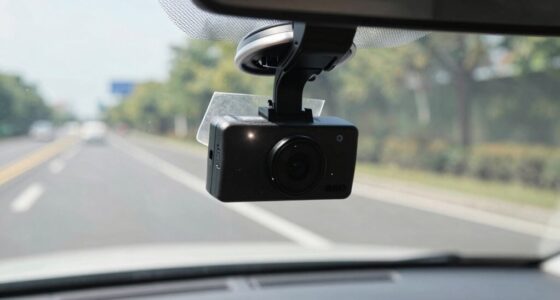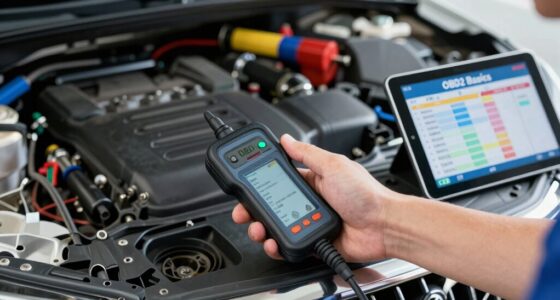

To perform the real-world test for driver data essentials, you need to verify that sensors and algorithms accurately capture actual driving behavior across different conditions and drivers. Compare the collected data with real-world observations or video footage to identify discrepancies. Guarantee your system handles behavioral variations and maintains data integrity and security. Regular validation, calibration, and testing are key to keep data trustworthy. If you want to understand how to refine this process further, keep exploring these vital steps.

Get business pricing on garage and car supplies
- Business-only prices and quantity discounts
- Tax-exempt purchasing
- Multiple users, one account, clear invoices
Key Takeaways
- Conduct real-world observations or video validations to verify that driver data accurately reflects actual behavior.
- Identify discrepancies between sensor data and on-road actions to detect mislabeling or system errors.
- Perform consistent testing across various conditions and driver profiles to ensure data reliability and robustness.
- Implement continuous calibration and validation processes to maintain data accuracy over time.
- Use cybersecurity measures to protect data integrity and prevent tampering during real-world testing.

Have you ever wondered how dependable your driving data really is? It’s a natural question, especially as more companies turn to driver data to improve safety, efficiency, and compliance. The truth is, the accuracy of this data depends heavily on understanding driver behavior and how well your data collection systems capture it. When evaluating data accuracy, you need to take into account whether the information truly reflects what’s happening behind the wheel. Are the sensors and algorithms correctly interpreting acceleration, braking, steering, and other actions? Or are they prone to errors that skew the overall picture? The reliability of your data hinges on both the quality of the input and the way it’s processed. If the data is inaccurate, you might make misguided decisions that could compromise safety or efficiency.
To test the real-world reliability of your driver data, you should first focus on how well your systems monitor driver behavior. Observe how accurately the data reflects actual driving patterns. For example, if your system flags aggressive braking, check whether it’s truly capturing sudden decelerations or if it’s mistakenly recording normal stops as aggressive. This kind of validation requires cross-checking the data with real-world observations or video footage, so you can identify discrepancies. If your system consistently mislabels driver actions, it’s a sign that data accuracy needs refinement. The goal is to have a dataset that truly mirrors driver behavior, so you can analyze it with confidence. Ensuring the accuracy of sensor data is crucial for meaningful insights and reliable assessments. Additionally, understanding the sensor calibration process is vital to ensure consistent data collection over time.
Validate driver data by comparing it with real-world observations to ensure accurate reflection of actual driving behavior.
Another important aspect is to gauge the consistency of your data over different conditions and drivers. Does the data maintain its reliability across various vehicle types, driving environments, and driver skill levels? If certain conditions cause your sensors to produce unreliable results, you’ll need to address those gaps. This could mean recalibrating sensors, improving data processing algorithms, or enhancing the hardware. Remember, driver behavior can vary widely, and your data collection methods should be robust enough to handle those variations without sacrificing accuracy. Additionally, cybersecurity measures play a critical role in safeguarding the integrity of your data from tampering or malicious interference. Implementing robust security protocols can help prevent unauthorized access and ensure data authenticity. Ensuring that your data collection systems are protected from tampering or interference is essential for maintaining trustworthiness and accuracy.
Finally, take into account the impact of data errors on your overall assessment. Even small inaccuracies can lead to big misconceptions about driver performance or safety risks. It’s essential to continuously test, validate, and calibrate your data collection systems to ensure they provide a true picture of driver behavior. Only then can you trust your driver data to inform meaningful decisions, improve safety protocols, and optimize fleet operations. In the end, a real-world test for driver data isn’t just about collecting numbers—it’s about ensuring those numbers genuinely reflect what happens on the road.
Products Worth Considering

Milwaukee 2697-22 M18 18-Volt Lithium-Ion Cordless Hammer Drill/Impact Driver XC Combo Kit (2-Tool)

DEWALT 20V MAX Drill and Impact Driver Combo Kit (DCK240C2)

DEWALT 20V MAX 1/4-Inch Impact Driver Kit with Battery and Charger (DCF787D1)
As an affiliate, we earn on qualifying purchases.
Frequently Asked Questions
How Often Should Driver Data Be Reviewed and Updated?
You should review and update driver data regularly, ideally every three to six months, to maintain data accuracy. This frequency guarantees driver training records stay current and reflect any recent changes. Consistent reviews help identify discrepancies early, improving safety and compliance. By actively managing driver data, you reduce risks, enhance driver performance, and ensure that training and licensing information remain accurate and up-to-date for peak operational efficiency.
What Are Common Challenges in Implementing Driver Data Tests?
You might face challenges like ensuring driver privacy while collecting and testing data, which requires strict compliance with privacy laws. Data accuracy is also a concern; inaccurate data can lead to faulty insights or decisions. Balancing thorough testing with respect for privacy, maintaining data integrity, and adapting to evolving regulations are common hurdles. Addressing these issues proactively helps you implement effective driver data tests without compromising privacy or accuracy.
How Does Driver Data Impact Insurance Premiums?
Driver data considerably impacts your insurance premiums by enabling more accurate risk assessment. When your data is precise and reliable, insurers can better evaluate your driving habits, leading to fairer rates. Conversely, inaccurate data can result in higher premiums or unfair assessments. By ensuring data accuracy, you help insurers assess your risk more effectively, potentially lowering your costs and improving your chances of getting better coverage tailored to your driving behavior.
Can Driver Data Tests Predict Future Driving Behavior?
A stitch in time saves nine, and accurate data can predict future driving behavior. While driver data tests offer valuable insights into your current habits, they don’t guarantee precise behavior prediction. Data accuracy is essential, as incorrect info can lead to misguided conclusions. These tests can highlight tendencies, but your future actions depend on many factors, so don’t rely solely on data for predicting your driving behavior.
What Technologies Are Used to Collect Driver Data?
You use vehicle telematics to collect driver data, which involves installing sensors and GPS devices in your vehicle to monitor speed, location, and driving habits. Data anonymization is essential; it protects your privacy by removing personal identifiers before sharing or analyzing the data. These technologies work together to gather accurate, real-time information about your driving, ensuring safety and efficiency while maintaining your confidentiality.
Conclusion
Just like Icarus tested the limits of flight, your driver data must face the real-world test. It’s not enough to gather information—you need to guarantee it’s precise, timely, and reliable. Only then can you soar above the competition, avoiding the pitfalls of outdated or flawed data. Remember, the true journey begins when your data takes flight in the chaos of the road. Embrace the challenge, and let your insights lead the way.