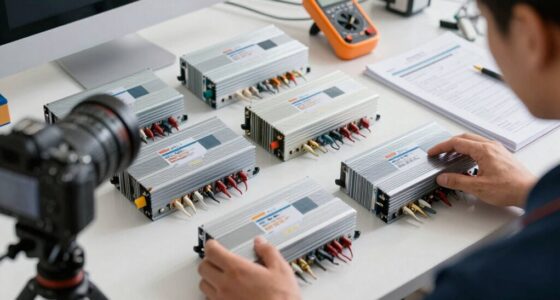

To quickly size an inverter, start by listing all devices you’ll run at once and find each’s wattage. Add these up plus a 20-25% buffer for surges and future growth. Check that your battery can supply enough power and choose an inverter with high efficiency (>90%) to cut waste. Make certain it can handle startup surges of your appliances. Balancing size, cost, and future needs ensures a reliable setup—continue on to master the details behind each step.

Get garage and car supplies delivered free — and shop member deals
- Fast, free delivery on millions of items
- Access to Prime Big Deal Days deals on October 6–7
- Prime Video, Amazon Music and more included
Key Takeaways
- List all devices to run simultaneously and sum their wattages, adding a 20-25% buffer for surges and future growth.
- Ensure battery capacity (Ah) can supply the inverter’s rated power for desired runtime.
- Choose an inverter with efficiency above 90% to minimize energy waste and heat.
- Confirm inverter’s surge capacity handles the startup wattage of all appliances.
- Balance system size and cost by considering future expansion, efficiency, and budget constraints.
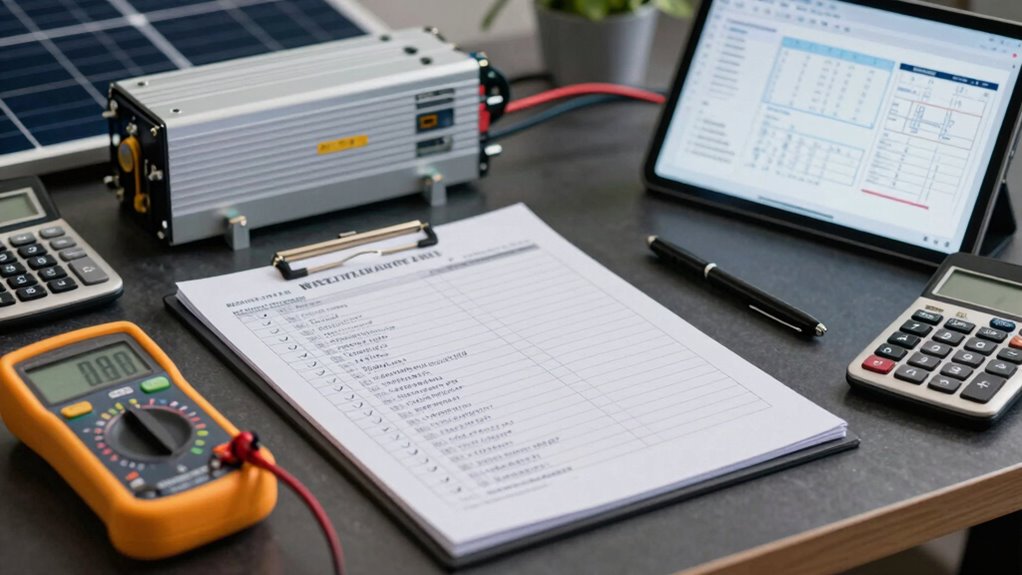
Ever wondered how to guarantee your inverter is perfectly sized for your needs? The key lies in understanding your power requirements and matching them accurately. Start by listing all the devices you plan to run simultaneously. Check each device’s wattage rating—this information is usually on the label or in the manual. Add these wattages together to determine your total power load. Remember, it’s wise to include a buffer of about 20-25% to account for startup surges and future expansion. This total gives you a clear idea of the minimum inverter capacity you’ll need. Additionally, consider the power efficiency of your inverter, as higher efficiency ratings ensure less energy is wasted as heat. Next, consider your battery capacity, which is essential when selecting an inverter, especially for off-grid or backup systems. Battery capacity, measured in amp-hours (Ah), determines how long your inverter can run your devices before needing a recharge. Make sure your battery bank can supply the required power at the inverter’s rated capacity for the desired period. A higher capacity battery allows for longer runtime and better reliability. Also, keep in mind that a larger battery bank might increase your system’s overall size and cost, so balance your needs with your budget and space constraints. Power efficiency is another key factor in inverter sizing. An efficient inverter wastes less energy as heat, meaning more of your stored energy gets to your devices. When choosing an inverter, look for models with high efficiency ratings—ideally above 90%. This improves overall system performance and reduces energy losses, saving you money in the long run. Efficient inverters also generate less heat, which can extend their lifespan and reduce cooling requirements. To ensure your system’s reliability, double-check your inverter’s surge capacity, which is its ability to handle brief power spikes when devices start up. Many appliances, like refrigerators or power tools, draw more power at startup than during normal operation. Ensuring your inverter can handle these surges prevents shutdowns or damage. It’s also important to consider the surge capacity in relation to your devices’ startup wattage to avoid potential issues. Additionally, choosing an inverter with a matching surge capacity ensures your system can handle the highest startup loads without trouble.
As an affiliate, we earn on qualifying purchases.
Frequently Asked Questions
Can Inverter Sizing Affect Overall Energy Efficiency?
Yes, inverter sizing directly impacts your system’s energy efficiency. If it’s too small, it struggles to handle load changes, increasing energy consumption and reducing performance. Conversely, an oversized inverter wastes energy and increases costs. Proper sizing guarantees peak system performance, minimizing energy waste, and improving overall efficiency. By choosing the right inverter size, you help your system operate smoothly, saving you money and extending its lifespan.
How Often Should Inverter Capacity Be Reassessed?
You should reevaluate your inverter capacity whenever there’s a change in your energy needs or battery compatibility, typically every few years. Installation considerations like new appliances or expanding your system can impact inverter performance. Regularly reviewing these factors guarantees your inverter remains efficient and compatible with your batteries, preventing overloads or underperformance. Staying proactive helps optimize energy efficiency and prolongs your system’s lifespan.
Are There Specific Brands Recommended for Inverter Sizing?
If you’re choosing an inverter, consider brands like SMA, known for their reputation in quality and reliability. For example, a homeowner in California selected SMA for their solar system, ensuring product compatibility and long-term performance. Stick to reputable brands because their products align with industry standards, reduce compatibility issues, and offer better warranty support. Always review brand reputation and compatibility with your system to make an informed, reliable choice.
What Are Common Mistakes in Inverter Sizing?
A common mistake is neglecting accurate load calculation and peak demand. You might oversize or undersize your inverter, leading to inefficiency or damage. Always assess your total energy needs and consider peak demand to guarantee the inverter can handle the maximum load. Failing to do this can cause system failures or reduced lifespan. Make sure to analyze these factors carefully for ideal inverter performance and longevity.
How Does Climate Impact Inverter Selection?
Climate impacts inverter selection by demanding climate adaptability and temperature tolerance. You need to take into account how hot, cold, humid, or snowy conditions affect inverter performance. For hot climates, choose inverters with high-temperature tolerance to prevent overheating. In cold regions, opt for models designed for low temperatures to ensure reliable operation. By matching your inverter’s capabilities to your climate, you guarantee durability, efficiency, and long-term reliability, regardless of weather challenges.
high efficiency power inverter 1000W
As an affiliate, we earn on qualifying purchases.
As an affiliate, we earn on qualifying purchases.
Conclusion
By following this quick checklist, you’re well on your way to selecting the perfect inverter for your needs. It’s better to get it right the first time than to face costly surprises later. Remember, a well-sized inverter is the backbone of a reliable system — don’t cut corners now. When you’ve got everything checked off, you’ll sleep soundly knowing you’ve covered all your bases. After all, a stitch in time saves nine.
surge protector inverter for appliances
As an affiliate, we earn on qualifying purchases.
As an affiliate, we earn on qualifying purchases.
off-grid inverter with high surge capacity
As an affiliate, we earn on qualifying purchases.
As an affiliate, we earn on qualifying purchases.
Halloween Picks
halloween
As an affiliate, we earn on qualifying purchases.