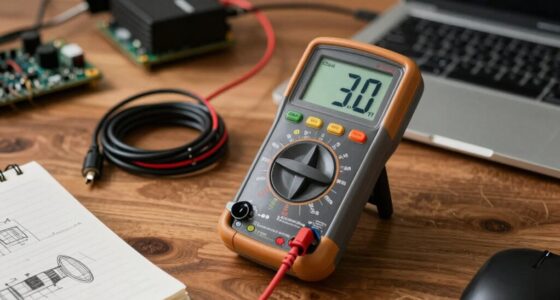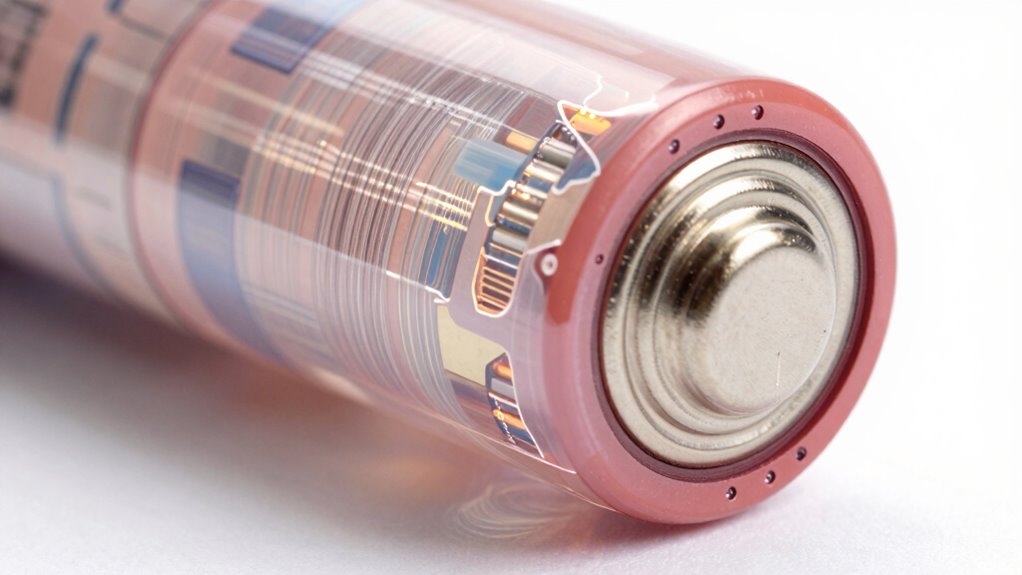

Test voltage alone can’t reveal your battery’s internal resistance because resistance changes with charge level, temperature, and age. When a battery discharges or heats up, its resistance increases, affecting performance but not always reflected in voltage readings. To truly understand your battery’s health, you need to measure internal resistance directly with specialized tools. If you want to discover how internal resistance impacts your battery’s efficiency, keep exploring this topic further.

Get business pricing on garage and car supplies
- Business-only prices and quantity discounts
- Tax-exempt purchasing
- Multiple users, one account, clear invoices
Key Takeaways
- Test voltage alone doesn’t reveal internal resistance, which varies with charge, temperature, and age.
- Internal resistance impacts battery performance more directly than voltage readings.
- Fully charged batteries typically have lower internal resistance than discharged ones.
- Temperature fluctuations can temporarily alter resistance, affecting current flow and performance.
- Accurate diagnosis requires specialized tools to measure internal resistance beyond simple voltage tests.

Battery internal resistance is a key factor that influences a battery’s performance and efficiency. When you’re evaluating a battery’s health, understanding how internal resistance varies with the state of charge is essential. As the battery charges or discharges, its internal resistance can change markedly, impacting how well it delivers power. When the battery is fully charged, the internal resistance tends to be lower, allowing for better current flow. Conversely, as the battery discharges, internal resistance can increase, leading to reduced performance. This variation can’t be fully captured by simply measuring the test voltage alone, because voltage readings don’t tell the full story about the internal conditions of the battery. Instead, you need to consider how the state of charge influences the internal resistance and, consequently, the overall efficiency.
Temperature effects also play an important role in this dynamic. Batteries generate heat during operation, and higher temperatures typically reduce internal resistance temporarily, allowing for easier current flow. However, prolonged exposure to elevated temperatures can damage the battery’s internal components, causing a long-term increase in resistance. On the other hand, cold temperatures tend to increase internal resistance, making it harder for the battery to supply current effectively. This means that during colder conditions, your battery’s performance might dip even if the voltage appears normal. Recognizing these temperature effects is necessary because they can mask underlying issues if you rely solely on voltage measurements. For example, a battery might seem to operate fine in cold weather based on voltage, but its internal resistance could be high, leading to poor performance under load.
Understanding how the state of charge and temperature effects influence internal resistance helps you interpret battery test results more accurately. If you only look at voltage levels, you might miss early signs of declining battery health. Instead, measuring internal resistance directly—using specialized tools—gives you a clearer picture of the battery’s true condition. This is especially important when diagnosing problems or predicting how long a battery will last under real-world conditions. Keep in mind that internal resistance isn’t static; it varies with charge level, temperature, age, and usage patterns. Additionally, accurate testing methods are essential for obtaining reliable measurements of internal resistance. By paying attention to these factors, you can better maintain your batteries, optimize their lifespan, and guarantee reliable performance. Remember, test voltage alone doesn’t reveal the full story—consider the battery’s internal resistance and how it fluctuates with charge and temperature for a more thorough evaluation.
Frequently Asked Questions
How Does Temperature Affect Battery Internal Resistance?
Temperature effects cause resistance fluctuation in your battery. When it gets colder, internal resistance increases because chemical reactions slow down, making it harder for electrons to flow. Conversely, at higher temperatures, resistance decreases as reactions speed up. You’ll notice that battery performance drops in cold weather, while it performs better in warmer conditions. Managing temperature helps optimize battery efficiency and longevity, ensuring consistent power delivery regardless of environmental changes.
Can Internal Resistance Indicate Battery Lifespan Accurately?
You might think internal resistance perfectly predicts battery lifespan, but it’s not that simple. As the battery ages, resistance increases, signaling potential decline. However, a rise in resistance alone doesn’t guarantee imminent failure, so relying solely on it can be misleading. Keep an eye on resistance trends, but combine them with other performance indicators to get a more accurate picture of your battery’s true health and remaining lifespan.
What Tools Are Best for Measuring Internal Resistance?
You should choose a specialized internal resistance meter or a multimeter with a low-resistance setting for accurate testing. When selecting a multimeter, make sure it offers a milliamp or microamp range and good stability. Follow proper testing procedures by fully charging the battery, then applying a load and measuring voltage drops. This method helps you get reliable internal resistance readings, giving insights into your battery’s health and lifespan.
How Does Internal Resistance Vary With Different Battery Chemistries?
You’ll notice that internal resistance varies substantially with different battery chemistries. For example, lithium-ion batteries generally have lower resistance, offering better efficiency and performance, while lead-acid batteries tend to have higher resistance, which can cause more energy loss. This resistance variation depends on the materials used, electrode design, and electrolyte composition. Understanding these differences helps you select the right battery chemistry for your specific needs, optimizing performance and lifespan.
Is Internal Resistance Measurement Necessary for All Battery Types?
You should measure internal resistance for most battery types to assess internal consistency and performance. Different battery chemistries, like lithium-ion or NiMH, have unique internal resistance characteristics that impact efficiency and lifespan. Regular testing helps identify issues early, ensuring safety and peak operation. While not always mandatory, measuring internal resistance provides valuable insights into your battery’s health, especially for high-demand or critical applications.
Conclusion
Understanding a battery’s internal resistance is like peering under the hood of a car—you see what’s really going on beneath the surface. Even if the test voltage looks perfect, hidden resistance can drain your battery’s power and shorten its lifespan. By recognizing this silent thief, you can better maintain and troubleshoot your batteries. Think of internal resistance as the quiet whisper that can tell you a lot about your battery’s health before it shouts for help.
Halloween Picks
halloween
As an affiliate, we earn on qualifying purchases.