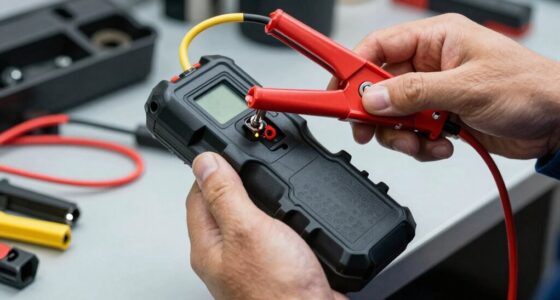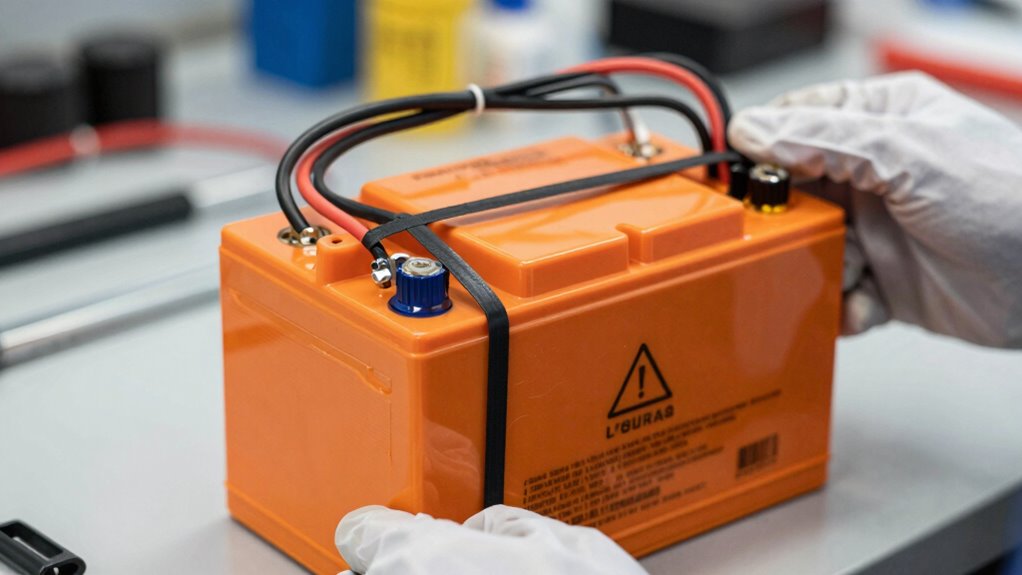

If you suspect a battery is loose, immediately clear the area of bystanders and avoid jostling it. Wear protective gear and carefully assess if you can safely secure or remove the battery using non-conductive tools. Place it in a fire-resistant, non-conductive container to prevent movement. Do not attempt repairs or puncture it. Proper handling prevents the battery from becoming a projectile. For detailed steps on safely managing loose batteries, keep exploring your options.

Get garage and car supplies delivered free — and shop member deals
- Fast, free delivery on millions of items
- Access to Prime Big Deal Days deals on October 6–7
- Prime Video, Amazon Music and more included
Key Takeaways
- Carefully secure the battery with non-conductive straps or brackets to prevent movement.
- Place the battery in a sturdy, fire-resistant container to contain potential hazards.
- Disconnect the battery from power sources only if safe and trained to do so.
- Keep bystanders away and handle the battery with protective gear to avoid injury.
- Evacuate the area if the battery shows signs of damage or leaks before attempting securement.
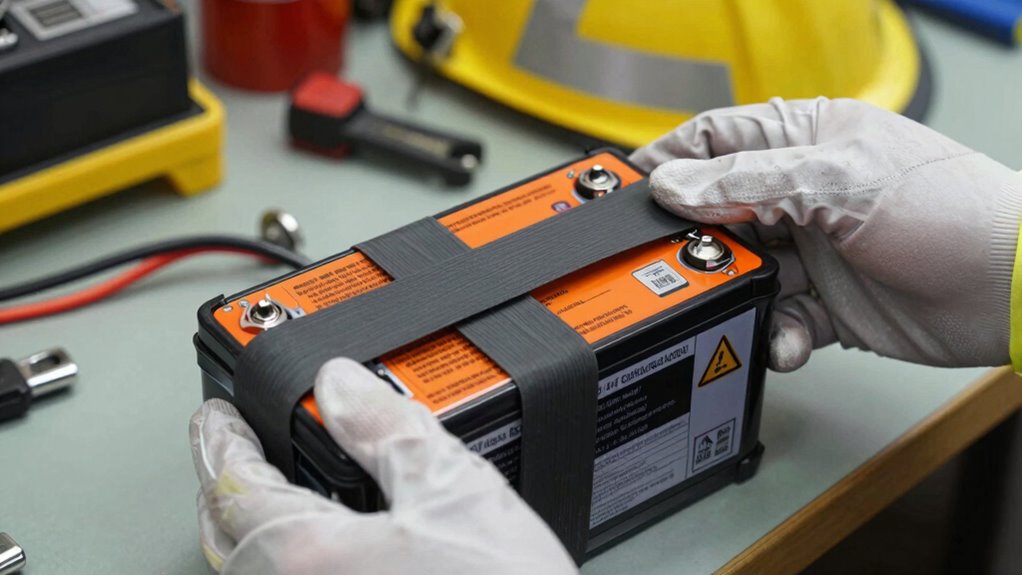
Have you ever wondered what to do if a loose battery in your device or vehicle suddenly becomes a dangerous projectile? It’s a frightening scenario that requires quick thinking and calm action. The first step is to prioritize battery safety. Keep in mind that a loose or damaged battery can leak, overheat, or even explode if mishandled, so handling it carefully is essential. If you notice a battery rattling or loose in your device or vehicle, don’t ignore the warning signs. Instead, stay calm and avoid trying to force or jostle the battery further, as this could cause it to ignite or rupture.
In such a situation, you should immediately clear the area of any bystanders to prevent injuries. Once the area is safe, you need to assess whether you can safely secure or remove the battery. If you have proper protective gear, such as gloves and eye protection, put them on to shield yourself from potential leaks or sparks. When handling a loose battery, always hold it by its edges, avoiding contact with terminals or internal components. If the battery is in a device or vehicle, disconnect the power source if possible, but only if you’re confident in doing so. If not, it’s best to wait for professional assistance.
Additionally, understanding the potential hazards of damaged batteries can help you react appropriately in emergency situations. In such cases, it’s crucial to recognize the signs of battery damage, which may include swelling, leaks, or a foul odor. Being aware of the proper disposal methods for damaged batteries is also vital to prevent environmental contamination or injury. Handling damaged batteries with caution is essential because battery leaks or fumes can be toxic and harmful if inhaled or touched. It’s important to remember that proper storage of damaged batteries can prevent accidental ignition or exposure. Avoid touching or inhaling fumes, and do not attempt to repair or puncture the battery. Instead, carefully place the battery in a non-conductive, fire-resistant container, like a metal or plastic box, to contain potential hazards. If the battery leaks or there’s smoke, evacuate the area immediately and call emergency services. Do not try to extinguish a battery fire with water; instead, use a fire extinguisher rated for electrical fires, such as a Class C extinguisher.
fire-resistant battery storage container
As an affiliate, we earn on qualifying purchases.
As an affiliate, we earn on qualifying purchases.
Frequently Asked Questions
What Are the Signs of a Loose Battery in a Device?
You might notice signs of a loose battery in your device through battery corrosion around the terminals or a noticeable decrease in charging efficiency. If your device experiences frequent charging issues or the battery doesn’t hold a charge properly, these could also indicate a loose battery. Keep an eye out for swelling or unusual heat, which further signal that the battery isn’t securely in place and needs immediate attention to prevent damage or hazards.
How Often Should I Check My Battery for Looseness?
Think of checking your battery like tending a garden—you need regular attention. You should inspect your device’s battery for looseness at least once a month, especially if you notice any changes in battery lifespan or charging habits. Consistent checks help prevent potential hazards and extend battery life. Keep an eye on it, and don’t wait until it’s obvious there’s a problem—early detection keeps everything running smoothly.
Can Loose Batteries Cause Damage to the Device?
A loose battery can indeed cause damage to your device. It may lead to short circuits, corrosion, or even internal component damage, which shortens your device’s battery lifespan. To prevent this, make sure you handle battery recycling properly and keep batteries securely in place. Regularly checking for looseness helps maintain device safety and longevity, avoiding costly repairs or replacements caused by damage from a loose battery.
Are There Specific Tools to Secure Loose Batteries?
Yes, there are specific tools to secure loose batteries. You can use a battery holder, which is designed to snugly fit and hold batteries in place, preventing movement. Additionally, adhesive pads or double-sided tape can be applied around the battery to secure it firmly within the device. These tools help guarantee your battery stays stable, reducing the risk of damage or accidents caused by a loose battery.
What Safety Precautions Should I Take When Handling Loose Batteries?
When handling loose batteries, you should wear gloves and eye protection to prevent leaks or contact with harmful substances. Make certain you’re in a well-ventilated area and avoid direct contact with battery terminals. Properly dispose of or recycle the batteries through authorized battery recycling facilities or follow local battery disposal guidelines. Never force or puncture batteries, as this can cause leaks or fires. Stay cautious to prevent accidents and environmental harm.
non-conductive battery securing straps
As an affiliate, we earn on qualifying purchases.
As an affiliate, we earn on qualifying purchases.
Conclusion
To prevent a loose battery from turning into a dangerous projectile, always inspect and secure batteries properly. Use appropriate tools and safety gear, and never ignore signs of damage or looseness. Did you know that over 3,000 battery-related injuries occur annually in the U.S.? Staying vigilant and handling batteries carefully can save you from potential harm. Remember, a little caution goes a long way in keeping yourself safe from unexpected accidents.
battery safety gloves and eye protection
As an affiliate, we earn on qualifying purchases.
As an affiliate, we earn on qualifying purchases.
As an affiliate, we earn on qualifying purchases.
Halloween Picks
halloween
As an affiliate, we earn on qualifying purchases.