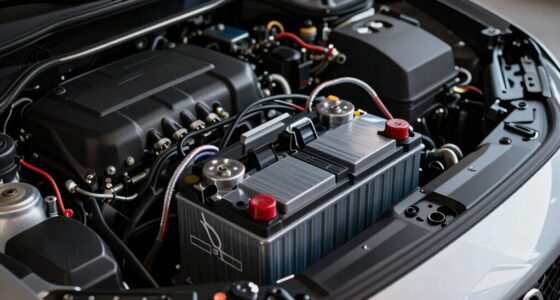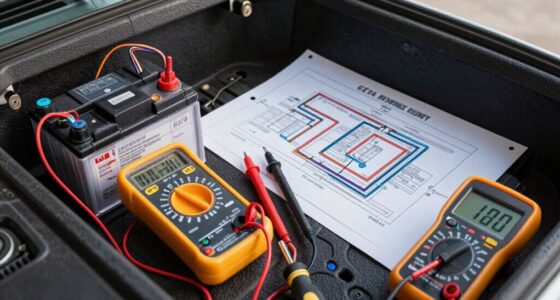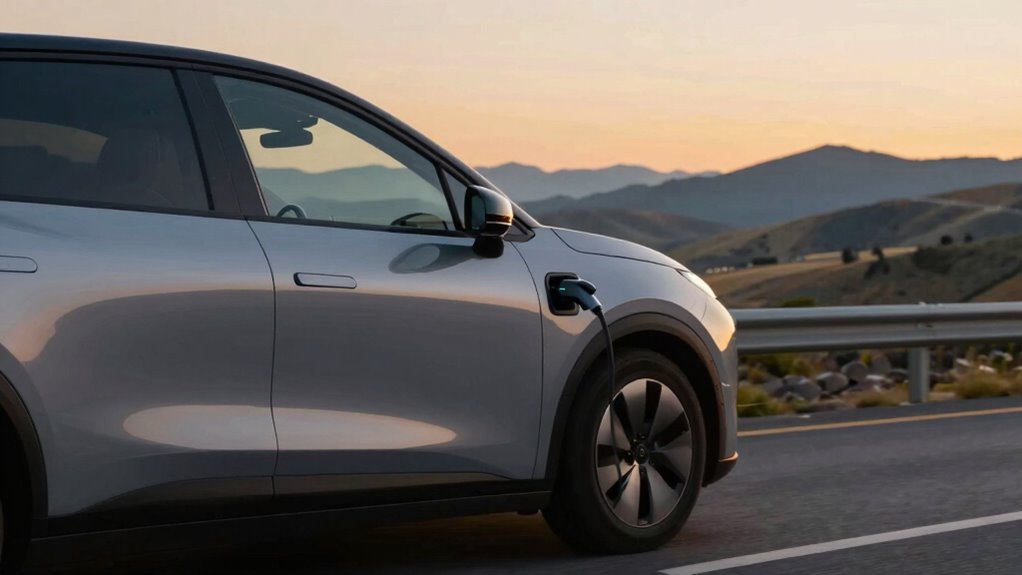

When charging while driving, you should use high-power stations designed for safety, ensuring proper thermal management to prevent overheating. Follow manufacturer guidelines to avoid overloading your battery and damaging its lifespan. Smart load management can help distribute power efficiently, reducing risks. Maintaining safe temperatures and not continuously charging at maximum capacity are key to protecting your battery. If you want to discover more tips for safe high-load charging on the go, keep exploring the essentials.

Get business pricing on garage and car supplies
- Business-only prices and quantity discounts
- Tax-exempt purchasing
- Multiple users, one account, clear invoices
Key Takeaways
- Use high-power charging stations designed for safety and proper thermal management during fast charging on the go.
- Follow manufacturer guidelines to prevent overloading and ensure safe high-load charging practices.
- Incorporate smart charging systems that manage load distribution and prevent electrical faults while driving.
- Plan routes around reliable charging stations with sufficient capacity to handle high loads safely.
- Regularly monitor battery temperature and avoid continuous maximum capacity charging to preserve battery health.
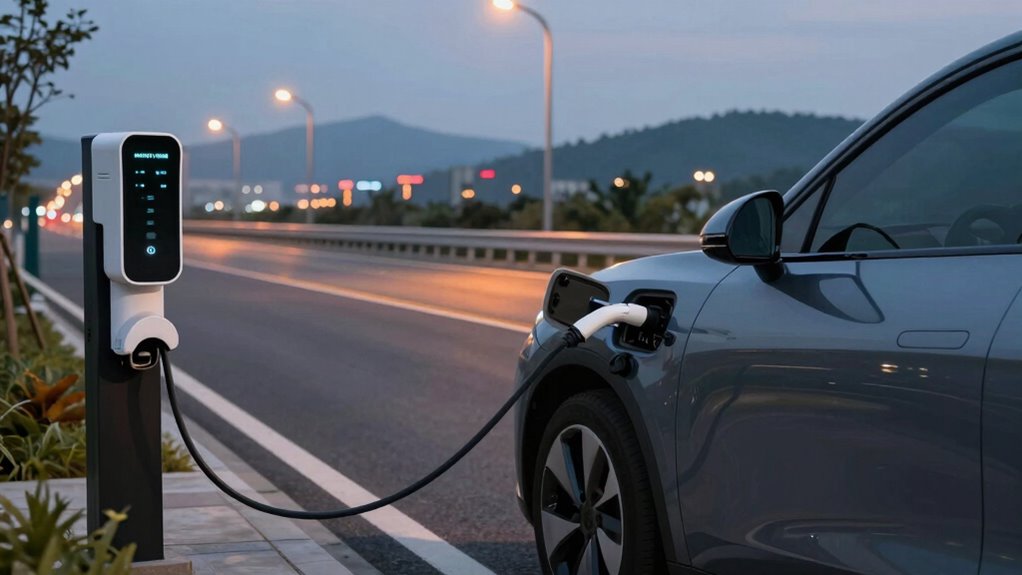
The success of charging while driving also depends heavily on the availability and reliability of charging infrastructure. As the network of fast chargers expands, you gain more options to top up your battery during long trips. It’s essential to plan your route around charging stations that support high-power charging, so you can replenish your battery quickly without long waits. These stations are designed to deliver high loads safely, but you should always follow the manufacturer’s guidelines to avoid overloading the system. Properly designed infrastructure not only speeds up charging times but also guarantees safety by preventing electrical faults or overheating. Investing in secure network connections for charging stations can further enhance safety by protecting against cyber threats that could disrupt power delivery. You should also pay attention to how you manage high loads during charging. Charging at high power levels generates heat, which can impact battery longevity if not handled properly. Many EVs have thermal management systems that regulate temperature during fast charging, but you still need to be cautious. Avoid charging at maximum capacity continuously, as this can strain the battery and reduce its overall lifespan. Instead, aim for a balanced approach: use high-speed chargers when necessary and allow the battery to cool down afterward. Maintaining proper thermal regulation is crucial for preserving your battery’s health over the long term, making certain that high loads don’t cause unnecessary wear. Understanding the impact of high loads on battery degradation can help you optimize your charging habits for better long-term performance, especially when combined with appropriate charging practices. Additionally, adopting smart charging technology can help manage load distribution and improve overall safety during fast charging sessions.
As an affiliate, we earn on qualifying purchases.
Frequently Asked Questions
What Types of Vehicles Are Best Suited for In-Motion Charging?
For in-motion charging, electric vehicles equipped with wireless power transfer systems and dynamic charging capabilities work best. You should focus on vehicles designed for continuous power transfer, like buses, delivery trucks, or specialized freight vehicles. These vehicles can efficiently harness wireless power while moving, reducing downtime. By integrating dynamic charging infrastructure, you guarantee a smooth, safe, and reliable energy supply during high load operations on the road.
How Does Charging While Driving Affect Vehicle Battery Life?
Charging while driving can lead to increased battery degradation over time because it adds extra charging cycles to your vehicle’s battery. While it’s a convenient way to maintain high loads, frequent in-motion charging stresses the battery, potentially shortening its lifespan. To safeguard your battery, avoid excessive charging while driving and follow manufacturer guidelines. Proper management ensures you get the most out of your vehicle’s battery without compromising its longevity.
Are There Specific Safety Precautions for In-Motion Charging?
Yes, there are specific safety precautions for in-motion charging. You should guarantee wireless safety by using certified equipment and maintaining proper distance to prevent interference. Always follow emergency protocols, such as disconnecting the charger if you notice any sparks or overheating. Keep your focus on the road, avoid distractions, and regularly inspect the charging setup for damage. These steps help prevent accidents and ensure safe, efficient charging while driving.
What Infrastructure Is Needed for Safe Charging During Travel?
To guarantee safe charging during travel, you need a reliable infrastructure that includes wireless charging stations integrated into roadways through roadway sensors. These sensors communicate with your vehicle, enabling seamless, in-motion wireless charging. You should also have standardized charging protocols and safety features like automated shutoffs. This setup allows you to charge high loads safely while maintaining control, reducing risks associated with in-motion power transfer.
Can All Electric Vehicles Support Charging While Driving?
Not all electric vehicles support charging while driving. To do so, your vehicle must be equipped with wireless power technology or dynamic charging capabilities, which allow for on-the-go energy transfer. These systems enable continuous charging through embedded charging pads or road infrastructure. If your vehicle lacks these features, you’ll need to stop and recharge at designated stations. Always check your EV’s specifications to see if it supports wireless power or dynamic charging.
thermal management electric vehicle charger
As an affiliate, we earn on qualifying purchases.
As an affiliate, we earn on qualifying purchases.
Conclusion
So, next time you hit the road with high loads, remember: charging while driving isn’t just smart—it’s like wielding the power of a thousand suns in your hands! With the right techniques, you’ll be unstoppable, cruising endlessly without a moment’s worry about running out of juice. Embrace this game-changing method, and turn your vehicle into a relentless, charging beast that defies limits and redefines what’s possible on the road!
As an affiliate, we earn on qualifying purchases.
fast charging cable for electric cars
As an affiliate, we earn on qualifying purchases.
As an affiliate, we earn on qualifying purchases.
Halloween Picks
halloween
As an affiliate, we earn on qualifying purchases.