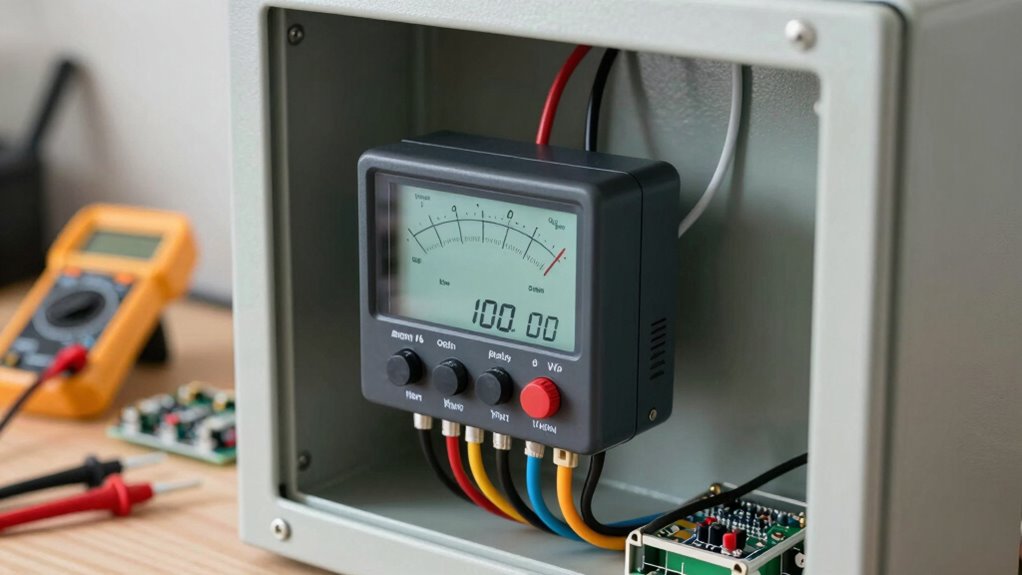

To add a voltmeter that gives accurate, truthful readings, start by following proper wiring diagrams and double-check connections before powering on. Use a high-quality voltmeter suited for your system, and always verify accuracy with a known voltage source like a 9V battery. Calibrate regularly, keep wiring neat and secure, and wear safety gear during installation. If you’re curious about ensuring reliable measurements, keep exploring how proper setup and maintenance make all the difference.

Get business pricing on garage and car supplies
- Business-only prices and quantity discounts
- Tax-exempt purchasing
- Multiple users, one account, clear invoices
Key Takeaways
- Use a high-quality, calibrated voltmeter for accurate and reliable readings.
- Follow proper wiring diagrams; connect positive to positive and negative to negative terminals.
- Verify connections before powering on to prevent false readings or damage.
- Calibrate the voltmeter with a known voltage source regularly to ensure measurement accuracy.
- Minimize electrical interference and environmental factors that can distort voltage measurements.
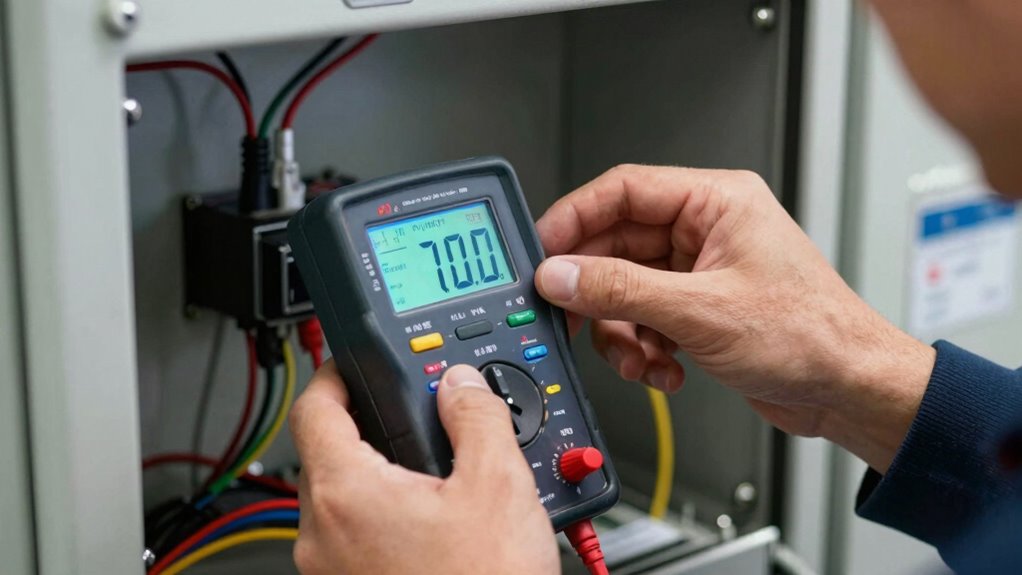
Ever wondered how to guarantee your voltmeter gives accurate readings? The key lies in proper installation and understanding how your device interacts with your system. First, you need to ensure that your voltmeter is correctly wired into your circuit. Using the right wiring diagrams is essential here. These diagrams serve as your blueprint, guiding you through the process of connecting your voltmeter safely and effectively. They show where to connect the positive and negative leads, ensuring your readings aren’t just guesses but precise measurements. When wiring your voltmeter, always double-check the connections against the diagram. Incorrect wiring can lead to inaccurate readings or damage to your meter.
Ensure correct wiring with proper diagrams for accurate and safe voltmeter readings.
Another critical aspect is battery safety. If you’re installing a voltmeter in a vehicle or any system powered by batteries, you must prioritize safety to avoid short circuits, sparks, or even fires. Before starting, disconnect the power source completely. Use insulated tools and wear protective gear. When connecting the voltmeter, make sure you’re attaching the positive lead to the positive terminal and the negative to the negative terminal. This proper polarity prevents false readings and potential damage. Always verify your connections before restoring power, and keep the wiring neat and secure to prevent accidental disconnections or shorts. Proper installation techniques are crucial for ensuring accurate and safe operation.
To guarantee your voltmeter provides truthful readings, calibration is vital. After installation, test the device with a known voltage source, like a fresh 9V battery, to verify accuracy. If the readings are off, consult the user manual for calibration procedures or consider using a multimeter to cross-check the measurements. Regular calibration ensures consistent, reliable data and helps you identify any issues before they cause problems in your system. Additionally, understanding the importance of proper device interaction can greatly improve your measurement reliability. Knowing how your voltmeter interacts with your system components helps prevent errors caused by electrical interference or incompatible devices. Moreover, paying attention to measurement conditions such as temperature and noise can further enhance the accuracy of your readings. Maintaining awareness of these factors is part of good measurement practices that support dependable data.
Lastly, pay attention to the quality of your voltmeter and its components. Cheaper models might save money upfront but often sacrifice accuracy and durability. Investing in a good-quality voltmeter designed for your specific application ensures longevity and precise readings. Remember, the goal is not just to install a voltmeter but to trust the data it provides. Proper wiring, adherence to safety protocols, regular calibration, and choosing a reliable device all combine to give you honest, trustworthy voltage readings rather than guesses. This way, you can confidently monitor your system’s health and make informed decisions based on accurate data.
digital voltmeter for automotive use
As an affiliate, we earn on qualifying purchases.
As an affiliate, we earn on qualifying purchases.
Frequently Asked Questions
What Types of Voltmeters Provide the Most Accurate Readings?
You’ll find digital voltmeters generally offer the most accurate readings, thanks to their precise digital display and reduced human error. Analog voltmeters can be accurate too but tend to be less precise due to needle fluctuations. To guarantee accuracy, regularly perform calibration techniques like zero adjustment and comparison against a known voltage source. Using well-maintained, calibrated digital meters will give you the most trustworthy, true readings.
How Often Should I Calibrate My Voltmeter?
You should calibrate your voltmeter at least once a year, but environmental factors can affect accuracy, so consider more frequent checks if you use it in extreme temperatures or humid conditions. Regular calibration guarantees reliable readings, especially if you notice discrepancies or inconsistent measurements. Don’t wait until it’s obviously off—staying proactive helps maintain your voltmeter’s precision and extends its lifespan.
Can I Use a Digital Voltmeter for High Voltage Measurements?
Yes, you can use a digital voltmeter for high voltage measurements, but choose the right type. Handheld digital voltmeters are portable, while bench models offer higher accuracy and range. When comparing analog vs digital, digital devices generally provide more precise readings and easier reading. Make sure your digital voltmeter is rated for your high voltage levels, and always follow safety guidelines to prevent accidents or damage.
What Are Common Causes of Inaccurate Voltmeter Readings?
Inaccurate voltmeter readings often stem from poor calibration techniques or low component quality. You might see errors if your device isn’t properly calibrated regularly or if it uses cheap, unreliable parts. To improve accuracy, guarantee your voltmeter is correctly calibrated using a known voltage source, and opt for a model with high-quality components. Regular maintenance and calibration are key to getting truthful, consistent measurements.
Is It Safe to Modify or Build My Own Voltmeter?
Modifying or building your own voltmeter can be safe if you follow proper DIY safety procedures and guarantee component compatibility. You should have a good understanding of electrical systems, use insulated tools, and work in a safe environment. Double-check all parts and connections to prevent shorts or damage. If you’re unsure about any step, consult a professional to avoid risks, especially when working with high voltages.
calibrated multimeter for accurate voltage measurement
As an affiliate, we earn on qualifying purchases.
As an affiliate, we earn on qualifying purchases.
Conclusion
Now that your voltmeter is truthful, think of it as a lighthouse guiding you through the stormy seas of electrical uncertainty. It stands as a steady beacon, revealing the true voltage amidst the fog of guesses and assumptions. With this tool, you’re no longer sailing blindly—you’re steering with clarity and confidence. Keep it calibrated, and let your voltmeter be the unwavering lighthouse that always guides you home safely, no matter how turbulent the currents.
high-quality voltmeter with safety features
As an affiliate, we earn on qualifying purchases.
As an affiliate, we earn on qualifying purchases.
As an affiliate, we earn on qualifying purchases.
Halloween Picks
halloween
As an affiliate, we earn on qualifying purchases.