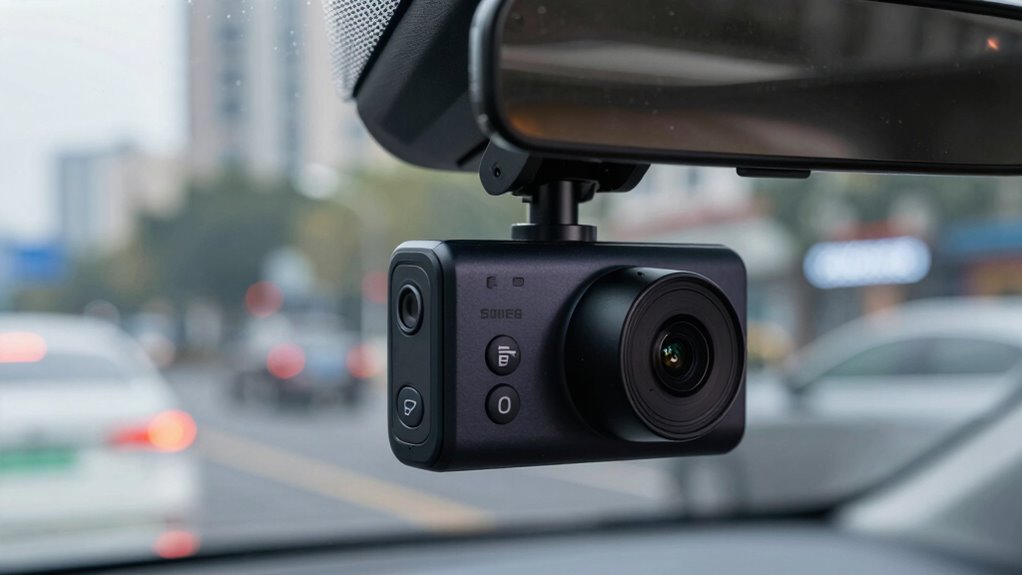

You might think a higher dash cam resolution guarantees better footage, but placement and lighting are far more important. Proper camera positioning guarantees a clear view of key details like license plates, while good lighting conditions help capture sharp images, day or night. Features like night mode and sensor quality improve low-light performance. Focusing on these settings leads to more reliable footage than just obsessing over megapixels. Keep exploring, and you’ll discover how to optimize your dash cam setup for the best results.

Get business pricing on garage and car supplies
- Business-only prices and quantity discounts
- Tax-exempt purchasing
- Multiple users, one account, clear invoices
Key Takeaways
- Proper camera placement and angle are more crucial than high resolution for clear footage.
- Good lighting conditions and camera settings significantly impact video clarity regardless of resolution.
- Features like infrared and night modes improve low-light footage more than increasing megapixels.
- Sensor quality and optimized compression preserve detail without needing ultra-high resolution.
- Investing in setup and lighting adjustments yields more reliable footage than focusing solely on megapixel count.
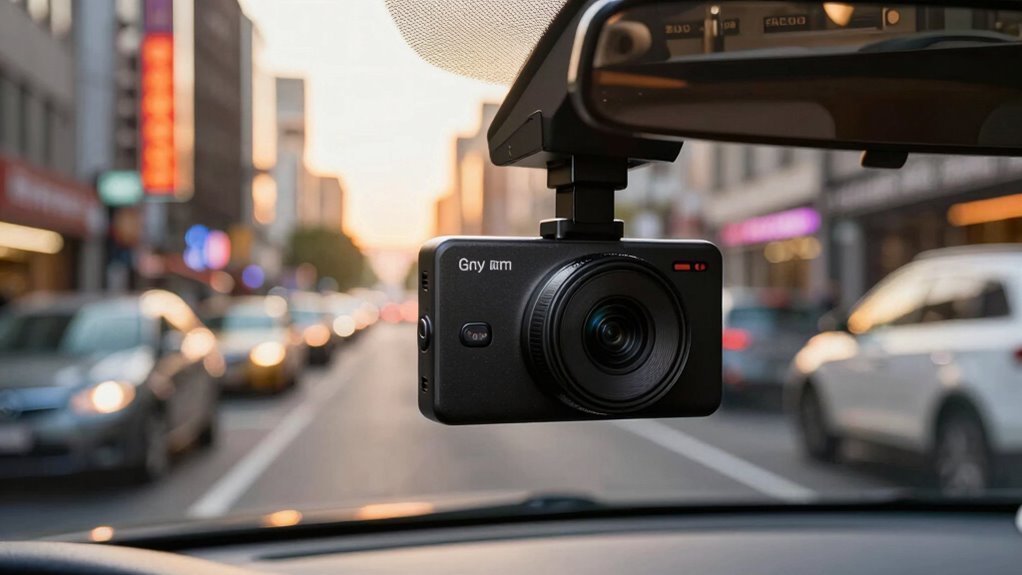
When it comes to dash cams, many drivers assume that higher resolution automatically means better footage. But that’s not always the case. Instead, what really matters are how you position your camera and how well it performs in various lighting conditions. These factors can make a bigger difference in capturing clear, useful footage than simply having the highest pixel count. Additionally, understanding seed preservation techniques can help ensure your dash cam’s components stay in top condition over time. Camera placement is crucial. If your dash cam isn’t pointed correctly or is obstructed by dirt, glare, or interior reflections, even the sharpest resolution won’t help. You want to mount it where it has a clear, unobstructed view of the road ahead. Typically, placing the camera behind the rearview mirror offers a good balance—it’s high enough to capture most of the lane and traffic, yet out of your way. Make sure it’s angled correctly so it captures the license plates of other vehicles and relevant details in front of you. Proper placement ensures that the footage is useful in case of an incident, and it minimizes the need for heavy stabilization or enhancement later. Also, selecting a camera with good low-light performance** is essential, as it can make a significant difference when driving in varying lighting conditions. Lighting conditions are another critical factor. No matter how high your dash cam’s resolution, poor lighting can turn footage into a blurry, unusable mess. During the day, direct sunlight can cause glare, while at night, insufficient lighting makes footage grainy. Look for a dash cam with good low-light performance—features like wider apertures, infrared capabilities, or enhanced night modes can significantly improve footage quality in dim conditions. Additionally, some models come with automatic exposure adjustments that respond quickly to changing light, helping to prevent overexposed or underexposed footage. Understanding sensor technology can further improve your choice of camera for various lighting environments. It’s also beneficial to consider the video compression technology used, as it can impact storage capacity and footage quality without necessarily increasing resolution. Adjusting your camera’s settings to optimize exposure and contrast for different lighting scenarios can make a noticeable difference in the clarity and detail of your recordings. Ultimately, focusing on camera placement and lighting conditions yields better results than obsessing over resolution alone. A well-placed camera in good lighting can produce footage that’s sharp and detailed enough to serve as reliable evidence, even if it’s not in ultra-high definition**. Conversely, a high-resolution camera that’s poorly positioned or struggles in low light is unlikely to deliver footage you can confidently rely on. So, rather than fixating on megapixels, invest your time in positioning your dash cam correctly and choosing a model that handles diverse lighting scenarios well. These adjustments will help ensure your footage remains clear, useful, and ready when you need it most.
As an affiliate, we earn on qualifying purchases.
Frequently Asked Questions
How Does Low Light Affect Dash Cam Footage Quality?
Low light markedly affects dash cam footage quality, making images darker and details harder to see. Your dash cam’s night vision feature and sensor sensitivity play vital roles here. If night vision isn’t effective or sensor sensitivity is low, footage becomes grainy or blurry, especially in poorly lit conditions. To improve footage, make certain your dash cam has good night vision capabilities and adjust sensor sensitivity settings for better clarity during nighttime drives.
What Is the Ideal Frame Rate for Clear Recordings?
You should set your dash cam to a frame rate of around 30 fps for clear recordings, especially in night vision conditions. This balance helps capture smooth footage without consuming excessive storage capacity. Higher frame rates can improve clarity in low light, but they use more storage. Adjusting your settings guarantees you get detailed, reliable recordings, even in challenging conditions like night driving or inclement weather.
Do Lens Quality and Angle Impact Video Clarity?
Yes, lens quality and angle markedly impact your video clarity. A durable lens guarantees sharpness over time, resisting scratches and dust that can obscure footage. Meanwhile, angle versatility lets you capture more of the road, making footage more thorough and detailed. If your lens isn’t up to the task or your angle is limited, essential moments could be blurry or missed entirely. Don’t underestimate how these factors shape your footage’s clarity and reliability.
How Often Should I Clean My Dash Cam Lens?
You should clean your dash cam lens regularly to maintain clear footage. Aim for lens maintenance every couple of weeks, especially if you drive often or encounter dust, dirt, or smudges. Use a soft microfiber cloth and gentle cleaning solution to avoid scratches. Frequent cleaning guarantees your dash cam captures sharp, detailed videos, making it easier to review incidents or accidents. Consistent cleaning frequency keeps your device performing at its best.
Can Video Compression Reduce Footage Quality Significantly?
Video compression can substantially reduce footage quality, with studies showing compressed videos often lose up to 50% of detail. When you use video encoding, compression artifacts like blurring or pixelation may appear, especially in fast-moving scenes. These artifacts are more noticeable on lower-quality footage. So, while compression saves storage space, it can diminish clarity, making it essential to balance compression levels with maintaining adequate video quality.
As an affiliate, we earn on qualifying purchases.
Conclusion
Remember, while high resolution might seem like the key to clear footage, it’s really just the tip of the iceberg. Think of your dash cam settings like a well-tuned instrument—you’ll get better results by focusing on things like exposure, frame rate, and lens quality. Don’t get caught up in chasing pixels like a kid chasing bubbles. Instead, fine-tune what truly matters, and your footage will be sharper, clearer, and more reliable, like a steady heartbeat in the chaos.
As an affiliate, we earn on qualifying purchases.
As an affiliate, we earn on qualifying purchases.
Halloween Picks
halloween
As an affiliate, we earn on qualifying purchases.