
Using a bigger inverter isn’t always better because it can reduce your system’s efficiency, generate excess heat, and wear out faster. Oversized inverters may struggle with sudden load changes, causing instability or even system shutdowns. They also operate less efficiently at lower loads, wasting energy and increasing costs. Proper sizing is key—if you want to avoid these problems and get the most reliability, keep exploring the details behind inverter sizing and performance.

Get business pricing on garage and car supplies
- Business-only prices and quantity discounts
- Tax-exempt purchasing
- Multiple users, one account, clear invoices
Key Takeaways
- Oversized inverters can reduce efficiency, causing more energy loss as heat and decreasing overall system performance.
- Larger inverters may struggle with sudden load changes, risking voltage instability and potential damage to electronics.
- Operating at partial loads drops inverter efficiency, leading to unnecessary energy waste and heat generation.
- Bigger inverters often require more space, cooling, and complex setup, increasing costs and system complexity.
- Proper sizing to match load requirements optimizes performance, preventing issues caused by oversizing.
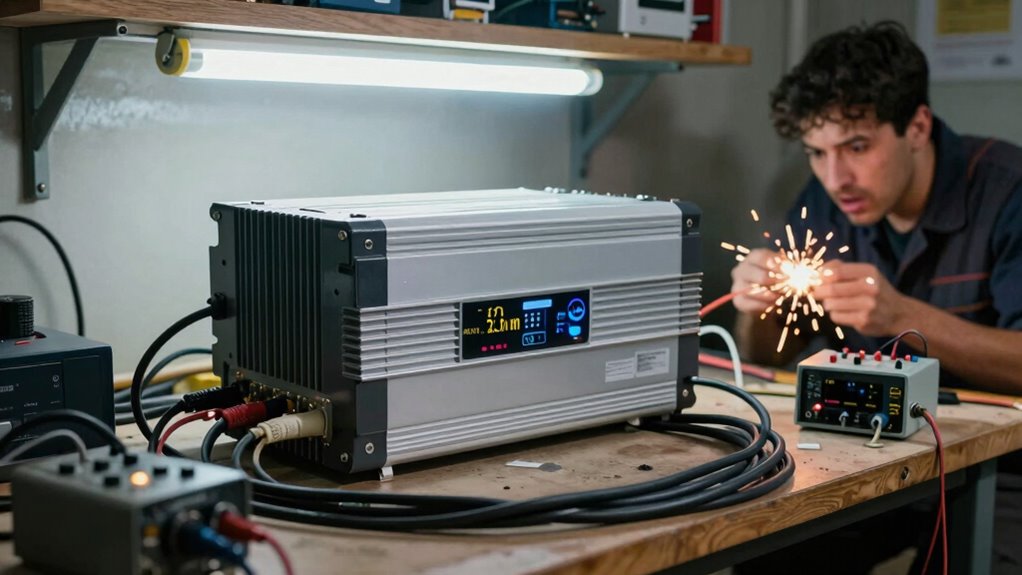
A larger inverter isn’t always the solution when your system struggles—sometimes, it can make things worse instead of better. When you think about upgrading to a bigger inverter, your main goal is likely to boost power capacity and guarantee smoother operation. But what you might not realize is that increasing inverter size doesn’t automatically improve performance. In fact, a bigger inverter can sometimes decrease overall inverter efficiency, which is the key to reliable power and stability. When inverter efficiency drops, more energy gets lost as heat, reducing the system’s overall effectiveness and potentially causing instability.
Power stability is essential, especially if you rely on your system for critical loads. A larger inverter, if not matched properly to your needs, might struggle to handle sudden load changes or fluctuations. Instead of maintaining a steady output, it can cause voltage swings or interruptions. This instability can damage sensitive electronics or cause your system to shut down unexpectedly. Larger inverters often have a higher capacity but may not be optimized for your specific load profile, leading to inefficient operation. As a result, you might experience more frequent outages or inconsistent power delivery, defeating the purpose of expanding capacity.
Another issue with oversized inverters is that they may run inefficiently at partial loads. Inverter efficiency is highest when the inverter operates close to its rated capacity, but if you install a size that’s far bigger than your actual demand, it might frequently operate at low loads where efficiency drops considerably. This inefficiency causes unnecessary energy waste and can generate excess heat, which further impacts performance and durability. Over time, this inefficiency can increase your energy costs and reduce the lifespan of your inverter.
Plus, a larger inverter can impose additional costs and complexity on your system. Not only does it require more space and potentially more cooling, but it also demands careful configuration to guarantee compatibility with your system components. If your inverter isn’t properly sized, it might lead to frequent system resets or protective shutdowns, all of which undermine power stability. Sometimes, the best solution isn’t a bigger inverter but a properly matched, high-quality inverter designed specifically for your load requirements. That way, you optimize inverter efficiency, maintain power stability, and avoid the pitfalls of oversizing.
In short, more capacity isn’t always better. You need to weigh your actual needs, the efficiency of the inverter, and how well it can maintain power stability. Oversizing might seem like a quick fix, but it can backfire by reducing efficiency, increasing costs, and causing instability. The smarter approach is to select an inverter that aligns with your load profile and ensures consistent, reliable power without unnecessary waste.
best inverter for home solar system
As an affiliate, we earn on qualifying purchases.
As an affiliate, we earn on qualifying purchases.
Frequently Asked Questions
Can Upgrading to a Bigger Inverter Harm My Appliances?
Upgrading to a bigger inverter can harm your appliances if it’s not compatible with your battery capacity and appliance requirements. An oversized inverter may supply power inconsistently, risking damage or reduced lifespan of your devices. Always check inverter compatibility with your battery capacity and appliance wattages before upgrading. Proper sizing guarantees your appliances receive stable power without overloads, preventing potential damage and ensuring efficient operation.
What Are Signs That My Inverter Is Too Large for My System?
You’ll notice signs like increased inverter noise and more complex installation if your inverter is too large for your system. The noise may become louder and more constant, indicating strain. Additionally, installation might require extra modifications, making it more complex and costly. An oversized inverter can lead to inefficiencies and unnecessary wear, so pay attention to these signs and consider consulting a professional to verify compatibility and peak performance.
How Does Inverter Size Affect Energy Efficiency?
Imagine you’re in a time machine—your inverter size directly impacts your system’s energy efficiency. A larger inverter than needed causes it to operate inefficiently, wasting power from your solar panel and battery storage. It frequently runs at partial capacity, leading to increased wear and energy loss. Smaller, properly sized inverters optimize performance, reduce waste, and guarantee your solar setup delivers maximum efficiency, saving you money and extending your system’s lifespan.
Is There an Ideal Inverter Size for Small Home Systems?
The ideal inverter size for small home systems depends on your solar compatibility and energy needs. You should choose an inverter that matches your solar panel capacity for peak performance. Oversized or undersized inverters can cause inefficiencies or damage, so careful inverter installation is crucial. By selecting a properly sized inverter, you guarantee your system operates smoothly, maximizes energy production, and avoids costly repairs or replacements.
How Do I Determine the Right Inverter Size for My Needs?
Think of your inverter as the heart of your system, pumping power to keep everything alive. To find the right size, you need to gauge your energy needs, considering your peak power draw. Check your battery compatibility and plan for inverter installation that matches your highest energy demands. Measure your appliances’ startup surges, and select an inverter slightly above that to guarantee smooth operation without overloading.
As an affiliate, we earn on qualifying purchases.
Conclusion
So, next time you reach for a bigger inverter, imagine pouring a stronger current into a delicate river. Instead of smooth flow, it causes turbulence and chaos, risking damage and confusion. Bigger isn’t always better; sometimes, it’s about balance and understanding the delicate dance of power. Keep that image in mind. Small, steady streams often preserve the beauty, while rushing in with more can drown what’s precious. Choose wisely, and let harmony guide your decision.
high efficiency inverter for electronics
As an affiliate, we earn on qualifying purchases.
As an affiliate, we earn on qualifying purchases.
As an affiliate, we earn on qualifying purchases.
Halloween Picks
halloween
As an affiliate, we earn on qualifying purchases.