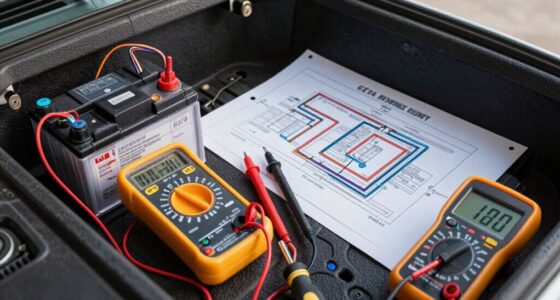
If you notice your lights flickering intermittently, appliances acting unpredictably, or a faint burning smell, these could be signs of weak grounding that you might not immediately suspect. You might also experience a tingling sensation when touching certain devices or outlets, even without sparks or smoke. Frequent circuit breaker trips and corrosion on grounding connections are subtle clues often overlooked. Keep hunting for more hidden indicators—there’s plenty more to uncover about keeping your electrical system safe.

Get business pricing on garage and car supplies
- Business-only prices and quantity discounts
- Tax-exempt purchasing
- Multiple users, one account, clear invoices
Key Takeaways
- Flickering lights or subtle hums may occur without obvious electrical faults, indicating potential grounding issues.
- Frequent circuit breaker trips can happen even with no visible wiring problems.
- Appliances acting unpredictably or malfunctioning might be a sign of poor grounding, not necessarily a direct fault.
- Faint burning smells or corrosion at connections could suggest grounding resistance problems hidden from plain sight.
- Slight tingling sensations when touching devices are symptoms often mistaken for other issues, but may point to weak grounding.

You might experience a persistent tingling sensation when touching appliances or outlets, but not associate it with grounding. This sensation can happen when the ground isn’t effectively dispersing electrical faults, making your system unsafe. Flickering lights, especially when they flicker intermittently or don’t stabilize, are another sign that your ground might be weak. These flickers can be caused by poor grounding connections that fail to provide a stable pathway for electrical current. You might also notice that certain appliances or devices seem to malfunction or behave unpredictably, which could be linked to ineffective grounding techniques.
Persistent tingling and flickering lights signal potential grounding issues affecting your safety.
Sometimes, you won’t see obvious sparks or smoke, which can make these issues easy to overlook. Instead, subtle signs like a slight hum from your electrical system or a faint burning smell can hint at grounding problems. If your circuit breakers trip frequently, it’s often a sign that your system is struggling to handle electrical loads safely—another indication that your ground may be compromised. Regular inspection of your grounding system can reveal these issues early, especially if you notice signs like corrosion or loose connections**, which are common indicators of grounding issues. Using specialized testing tools or techniques can help detect ground resistance problems that are not visible to the naked eye. Additionally, understanding the importance of proper grounding techniques can prevent many of these issues from occurring in the first place. Properly maintained grounding systems are essential for electrical safety** and can significantly reduce the risk of hazards.
Being aware of the grounding system’s condition can also help you prevent potential hazards before they develop. It’s essential to address these symptoms promptly because weak ground signs can compromise electrical safety. Faulty grounding can lead to electric shocks, damage to sensitive electronics, or even fires. Making sure your grounding techniques are correctly implemented isn’t just about avoiding inconvenience; it’s about protecting everyone in your space from potential electrical hazards. If you’re unsure about the condition of your grounding system, consider consulting a professional electrician. They can perform thorough testing, including measuring ground resistance, to verify your system is safe. Remember, a weak ground doesn’t always show obvious symptoms, but paying attention to these subtle signs can help you catch problems before they escalate. Prioritize electrical safety by maintaining a reliable grounding system, and don’t ignore symptoms that could signal a weak ground lurking beneath the surface. Your safety and peace of mind depend on it.
grounding tester for electrical outlets
As an affiliate, we earn on qualifying purchases.
As an affiliate, we earn on qualifying purchases.
Frequently Asked Questions
Can Weak Grounding Cause Electrical Fires?
Yes, weak grounding can cause electrical fires. Grounding hazards increase the fire risk because they prevent proper current flow, which can lead to overheating and sparks. When your system isn’t grounded correctly, electrical faults may go unnoticed, causing wires to heat up dangerously. Always make certain your grounding system is solid and up-to-date to minimize fire risk and protect your home from potential electrical fires.
How Long Does It Take to Fix a Weak Ground?
Fixing a weak ground typically takes a few hours, but it depends on the complexity of your electrical system and the extent of grounding maintenance needed. You should hire a licensed electrician to guarantee proper repairs, which enhances electrical safety and prevents future issues. Prompt attention to grounding problems minimizes risks like electrical shocks or fires, so don’t delay scheduling repairs to keep your electrical system safe and reliable.
Are All Appliances Equally Affected by Weak Grounding?
Think of appliances as dancers in a performance—some are more sensitive to weak grounding, like a delicate ballet dancer, while others are more resilient. Not all appliances are equally affected by weak grounding; those with metal cases or complex electronics are more vulnerable. You need a thorough grounding inspection to guarantee appliance safety, preventing shocks or damage. Addressing weak ground issues keeps your entire electrical dance smooth and safe.
Can Weather Conditions Worsen Grounding Problems?
Yes, weather conditions can worsen grounding problems. Heavy rain or droughts affect soil stability and moisture levels, which are vital for good grounding. Excess moisture can cause the ground to become unstable and less conductive, while dry conditions can lead to cracks and poor contact. Both situations weaken the grounding system, increasing the risk of electrical issues. So, keep an eye on weather patterns to maintain effective grounding.
Is Professional Testing Necessary for Diagnosing Grounding Issues?
You should definitely consider professional testing for diagnosing grounding issues. Relying solely on DIY testing can lead to grounding myths and missed problems, especially with complex electrical systems. Experts use specialized tools to accurately identify weak grounds and guarantee safety. While DIY tests are helpful for basic checks, a professional assessment guarantees thorough diagnostics and proper fixes, preventing potential electrical hazards and ensuring your system’s reliability.
As an affiliate, we earn on qualifying purchases.
Conclusion
So, next time your electronics act up or your outlets seem off, don’t dismiss the ground. After all, it’s the silent hero that keeps everything running smoothly—until it doesn’t. Ironically, a weak ground often shows no obvious signs, making you think all is well. But neglect it, and you might find yourself in a shocking situation. Remember, sometimes the quietest connections cause the loudest problems—so pay attention before it’s too late.
As an affiliate, we earn on qualifying purchases.
electrical outlet voltage tester
As an affiliate, we earn on qualifying purchases.
As an affiliate, we earn on qualifying purchases.
Halloween Picks
halloween
As an affiliate, we earn on qualifying purchases.