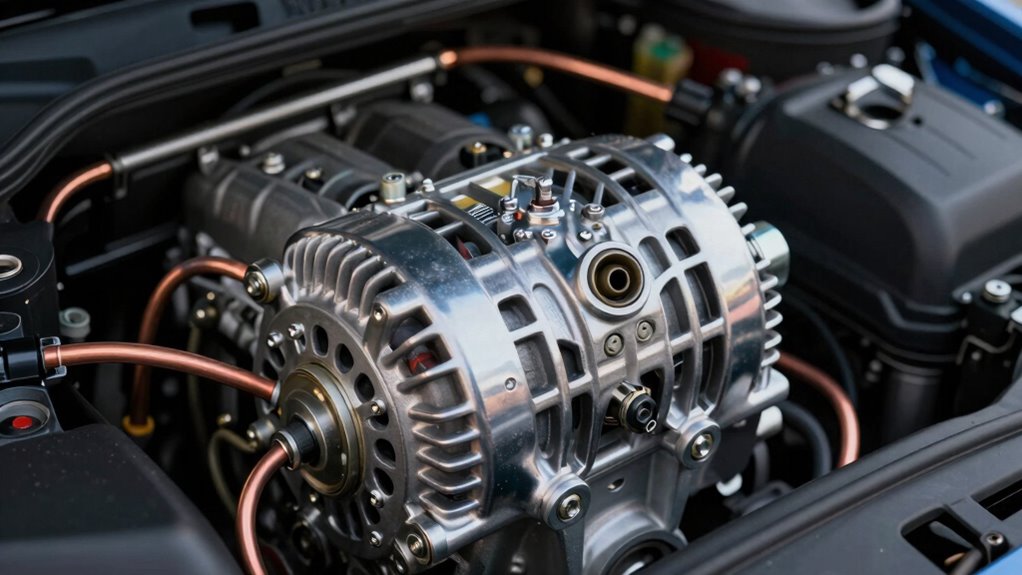

If your alternator is the bottleneck, you’ll notice electrical issues like dimming headlights, warning lights, or random stalling, even if your battery appears fine. A weak alternator can cause your vehicle’s electrical system to malfunction, making it seem like the battery is dead. You might find your battery slowly draining over time despite being healthy. Recognizing these signs helps prevent bigger problems—keep going to discover more about diagnosing and fixing this common black sheep.

Get business pricing on garage and car supplies
- Business-only prices and quantity discounts
- Tax-exempt purchasing
- Multiple users, one account, clear invoices
Key Takeaways
- An alternator failing to supply sufficient power causes electrical issues despite a healthy battery.
- Dimming lights and warning indicators often signal alternator weakness rather than battery problems.
- A healthy battery can still drain quickly if the alternator isn’t recharging it properly.
- Testing alternator output reveals if it’s the source of electrical support bottleneck.
- Regular diagnostics help distinguish between alternator failure and battery health issues.
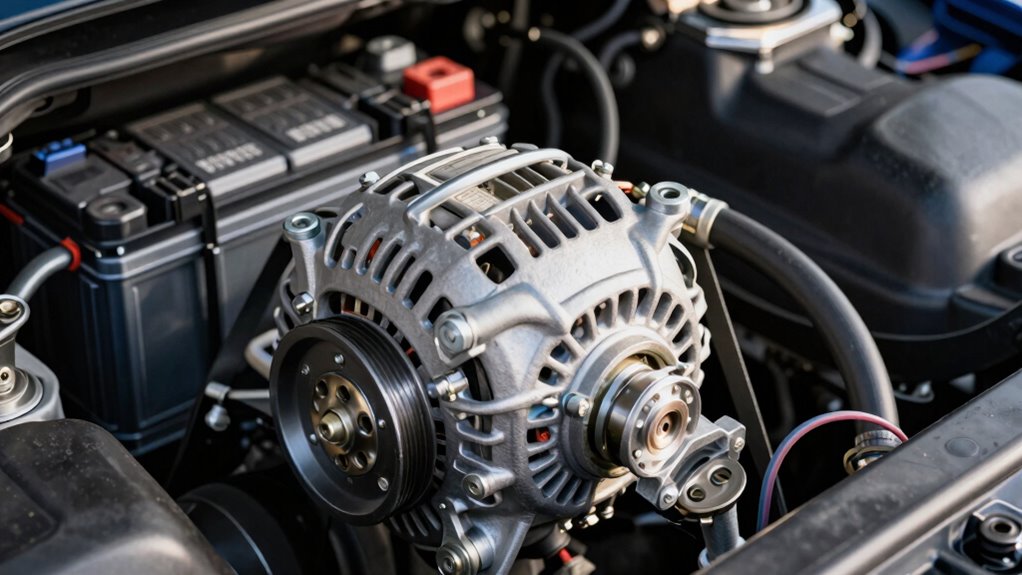
If your car’s electrical issues persist despite a healthy-looking battery, the problem might not be your battery at all—instead, your alternator could be the bottleneck. The alternator is a crucial part of your vehicle’s charging system, responsible for supplying power to run your electrical components and recharge the battery while the engine is on. When it isn’t functioning properly, your car’s electrical load exceeds what the alternator can support, leading to dimming lights, slow accessory operation, or even a complete electrical failure. Many drivers assume a dead battery is the culprit, but in reality, a failing alternator can mimic battery problems and cause similar symptoms.
Your vehicle’s charging system depends heavily on the alternator’s ability to produce consistent voltage and current. If the alternator’s output drops below what’s needed, your car’s electrical load—everything from your headlights to your onboard computer—won’t receive enough power. This can lead to a gradual drain on your battery, which may still appear healthy but is actually being drained because the alternator isn’t recharging it properly. Over time, this imbalance causes your battery to weaken and your car’s electrical system to behave erratically. Recognizing the alternator’s role in the charging system is essential for accurate diagnosis. Additionally, understanding how the electrical system interacts with various components can help you identify early warning signs. Regular testing of the alternator output can help prevent unexpected failures and costly repairs. Being aware of the symptoms of alternator failure can also assist in catching issues early before they lead to breakdowns.
A weak alternator causes electrical drain, making your battery seem healthy but actually weakening over time.
You might notice warning signs like dashboard warning lights, especially the battery or alternator indicator. If your headlights dim when you turn on accessories or if your vehicle stalls unexpectedly, these are strong indicators that your alternator isn’t meeting the electrical load demands. You could also experience difficulty starting your car, as the battery isn’t being replenished adequately. These symptoms point to a problem within the charging system, not necessarily the battery itself. Additionally, electrical system stress can accelerate wear on other components if the issue persists. Regular maintenance checks can help prevent these issues from escalating into more costly repairs.
As an affiliate, we earn on qualifying purchases.
Frequently Asked Questions
How Can I Tell if My Alternator Is Failing?
You can tell if your alternator is failing by observing signs like dimming headlights, flickering dashboard lights, or a battery warning light on your dash. During an electrical diagnosis, a mechanic checks your charging system to see if the alternator is producing enough power. If your car stalls or has difficulty starting, it’s a strong indicator your alternator isn’t keeping up, and a professional inspection is needed to confirm.
What Are Common Signs of Alternator Problems?
You often notice dimming headlights, flickering interior lights, or a dead battery when your alternator has issues. If your vehicle’s electrical system diagnostics reveal frequent voltage fluctuations or warning lights on the dashboard, these are signs of alternator problems. Regular alternator maintenance helps prevent these issues. Stay alert to strange sounds or difficulty starting your engine, and consult a mechanic promptly for proper electrical system diagnostics.
Can a Bad Alternator Damage My Battery?
Yes, a bad alternator can damage your battery. As your charging system falters, it causes inconsistent voltage, leading to battery corrosion and reduced lifespan. When the alternator struggles, it may overcharge or undercharge, stressing the battery and accelerating wear. You might notice warning signs first, but ignoring them risks severe damage to both components. Don’t wait—address alternator issues promptly to protect your battery’s health and keep your vehicle running smoothly.
How Often Should I Have My Alternator Tested?
You should have your alternator tested at least once a year as part of regular alternator maintenance. If your vehicle shows signs like dimming headlights or a dead battery, get it checked sooner. Testing guarantees your alternator maintains proper battery compatibility and prevents unexpected breakdowns. Regular inspections help catch issues early, saving you money and hassle while keeping your vehicle’s electrical system running smoothly.
What Parts Besides the Alternator Could Cause Electrical Issues?
Imagine your car’s dashboard flickering unexpectedly—it’s not solely the alternator. Faulty wiring connections can disrupt voltage regulation, causing electrical issues. Poor connections or damaged wiring can prevent proper power flow, leading to dim lights or erratic behavior. Besides the alternator, these wiring problems are common culprits. Regular inspection guarantees wiring connections are secure and voltage regulation functions correctly, helping you avoid unexpected electrical failures and maintain smooth vehicle operation.
As an affiliate, we earn on qualifying purchases.
Conclusion
So, stay savvy and stay sensitive to your system’s subtle signals. When your alternator’s antics become the bottleneck, don’t delay—detect, diagnose, and dominate the dilemma. Keep your car’s core charging core clear, and you’ll cruise confidently without costly conundrums. Remember, a vigilant vehicle guarantees vibrant vitality on every voyage. Don’t let a flawed alternator foster frustration—fuel your focus, fix the fault, and keep your journey joyful and smooth.
automotive alternator voltage tester
As an affiliate, we earn on qualifying purchases.
As an affiliate, we earn on qualifying purchases.
car battery and alternator diagnostic tool
As an affiliate, we earn on qualifying purchases.
As an affiliate, we earn on qualifying purchases.
Fall Picks
fall essentials
As an affiliate, we earn on qualifying purchases.