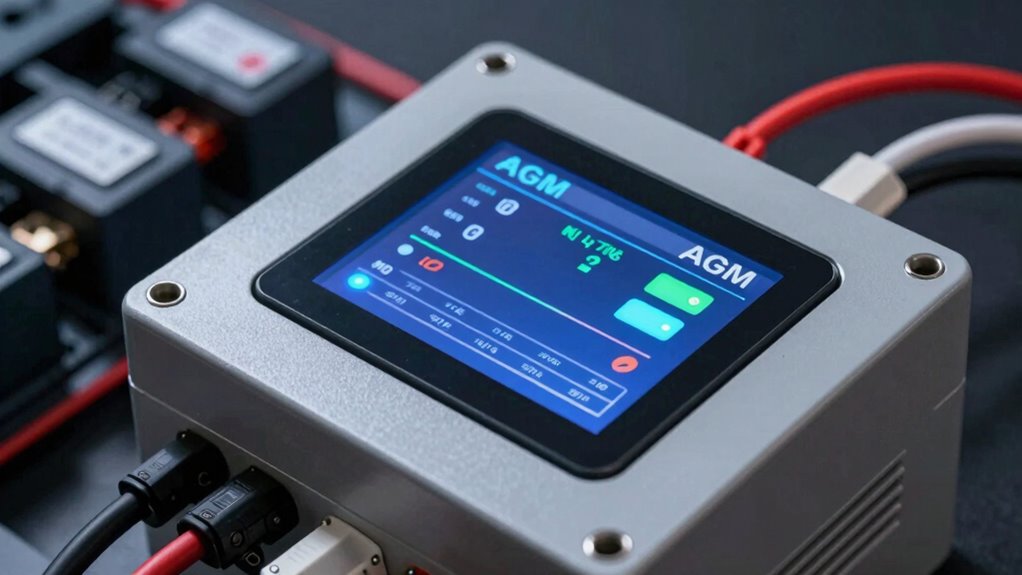

Many believe all chargers work equally well with AGM batteries, but that’s a common misconception. Using the wrong settings or an incompatible charger can cause damage, reduce lifespan, or lead to under- or overcharging. AGM batteries need specific voltage and current during different charging stages, and not adjusting these can harm them. If you want to guarantee your AGM battery stays healthy and gets the right care, keep exploring the proper charging techniques.

Get business pricing on garage and car supplies
- Business-only prices and quantity discounts
- Tax-exempt purchasing
- Multiple users, one account, clear invoices
Key Takeaways
- Assuming all chargers suit AGM batteries without adjusting voltage and current settings can cause damage.
- Believing standard lead-acid chargers are interchangeable with AGM batteries often leads to improper charging.
- Overlooking the need for specific charging stages and settings increases the risk of reduced battery lifespan.
- Assuming float voltage remains constant ignores environmental factors, risking over- or undercharging.
- Relying solely on automatic chargers without monitoring can neglect AGM-specific requirements for optimal health.
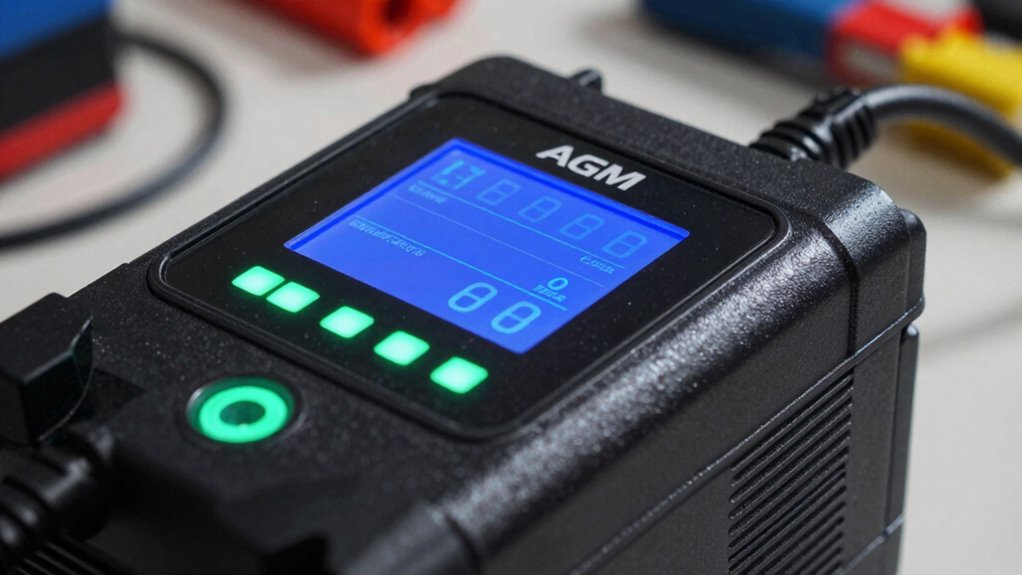
Proper AGM charging settings are vital to maximize battery lifespan and guarantee peak performance. Many people assume that simply connecting their AGM batteries to a charger and letting it run is enough. However, this common misconception overlooks the importance of precise charging parameters that promote optimal battery health. When you use the correct settings, you not only extend your battery’s lifespan but also improve charging efficiency, saving you time and money in the long run.
Using correct AGM charging settings maximizes battery life and boosts efficiency for long-term performance.
One of the biggest mistakes is believing that all chargers are suitable for AGM batteries without adjustments. AGM batteries require specific voltage and current settings during different charging stages—bulk, absorption, and float—to function correctly. If you ignore these details, you risk undercharging or overcharging, both of which can lead to reduced battery life. Overcharging can cause excessive heat and damage internal plates, while undercharging prevents the battery from reaching full capacity, decreasing its overall lifespan. Proper charger compatibility is essential to ensure these settings are met effectively. Additionally, selecting a charger with advanced features can help automatically adjust these parameters based on your battery’s needs.
Many think that a standard lead-acid charger can be used interchangeably with AGM batteries. This is not true. AGM batteries demand a charger with a compatible voltage profile and, ideally, a dedicated AGM setting. When you use the right charger, you guarantee that the charging efficiency is maximized, meaning you fully recharge your batteries in less time without harming them. Proper settings prevent excessive gassing or sulfation, which can permanently diminish capacity and shorten the battery’s longevity. Additionally, selecting a charger with adjustable settings can help tailor the charging process to your specific AGM battery needs.
Another common misconception is that once the battery is fully charged, you can leave it connected indefinitely. While float charging is necessary to maintain full charge, setting the correct float voltage is vital. Too high, and you risk overcharging; too low, and the battery may slowly lose its charge or become sulfated over time. It’s also crucial to regularly inspect and validate these settings to ensure they remain aligned with the battery’s current condition. Adjusting the float voltage accurately helps preserve your AGM battery’s health and prolongs its useful life. Regularly checking and adjusting these settings based on environmental factors is equally important for optimal performance.
People also underestimate the importance of regular maintenance and monitoring. Even with the correct settings, environmental factors like temperature can influence performance. Using a charger with temperature compensation ensures your AGM battery receives the right amount of charge regardless of external conditions. This attention to detail enhances charging efficiency and protects your investment by extending the overall battery lifespan. Additionally, understanding cloud server solutions and security strategies can help you monitor and control your charging systems remotely, ensuring optimal performance in various environments.
AGM battery charger with adjustable settings
As an affiliate, we earn on qualifying purchases.
As an affiliate, we earn on qualifying purchases.
Frequently Asked Questions
Can AGM Batteries Be Charged With Standard Lead-Acid Chargers?
Yes, you can charge AGM batteries with a standard lead-acid charger, but you must prioritize charging safety. Make certain the charger’s settings are compatible with AGM batteries, especially regarding voltage and charging rate. Using the wrong settings can reduce your battery’s lifespan and risk damage. Always follow the manufacturer’s recommendations to guarantee safe charging and maximize the longevity of your AGM battery.
How Often Should AGM Batteries Be Recharged During Storage?
You should recharge AGM batteries every 3 to 6 months during storage to maintain battery health. Regular recharging is essential for proper battery maintenance and prevents sulfation. Follow storage best practices by keeping the batteries in a cool, dry place, and avoid letting the voltage drop below 12.4 volts. Consistent recharging helps guarantee your AGM batteries stay ready for use and extend their lifespan.
Do AGM Batteries Require a Different Voltage Setting Than Flooded Batteries?
No, AGM batteries typically require a slightly higher voltage setting than flooded batteries for ideal charging efficiency. Some might worry this could harm their battery lifespan, but correctly adjusting the voltage actually enhances lifespan by preventing undercharging. Using the right voltage ensures you get the most out of your AGM battery’s performance and longevity, making your investment worthwhile. Proper settings help you maximize battery lifespan while maintaining charging efficiency.
What Are Signs of Overcharging in AGM Batteries?
You’ll notice overcharging in AGM batteries if they get excessively hot, swell, or develop a foul smell, which can shorten their battery lifespan. You might also see decreased performance or frequent need for recharging. Overcharging compromises charging safety, so it’s vital to monitor voltage carefully and avoid setting chargers too high. Keeping an eye on these signs helps guarantee your AGM batteries stay safe and last longer.
Is Temperature Compensation Necessary for AGM Charging?
Yes, temperature compensation is necessary for AGM charging. You should perform temperature calibration to guarantee accurate readings, as battery performance varies with temperature. Proper voltage regulation depends on adjusting the charger’s settings based on ambient conditions, preventing overcharging or undercharging. By incorporating temperature compensation, you help maintain ideal battery health, extend lifespan, and improve overall efficiency, especially in environments with fluctuating temperatures.
AGM battery charging voltage and current meter
As an affiliate, we earn on qualifying purchases.
As an affiliate, we earn on qualifying purchases.
Conclusion
Remember, setting your AGM charging parameters isn’t just about numbers; it’s about nurturing the soul of your battery. Treat it like a delicate garden, where proper care cultivates strength and longevity. When you respect its unique needs, you prevent the silent erosion of its importance. In this way, your charging settings become the guiding hand—an unseen but essential symbol of your commitment to the battery’s enduring life, ensuring it remains a steadfast companion on your journey.
automatic AGM battery charger with float mode
As an affiliate, we earn on qualifying purchases.
As an affiliate, we earn on qualifying purchases.
As an affiliate, we earn on qualifying purchases.
Fall Picks
fall essentials
As an affiliate, we earn on qualifying purchases.