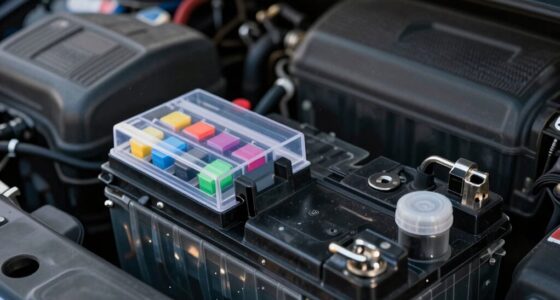
To prevent your vehicle’s battery from dying during a 60+ day storage, disconnect the negative terminal, or use a trickle charger or maintainer if you keep it connected. Make certain the battery is fully charged before storage, check it periodically, and replace weak batteries beforehand. Keep the vehicle in a cool, dry, well-ventilated area, inflate tires properly, and cover them if needed. For more tips to protect your car, continue exploring these best practices.

Get garage and car supplies delivered free — and shop member deals
- Fast, free delivery on millions of items
- Access to Prime Big Deal Days deals on October 6–7
- Prime Video, Amazon Music and more included
Key Takeaways
- Disconnect the negative terminal and use a trickle charger or maintainer to keep the battery charged.
- Store the vehicle in a cool, dry, well-ventilated area away from direct sunlight and extreme temperatures.
- Inflate tires to recommended pressure, move the vehicle periodically, and consider using jack stands to prevent flat spots.
- Fill the gas tank, add fuel stabilizer, and clean the vehicle to prevent corrosion and fuel degradation.
- Cover the vehicle with a breathable cover and regularly inspect it for any signs of damage or deterioration.
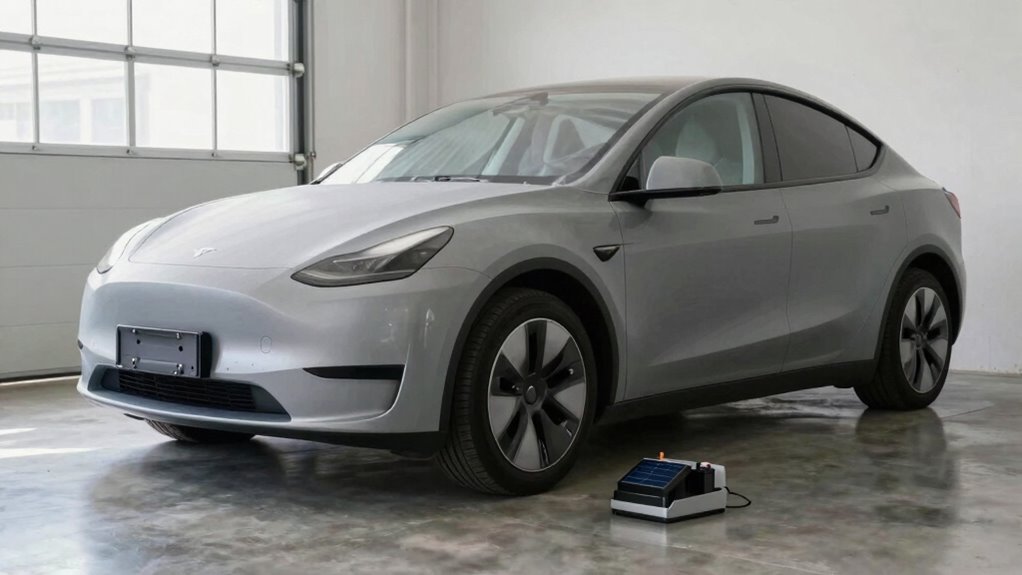
Storing your vehicle for more than 60 days requires careful planning to prevent damage and guarantee it stays in good condition. One of the most critical aspects is ensuring your battery remains healthy so it doesn’t die or become unusable upon return. To do this, you should either disconnect the battery or use a trickle charger. Disconnecting the negative terminal prevents parasitic drain, which can slowly deplete the battery over time. If you prefer to keep the battery connected, a quality trickle charger or battery maintainer will keep it charged without overcharging. Avoid letting the battery sit completely discharged, as this can cause sulfation, reducing its lifespan. Checking the battery’s charge level before storage and periodically during the storage period helps you identify any issues early. If your battery is old or weak, replacing it before storing the vehicle is a smart move to avoid starting problems later. Proper storage also involves maintaining battery health, which is crucial for a smooth start after long-term storage.
Tire preservation is equally important when storing your vehicle for an extended period. Over time, tires can develop flat spots if they remain stationary under constant pressure. To prevent this, inflate the tires to the manufacturer’s recommended pressure, which is often higher than normal driving levels. This helps maintain the shape of the tires and reduces the risk of flat spots. If possible, move the vehicle slightly every couple of weeks to shift the tires’ contact points on the ground. This prevents uneven wear and flat spots from forming. If you’re storing the car in a garage or on a concrete slab, consider placing the vehicle on jack stands to lift the tires off the ground. Doing so relieves pressure on the tires and suspends them, further preventing flat spots. Additionally, covering the tires with a breathable cover helps protect them from dust, dirt, and sunlight, which can degrade rubber over time. Regularly inspecting tire condition during storage can also help identify any issues early and prevent long-term damage. Ensuring proper ventilation in the storage area can also help prevent moisture buildup, which can cause rust and other issues. Also, using protective covers can shield the vehicle from environmental elements, extending its storage life.
Beyond battery maintenance and tire preservation, ensure your vehicle is stored in a cool, dry place away from direct sunlight and extreme temperatures, which can accelerate deterioration. Filling the gas tank before storage and adding a fuel stabilizer prevents the fuel from degrading and causing internal engine issues. Also, clean the vehicle thoroughly to remove dirt, grime, and any corrosive substances that could cause damage during storage. By taking these precautions, you give your vehicle the best chance to stay in top shape, ready to hit the road again after 60 days or more. Proper storage practices save you time and money in the long run and help keep your vehicle in prime condition.
As an affiliate, we earn on qualifying purchases.
Frequently Asked Questions
Can I Leave the Windows Slightly Open During Storage?
You can leave the windows slightly open during storage, but consider ventilation and security. A small gap improves air circulation, preventing mold and stale odors. However, it also raises security concerns, making it easier for theft or vandalism. To balance both, crack the windows just enough for ventilation, and park the vehicle in a secure, monitored area. Always weigh the risks and benefits to protect your vehicle effectively.
Should I Disconnect the Car Alarm System?
You should disconnect the alarm system to prevent unnecessary battery drain during storage. For example, a car owner stored their vehicle for three months, and the alarm drained the battery, causing starting issues. Disconnecting the alarm system minimizes this risk, ensuring your battery stays charged. If you’re worried about security, consider installing a solar-powered alarm or disconnecting the alarm’s fuse instead of removing the entire system.
Is It Necessary to Use a Fuel Stabilizer?
Using a fuel stabilizer is highly recommended for storage preparation, especially if your vehicle will sit for over 60 days. Fuel stabilizer benefits include preventing fuel degradation, varnish buildup, and gum formation, which can clog your engine. It helps keep the fuel fresh and your engine ready to start when you’re ready to use the vehicle again. Adding stabilizer is a simple step that can save you headaches later.
How Often Should I Check the Vehicle During Storage?
Check your car weekly to ward off worries. During each visit, inspect battery maintenance, ensuring terminals stay clean and connections tight. Test tire pressure to prevent flats and maintain proper handling. Look for leaks or fluid issues that could cause damage. Regularly reviewing your vehicle’s condition helps keep it ready and reliable, preventing problems from developing during storage. Consistent care keeps your car safe, sound, and ready when you need it again.
Will Overinflating Tires Prevent Flat Spots?
Overinflating your tires can help prevent flat spots during long-term storage. When tire pressure is higher than normal, the contact patch with the ground decreases, reducing the risk of flat spots forming over time. Just be careful not to overinflate too much, as it can cause uneven wear or damage. Regularly check the tire pressure before storage and maintain it at the recommended level to protect your tires from flat spots.
As an affiliate, we earn on qualifying purchases.
Conclusion
So, there you have it—your crash course in keeping that car alive while you’re away. Because nothing says “I trust my vehicle” like disconnecting every wire and praying to the automotive gods. Remember, a little preparation now saves you from a dead battery and a very inconvenient roadside rescue later. Now go ahead, stash that car, and return to find it just as enthusiastic to hit the road as when you left—battery and all.
As an affiliate, we earn on qualifying purchases.
breathable car cover for storage
As an affiliate, we earn on qualifying purchases.
As an affiliate, we earn on qualifying purchases.
Halloween Picks
halloween
As an affiliate, we earn on qualifying purchases.