Aerodynamics impact your vehicle’s maximum speed by reducing air resistance and managing airflow effectively. When a car’s shape minimizes drag, more of the engine’s power goes toward increasing speed rather than fighting air. Design features like sleek contours, spoilers, and smooth underbodies help achieve this. By optimizing airflow and decreasing turbulence, your vehicle can reach higher speeds more efficiently. Keep exploring how these aerodynamic principles work to release even greater speed potential.
Key Takeaways
- Reducing drag coefficient decreases air resistance, allowing more engine power to be used for increasing speed.
- Streamlined vehicle shapes minimize turbulence and wake, improving airflow and enabling higher maximum speeds.
- Aerodynamic features like spoilers and diffusers enhance stability, permitting safer high-speed driving.
- Managing airflow underneath and around the vehicle reduces drag and increases efficiency at top speeds.
- Optimized aerodynamics lower energy losses, helping vehicles reach and maintain maximum speed more effectively.

Understanding aerodynamics is essential to grasping how vehicles achieve their maximum speed. When you look at high-performance cars or racing vehicles, one of the most critical factors influencing their top speed is how well they manage airflow around them. This is where concepts like the drag coefficient and airflow optimization come into play. The drag coefficient measures how smoothly air flows over a vehicle’s surface; a lower value indicates less resistance, allowing the vehicle to cut through the air more efficiently. Engineers work tirelessly to reduce this coefficient by designing sleek, streamlined shapes that minimize turbulent airflow and drag. When you optimize airflow around a vehicle, you’re fundamentally reducing the force that opposes its motion, enabling it to accelerate faster and reach higher speeds. Reducing drag is a key focus in high-speed vehicle design to maximize performance.
Optimizing airflow and reducing the drag coefficient are key to unlocking a vehicle’s maximum speed and performance.
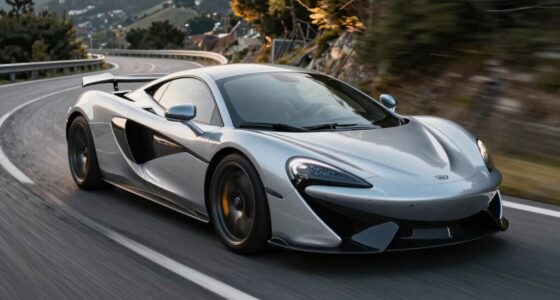
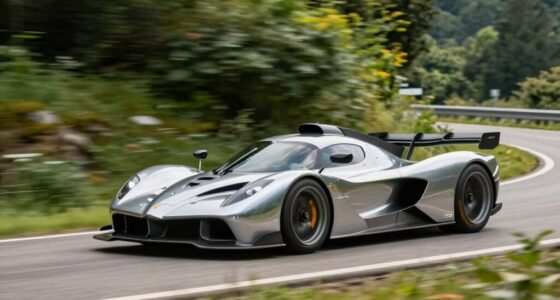
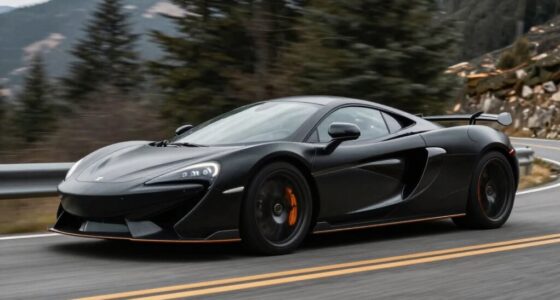
The shape of the vehicle directly impacts its drag coefficient. A rounded front with a smoothly tapered rear helps air flow seamlessly over the surface, decreasing turbulence and drag. Think of a sports car with a low, aerodynamic profile—it’s built to slice through air with minimal resistance. When airflow is optimized, less energy is wasted battling against air resistance, so more of your engine’s power goes directly into speed. This is why race cars feature streamlined bodies, rear spoilers, and diffusers—they’re all designed for airflow optimization. These elements work together to manage how air moves around the vehicle, reducing drag and increasing stability at high speeds. Additionally, aerodynamic efficiency plays a significant role in maintaining high speeds while conserving fuel and energy. Proper airflow management is further enhanced by underbody aerodynamics, which helps streamline airflow underneath the vehicle, minimizing turbulence and drag. Advanced aerodynamic modeling tools are used to predict and refine airflow patterns during the design process, helping engineers create more effective shapes and surfaces.
Beyond shape, other design features contribute to airflow optimization. For example, smooth underbody panels prevent air from becoming turbulent underneath the vehicle, further reducing drag. Similarly, side mirrors are replaced with camera systems in many high-speed vehicles because traditional mirrors cause additional airflow disruption. Every small detail counts when it comes to minimizing drag and maximizing speed. The goal is to create a flow that stays attached to the vehicle’s surface for as long as possible, avoiding separation that leads to turbulent wake and increased drag. Recognizing boundary layer control techniques is essential for engineers to enhance aerodynamic performance further.
In a nutshell, understanding and controlling airflow through aerodynamic design directly impacts your vehicle’s maximum speed. By minimizing the drag coefficient and optimizing airflow, you allow the vehicle to reach higher velocities with less effort and energy loss. This delicate balance between shape, surface features, and airflow management is what unlocks peak performance on the road or track. If you want to push a vehicle’s limits, focusing on aerodynamics isn’t optional—it’s fundamental. Every advancement in reducing drag and improving airflow translates into faster, more efficient vehicles capable of achieving their highest potential speeds.
Frequently Asked Questions
How Does Wing Shape Influence Top Speed?
Your wing shape directly affects top speed through wing design and lift enhancement. Sleek, aerodynamic wings reduce drag, allowing you to reach higher speeds efficiently. Wings with optimized lift enhancement generate the necessary lift without excessive drag, improving overall performance. By carefully designing wing shape, you minimize resistance and maximize airflow, which helps you accelerate faster and achieve a higher maximum speed while maintaining stability and control during flight.
What Role Does Drag Reduction Play in Speed Enhancement?
Think of your vehicle as a sailboat cutting through water; reducing drag is like trimming its sails for swift passage. By employing streamlining techniques and lowering the drag coefficient, you minimize air resistance. This allows your vehicle to accelerate more easily and reach higher speeds. When drag decreases, less energy is wasted fighting air resistance, giving you a smoother, faster ride and maximizing your vehicle’s potential on the road.
How Do Materials Affect Aerodynamic Efficiency?
Materials markedly influence aerodynamic efficiency through their strength and weight reduction capabilities. When you choose lightweight, strong materials, you can design sleeker shapes that cut through the air more easily, reducing drag. This means your vehicle or object can achieve higher speeds with less effort. Using advanced composites or lightweight alloys allows you to optimize aerodynamic performance, enhancing speed while maintaining durability and safety.
Can Aerodynamics Improve Speed in Non-Vehicle Objects?
Yes, aerodynamics can improve speed in non-vehicular objects. For example, applying aerodynamic principles to sports equipment can reduce drag by up to 40%, boosting performance. You can see this in racing bicycles or aircraft models, where streamlined shapes cut air resistance. By optimizing form and surface features, you enhance efficiency and speed, showing how aerodynamic principles extend beyond vehicles to improve various non-vehicular applications.
How Does Airflow Turbulence Impact Maximum Speed?
Airflow turbulence can substantially limit your maximum speed by increasing drag and causing instability. To improve your speed, focus on turbulence control techniques that promote airflow stability around your vehicle or object. When turbulence is minimized, your surface experiences less drag, allowing for smoother, faster movement. This is why aerodynamic designs prioritize streamlined shapes and turbulence control features—they ensure airflow remains stable, helping you reach and sustain higher speeds efficiently.
Conclusion
As you push your vehicle to its limits, remember that aerodynamics is like wielding a fine-tuned sailboat — catching the wind just right makes all the difference. When engineers improved the shape of racing cars, their top speeds soared by hundreds of miles per hour, proving that small tweaks in design can release incredible power. So, next time you hit the gas, think of aerodynamics as your secret wind whisperer, guiding you smoothly toward maximum speed.