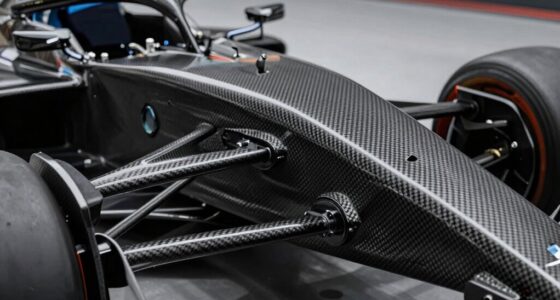
Proper weight distribution is key to achieving a balanced handling feel in your vehicle. When weights are evenly spread or adjusted toward ideal points, your car responds more predictably through corners and remains stable at high speeds. Tuning your suspension and managing weight transfer can improve grip, reduce body roll, and enhance overall control. Staying aware of how changes affect handling will help you drive more confidently—continuing on will reveal even more ways to master your vehicle’s dynamics.
Key Takeaways
- Proper weight distribution enhances vehicle stability and responsiveness during cornering.
- Suspension tuning manages weight transfer, improving handling balance and minimizing body roll.
- Adjusting suspension stiffness and adding rear weight can shift handling toward oversteer or understeer.
- Driving style influences setup needs; aggressive driving requires balanced suspension for stability.
- Overall, optimal weight distribution results in safer, more predictable, and enjoyable driving experiences.

Understanding weight distribution is vital for achieving ideal handling balance in any vehicle. When you’re behind the wheel, how the weight is spread across the front and rear axles significantly influences your vehicle’s response, especially during cornering. Proper weight distribution enhances cornering stability, allowing you to maintain control and confidence when maneuvering turns. If too much weight shifts forward or backward, it can cause understeer or oversteer, making your car feel unpredictable and less responsive. That’s why adjusting weight balance isn’t just about comfort; it’s about safety and performance.
Proper weight distribution is key for safe, responsive vehicle handling during cornering.
One of the key ways to optimize handling balance is through suspension tuning. Suspension components—shocks, struts, springs, and sway bars—work together to manage how weight transfers during maneuvers. When you fine-tune these elements, you improve how your vehicle reacts during cornering, ensuring that weight transfer occurs smoothly and predictably. Proper suspension tuning helps keep the tires firmly planted on the road, which directly boosts cornering stability. When your suspension is dialed in correctly, it minimizes body roll and keeps the vehicle balanced through turns, giving you a more precise steering feel and better control. Additionally, understanding weight transfer is crucial for making effective adjustments and achieving optimal handling.
You can influence weight distribution and handling by adjusting suspension settings, such as stiffness and ride height. For instance, stiffening the rear suspension can shift the handling characteristics toward a more neutral or even slightly oversteering setup, which some drivers prefer for spirited driving. Conversely, softening the front suspension can improve grip and reduce understeer. These adjustments help balance the car dynamically, especially when combined with careful consideration of weight placement. Adding weight to certain areas, like the trunk or rear cargo, can also shift the center of gravity and alter handling traits. Proper alignment and tire pressure management further contribute to consistent handling performance.
Beyond just hardware tweaks, understanding how your driving style interacts with weight distribution is crucial. Aggressive cornering demands a balanced setup that promotes stability and minimizes weight transfer issues. If your suspension isn’t tuned properly, weight transfer during sharp turns can cause instability, making the vehicle feel loose or unpredictable. Conversely, a well-tuned suspension setup ensures that your car remains composed, allowing you to push through corners with confidence and precision. Recognizing driving style and its impact on handling can help you customize your vehicle’s setup for optimal performance.
In essence, mastering weight distribution through suspension tuning isn’t just about making your vehicle faster—it’s about making it safer and more predictable. When you pay attention to how weight shifts and how your suspension responds, you enhance cornering stability and overall handling balance. This harmony between weight placement and suspension setup results in a more controlled, enjoyable driving experience, whether you’re on a racetrack or winding mountain roads.
Frequently Asked Questions
How Does Weight Distribution Affect Vehicle Acceleration?
You’ll find that weight distribution directly impacts your vehicle’s acceleration by influencing its grip and stability. When acceleration occurs, weight transfer shifts your car’s center of gravity forward, increasing traction on the front tires. If weight isn’t evenly distributed, it can cause uneven grip, reducing acceleration efficiency. Properly balanced weight helps maintain ideal grip, allowing smoother, quicker acceleration and better handling during high-speed starts.
What Are Common Signs of Poor Handling Balance?
Imagine your car as a tightrope walker, balancing on a thin wire. Poor handling balance shows as your vehicle pulls to one side, sways during turns, or feels unstable over bumps. These signs indicate a low or uneven center of gravity and a suspension setup that needs adjustment. When your car struggles to stay centered, it’s like a walker wobbling—time to check your suspension and rediscover your ride’s equilibrium.
Can Uneven Weight Distribution Improve Off-Road Performance?
Uneven weight distribution can improve off-road performance if you focus on suspension tuning and cargo management. By shifting weight strategically, you can enhance traction and stability over rough terrain. Adjust your suspension to accommodate the uneven load, and manage cargo to keep the center of gravity low. This approach helps your vehicle handle better off-road, giving you improved control, reduced body roll, and better maneuverability on challenging trails.
How Does Load Placement Influence Tire Wear?
Think of your tires as the foundation of your vehicle’s journey. Proper load placement guarantees even tire pressure, which prevents uneven wear and reduces the risk of alignment issues. When weight is unevenly distributed, it’s like tilting a tower—straining the tires and causing early wear patterns. Keep the load balanced, check tire pressure regularly, and address alignment issues promptly to extend tire life and maintain smooth handling.
What Tools Are Used to Measure Handling Balance?
You use specialized tools like a handling balance analyzer or a wheel alignment system to measure handling balance. These tools help you identify issues with your vehicle’s center of gravity and suspension alignment, which directly affect handling. By adjusting the suspension and ensuring proper wheel alignment, you can improve handling balance, making your ride smoother and safer. Regular measurements with these tools keep your vehicle performing at its best.
Conclusion
Remember, your vehicle’s weight is like a delicate dance, where each move influences the harmony of balance. When you evenly distribute load, you’re guiding the symphony of handling, steering it smoothly through every turn. Keep the center of gravity steady, like a steady heartbeat, and your ride will glide effortlessly, safe and confident. Balance isn’t just about weight—it’s the rhythm that keeps you moving forward, steady and true, through every journey.