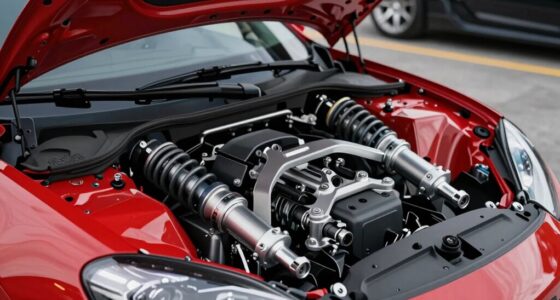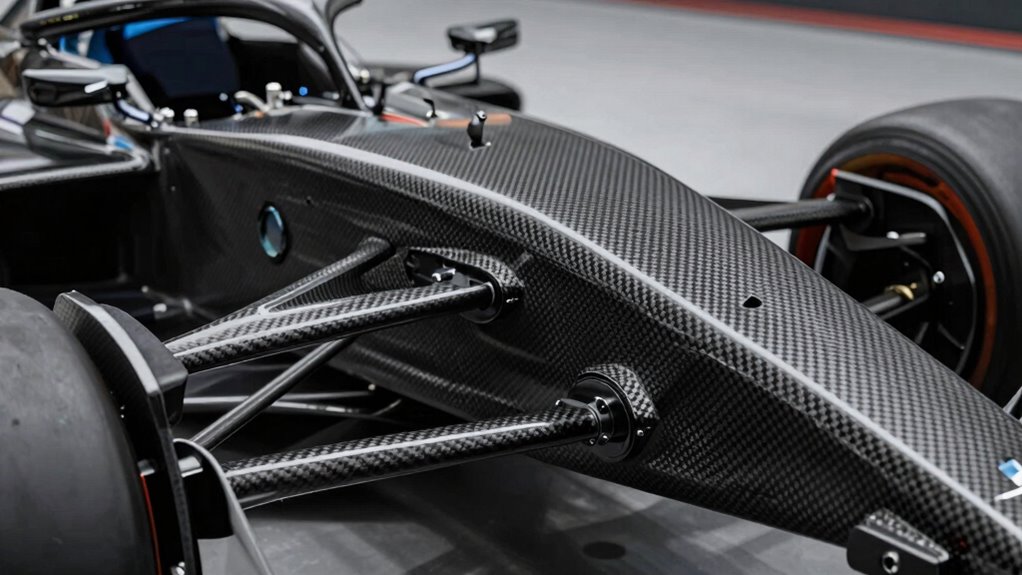

Chassis rigidity directly impacts your vehicle’s handling, stability, and safety. When your chassis is stiff, it minimizes flex, allowing tires to maintain better contact with the road and providing more precise responses during sharp turns or quick maneuvers. Using advanced materials and innovative design techniques, manufacturers balance strength and weight for peak performance. Staying aware of how chassis rigidity influences driving confidence can improve your understanding of vehicle dynamics as you explore more insights.

Get business pricing on garage and car supplies
- Business-only prices and quantity discounts
- Tax-exempt purchasing
- Multiple users, one account, clear invoices
Key Takeaways
- Increased chassis rigidity enhances handling precision, stability, and responsiveness during sharp turns and quick maneuvers.
- Material innovations like high-strength steel and composites improve rigidity while reducing weight.
- Excessive flex can cause vague steering and body roll, negatively impacting vehicle control.
- Balancing strength and weight optimizes performance, safety, and driving feel.
- Advanced manufacturing techniques enable precise control of rigidity profiles for better overall vehicle dynamics.
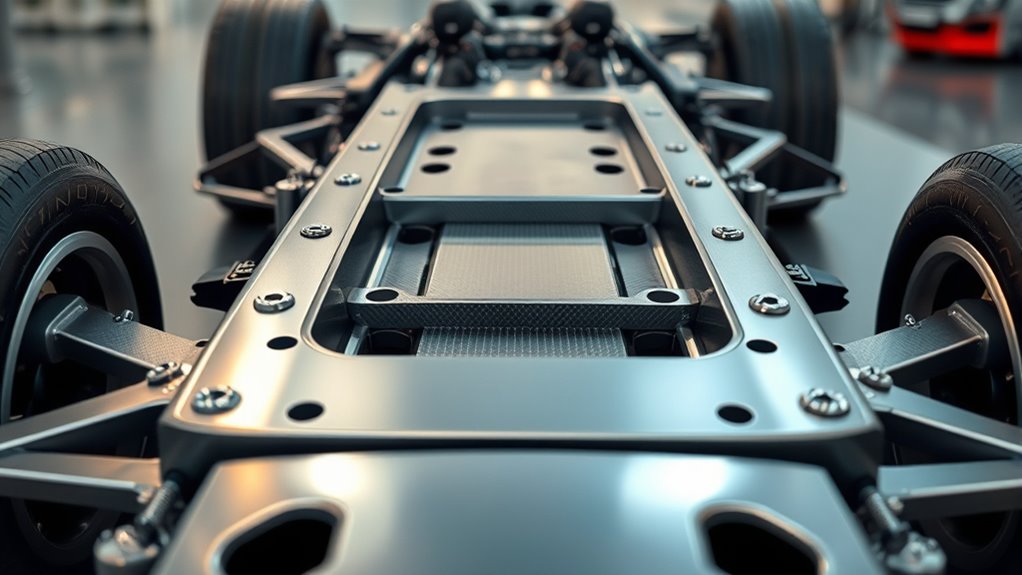
Chassis rigidity plays a pivotal role in determining a vehicle’s overall performance, especially in handling and stability. When you consider how a car responds on the road, the stiffness of its chassis directly influences its ability to maintain control during sharp turns, quick maneuvers, or uneven surfaces. The key factors that contribute to this rigidity are material stiffness and the amount of structural flex the chassis experiences under load. Material stiffness refers to how resistant the chassis material is to deformation; a stiffer material resists bending and twisting, which helps keep the vehicle’s structural integrity intact. Structural flex, on the other hand, is the degree to which the chassis can bend or deform when subjected to forces. Too much flex can lead to vague steering, body roll, and compromised handling, while a well-designed chassis minimizes this flex to provide a more predictable and responsive driving experience.
You’ll find that high-quality materials like high-strength steel or aluminum alloys are often used in performance-oriented vehicles because they offer superior material stiffness. This increased stiffness translates into less energy loss during cornering and quicker, more precise responses from the suspension system. When the chassis flexes less, the tires maintain better contact with the road, enhancing grip and reducing tire wear. It also helps the suspension work more effectively, absorbing bumps and dips without transmitting excessive vibrations to the cabin. Conversely, a chassis with excessive flex can lead to unpredictable handling; your steering inputs might feel sluggish or disconnected, especially at high speeds or during aggressive driving. This is why manufacturers focus on enhancing material stiffness and controlling structural flex in their designs. Additionally, advancements in material engineering contribute significantly to optimizing chassis rigidity while minimizing weight. For example, composite materials are increasingly being utilized to achieve this balance, and ongoing research in material science continues to drive innovations in chassis construction. Incorporating advanced manufacturing techniques further enables precise control over structural properties, allowing for better customization of rigidity profiles.
Achieving an ideal balance between strength and weight is essential. You want a chassis stiff enough to improve handling and stability but not so heavy that it hampers acceleration or fuel efficiency. Engineers often reinforce critical areas with additional bracing or use advanced composite materials to bolster stiffness without adding unnecessary weight. When you’re behind the wheel, a chassis with high rigidity feels more solid, offering confidence that your inputs translate directly to vehicle movement. This sense of precision is vital whether you’re pushing the car on a race track or navigating tight city streets. The integration of structural reinforcement technologies further allows manufacturers to enhance rigidity without significantly increasing weight. Ultimately, understanding and improving material stiffness and managing structural flex aren’t just about engineering—they’re about delivering a safer, more engaging driving experience.
performance car chassis reinforcement
As an affiliate, we earn on qualifying purchases.
As an affiliate, we earn on qualifying purchases.
Frequently Asked Questions
How Does Chassis Rigidity Affect Ride Comfort?
Chassis rigidity directly impacts your ride comfort by controlling how much the body flexes over bumps. A stiffer chassis allows better suspension tuning, making the ride smoother and more responsive. It also reduces noise and vibrations, creating a quieter, more comfortable experience. When your chassis is rigid, you’ll notice less rattling and less harshness, allowing you to enjoy a balanced, comfortable ride even on rough roads.
What Materials Best Enhance Chassis Stiffness?
You should choose materials like high-strength steel, aluminum alloys, or carbon fiber to enhance chassis stiffness. These materials offer excellent strength-to-weight ratios, which improve structural integrity. Additionally, focusing on smart structural design—such as reinforcing key stress points and using tubular or monocoque frameworks—maximizes stiffness without adding unnecessary weight. By carefully selecting materials and optimizing your structural design, you’ll considerably boost chassis rigidity and overall vehicle performance.
Can Chassis Rigidity Improve Fuel Efficiency?
Yes, increasing chassis rigidity can improve fuel efficiency. When your chassis is less flexible, it reduces energy loss caused by vibrations and flexing, allowing your vehicle to move more smoothly. To achieve this, weight reduction plays a key role, as lighter chassis with enhanced rigidity enhance handling and efficiency. By focusing on reducing unnecessary weight while maintaining peak stiffness, you help your vehicle use fuel more effectively and improve overall performance.
How Is Chassis Rigidity Measured During Manufacturing?
Like a sculptor shaping steel, you measure chassis rigidity during manufacturing with precise measurement techniques. Using tools like strain gauges and laser scanning, you capture how the chassis responds under stress, ensuring it meets strict manufacturing standards. These methods act as the heartbeat of quality control, revealing the strength and flexibility of the frame, so every vehicle you produce stands firm and reliable on the road’s unpredictable terrain.
Does Increased Rigidity Compromise Vehicle Safety?
Increasing chassis rigidity doesn’t necessarily compromise vehicle safety; in fact, it often enhances crash impact performance by providing better structural support. While there are safety trade-offs to take into account, a more rigid chassis helps maintain shape during collisions, protecting occupants. You benefit from improved crashworthiness and handling, as the vehicle absorbs impact more effectively. Just make sure the rigidity is balanced properly to avoid overly stiff structures that could affect ride comfort.
high-strength steel chassis components
As an affiliate, we earn on qualifying purchases.
As an affiliate, we earn on qualifying purchases.
Conclusion
Ultimately, your chassis is the backbone of your vehicle’s soul, holding everything together like the frame of a finely crafted masterpiece. When you prioritize rigidity, you’re sharpening your edge, turning every twist and turn into a dance of precision. Think of it as an unbreakable promise to performance, where strength and agility harmonize. With a stiff chassis, you don’t just drive—you command the road, transforming every journey into a symphony of control and confidence.
car chassis rigidity upgrade kit
As an affiliate, we earn on qualifying purchases.
As an affiliate, we earn on qualifying purchases.
advanced automotive chassis materials
As an affiliate, we earn on qualifying purchases.
As an affiliate, we earn on qualifying purchases.
Halloween Picks
halloween
As an affiliate, we earn on qualifying purchases.