

To optimize performance alignment settings, start by establishing clear benchmarks that reflect your organizational goals and values. Use regular communication, visual dashboards, and performance reviews to keep everyone focused and informed. Leverage data and feedback tools to identify gaps and adjust strategies promptly. Foster a culture of continuous improvement and open dialogue. If you explore further, you’ll discover how to fine-tune these strategies for maximum team success.
Key Takeaways
- Define clear benchmarks aligned with organizational goals and values before implementation.
- Regularly review and update performance benchmarks to reflect evolving priorities.
- Communicate expectations and progress using visual dashboards and reports for transparency.
- Use data-driven insights from AI tools and performance metrics to guide decision-making.
- Foster a culture of continuous improvement through ongoing feedback and collaborative performance discussions.
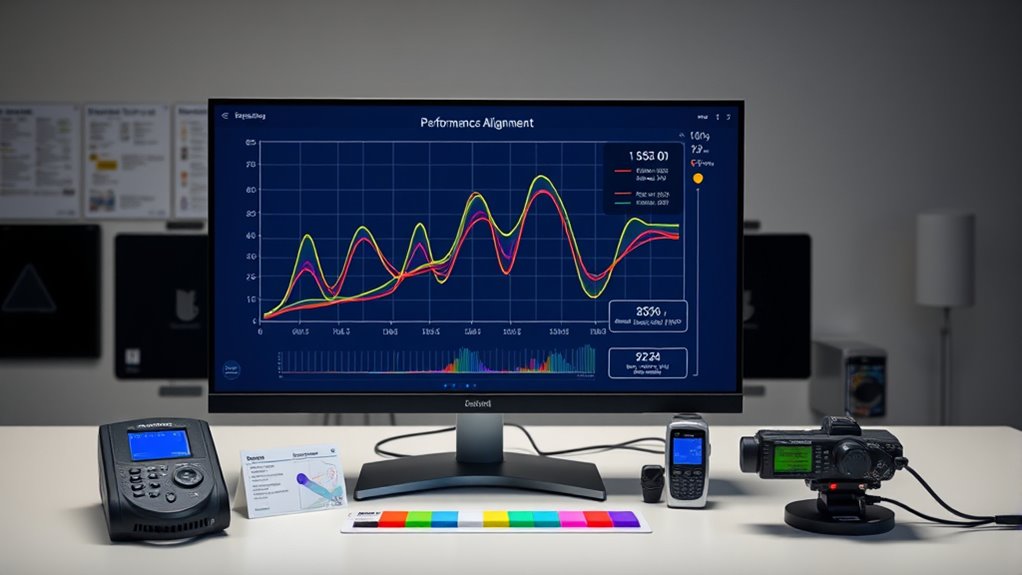
Have you ever wondered how to guarantee your team’s performance aligns with your organizational goals? Achieving this harmony requires more than just setting broad objectives; it involves establishing clear performance benchmarks and implementing effective alignment strategies. Performance benchmarks serve as measurable standards that help you evaluate whether your team’s efforts are on track. These benchmarks could include specific sales targets, customer satisfaction scores, project completion times, or quality metrics. By defining these benchmarks upfront, you create concrete references that guide daily activities and decision-making. They function as a roadmap, allowing you to identify gaps early and adjust course before issues escalate. Alignment strategies, on the other hand, are the methods you use to ensure everyone understands and works toward the same goals. This could involve regular performance reviews, transparent communication channels, or collaborative planning sessions. When your team members know how their individual roles contribute to overarching organizational objectives, motivation and accountability naturally increase. To effectively use performance benchmarks, you should align them with your organization’s core values and strategic priorities. For instance, if innovation is a key value, your benchmarks might include number of new ideas generated or time taken to implement innovative solutions. Once set, regularly reviewing these benchmarks allows you to track progress and make data-driven decisions. It also provides a basis for constructive feedback, helping team members understand where they excel and where improvements are needed. Incorporating alignment strategies ensures that this performance data translates into action. Communicate expectations clearly and consistently, so everyone knows what success looks like. Use visual dashboards or progress reports to keep performance visible and tangible. Encourage open dialogue, so team members feel comfortable discussing challenges and sharing insights. Additionally, recognize achievements aligned with your benchmarks to reinforce positive behaviors. The key is to create a culture of continuous improvement, where benchmarks aren’t just static targets but part of an ongoing process of learning and development. When your alignment strategies are integrated into daily routines, they reinforce a shared sense of purpose. This makes it easier to adapt to changing circumstances and ensures that performance stays aligned with organizational goals, even as priorities evolve. Leveraging performance data from AI-powered tools can further enhance your ability to make informed decisions and optimize team performance. Incorporating performance measurement methods helps in maintaining an accurate understanding of progress and areas for improvement. Developing a clear performance feedback process ensures ongoing communication about progress and expectations. Additionally, understanding the importance of technological integration can streamline these processes and lead to more efficient outcomes. Ultimately, by setting appropriate performance benchmarks and deploying effective alignment strategies, you empower your team to perform at their best and drive your organization forward with clarity and purpose.
Frequently Asked Questions
How Do I Reset Performance Alignment Settings to Default?
To reset performance alignment settings to default, you should follow the reset procedures outlined in your system’s documentation. Typically, this involves steering to the settings menu, selecting the performance options, and choosing the “Restore to Default” or “Reset to Default” button. This action reverts all configurations to their original default settings, ensuring your system performs as intended without any custom adjustments. Always save changes before exiting.
Can Performance Alignment Settings Be Customized for Different User Groups?
Imagine tailoring a suit perfectly fitted to each individual. Yes, performance alignment settings can be customized for different user groups. You can use user customization to create group-specific adjustments, ensuring everyone’s experience aligns with their needs. By applying these tailored settings, you optimize performance for each group, making the system more efficient and personalized. So, go ahead and customize those settings—your users will thank you for the personalized touch!
What Are the Common Troubleshooting Steps for Performance Issues?
When troubleshooting performance issues, start by checking system optimization to guarantee resources aren’t overused. Clear cache, close unnecessary apps, and update software to improve speed. Verify user experience by asking if the problem persists across different devices or networks. Additionally, review system logs for errors, restart devices, and consider hardware upgrades if needed. These steps help identify bottlenecks and restore smooth performance for users.
Are There Security Considerations When Adjusting Alignment Settings?
Yes, adjusting alignment settings can introduce security risks if not managed properly. You need to make certain that access controls are strict so only authorized personnel can make changes. Be cautious about exposing sensitive configurations, which could be exploited by attackers. Regularly review who has permission to modify these settings, and implement audit logs to track changes. This way, you minimize security risks while maintaining ideal performance.
How Often Should Performance Alignment Settings Be Reviewed or Updated?
Imagine your performance settings as a garden that needs regular tending. You should review your alignment settings at least quarterly, keeping an eye on evolving goals and team dynamics. An update schedule that aligns with project cycles or organizational changes guarantees best performance. By regularly tending this garden, you prevent misalignments from sprouting and ensure your team stays productive and focused on shared objectives.
Conclusion
By fine-tuning your performance alignment settings, you guarantee your systems operate seamlessly and efficiently. Are you truly leveraging every option to optimize your performance? Remember, small adjustments can lead to significant improvements, so stay proactive and attentive. Keep exploring these settings to unearth your system’s full potential and stay ahead of the curve. After all, isn’t continuous improvement the key to sustained success?