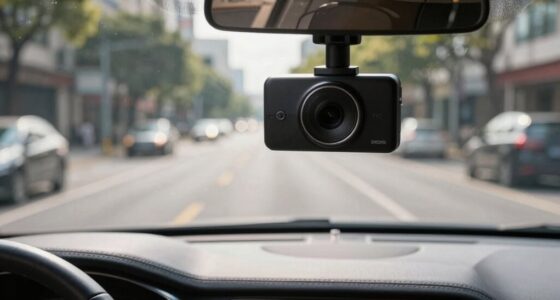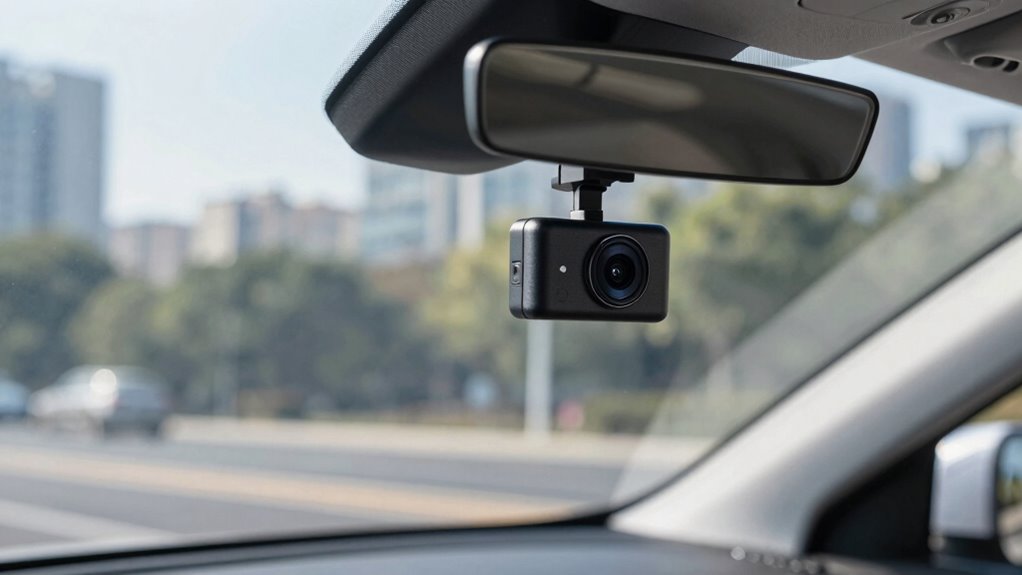
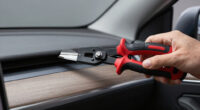
You should avoid mounting your dash cam near the edges of the windshield, as it can block your view or cause glare. Keep it away from embedded sensors to prevent interference with safety systems like collision alerts and lane assist. Make sure it’s securely attached and not positioned too high or low, which could compromise footage quality. Additionally, avoid placing it where it might distract you or be an obstacle in a collision—finding these safe spots is easier with a bit more guidance.

Get business pricing on garage and car supplies
- Business-only prices and quantity discounts
- Tax-exempt purchasing
- Multiple users, one account, clear invoices
Key Takeaways
- Avoid mounting near windshield edges to prevent limited view and glare issues.
- Keep dash cam away from embedded sensors to prevent interference with safety systems.
- Do not place in areas obstructing the rearview mirror or primary visibility zones.
- Stay clear of sensor zones specified in the vehicle manual to avoid false alerts.
- Secure the device firmly, avoiding unstable positions that could cause injury or damage.
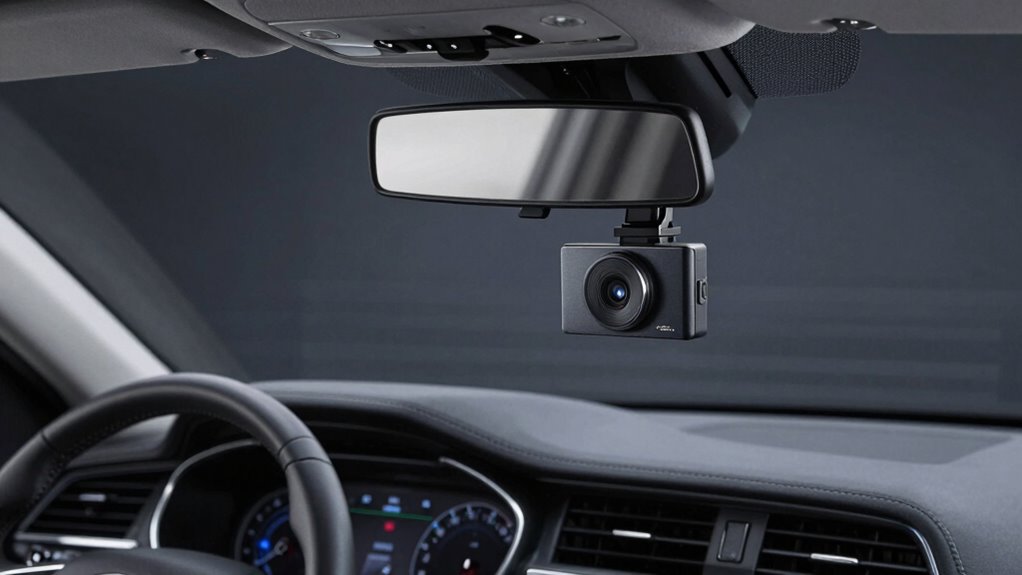
Mounting a dash cam seems straightforward, but choosing the wrong spot can compromise its effectiveness and even cause safety issues. When you place the camera in an area that blocks your rearview, you risk creating a rearview obstruction. This obstruction can hinder your ability to see vehicles approaching from behind or pedestrians crossing, increasing the chance of accidents. Avoid mounting the dash cam where it covers or interferes with your rearview mirror or window view, as this can distract you or reduce your overall driver visibility. Remember, the primary purpose of a dash cam is to record incidents without impairing your ability to operate the vehicle safely.
You should steer clear of mounting the dash cam in spots that are too close to the windshield edges. These areas might look like convenient locations, but they can limit your field of view or cause glare issues. Additionally, mounting the camera too high or too low can result in poor footage quality or make it difficult to access controls. Keep in mind that a poorly positioned camera might capture skewed angles, making footage less useful in case of an incident. To avoid this, place the dash cam within the central part of the windshield, ideally behind the rearview mirror, where it can record a clear, unobstructed view of the road ahead without obstructing your line of sight.
Another critical consideration is avoiding placement near sensors or safety zones. Many modern vehicles have sensors embedded in the windshield for collision avoidance or lane assistance. Mounting a camera too close to these sensors can interfere with their operation, which might compromise safety features or cause false alerts. Check your vehicle’s manual for sensor locations and keep the dash cam at a safe distance from these zones. This not only preserves sensor functionality but also ensures your camera captures footage without interference. Additionally, sensor zones are often critical for vehicle safety systems, so proper placement helps maintain the vehicle’s full range of safety features. Proper placement also aligns with industry safety standards to ensure your vehicle’s safety features function optimally. Moreover, incorrect placement near these zones can lead to sensor interference, reducing the effectiveness of vital safety systems. It is essential to understand and respect biodiversity considerations when choosing a mounting spot, especially if your vehicle is parked in natural environments, to prevent unnecessary disturbance to wildlife. Finally, never mount a dash cam where it could become a projectile in a sudden stop or collision. Secure it firmly in a location that won’t become a hazard during an accident. Any loose or improperly mounted device could cause injury or additional damage if it detaches upon impact. Keep the camera stable, unobtrusive, and out of the way of your view, so you can record incidents effectively without sacrificing safety. Proper placement is key to maximizing your dash cam’s benefits while maintaining clear driver visibility and avoiding rearview obstruction.
As an affiliate, we earn on qualifying purchases.
Frequently Asked Questions
Can Mounting Near Airbags Affect Their Deployment?
Mounting a dash cam near airbags can cause airbag interference and sensor obstruction, potentially affecting their deployment during an accident. If the camera blocks sensors or is too close to the airbag, it might delay or prevent proper activation, risking your safety. To avoid this, make sure your dash cam is installed in a spot that keeps airbags and sensors unobstructed, maintaining their full functionality during emergencies.
Is It Legal to Hide a Dash Cam Behind Tinted Windows?
Hiding a dash cam behind tinted windows isn’t usually illegal, but legal restrictions vary by location. You need to make certain your tint isn’t so dark that it obstructs your view or violates local laws. Privacy concerns also come into play—others might feel their privacy is invaded if they notice a hidden camera. So, check your area’s regulations and consider openly mounting your dash cam to avoid legal issues and respect privacy.
Do Different Vehicle Types Require Different Dash Cam Placements?
Yes, different vehicle types do require different dash cam placements. You should consider interior visibility to guarantee the camera captures the road clearly without obstructing your view or dashboard functions. Also, aesthetic considerations matter, so mount the dash cam where it blends with your vehicle’s design and doesn’t look out of place. For larger vehicles like trucks, position the cam higher for a broader view, while smaller cars need a more discreet spot.
How Does Extreme Weather Impact Dash Cam Placement Safety?
An ounce of prevention is worth a pound of cure. Extreme weather can threaten your dash cam’s placement safety, causing damage or malfunctions. Harsh conditions like heat, cold, or heavy rain affect weather considerations and can create placement hazards. To protect your device, mount it where it’s shielded from direct sunlight, freezing temperatures, or moisture, ensuring reliable footage and avoiding costly replacements.
Can Mounting Positions Interfere With Vehicle Sensors or Alarms?
Yes, mounting positions can interfere with your vehicle’s sensors or alarms. If you place the dash cam near parking sensors, it might cause sensor interference, leading to false alerts or reduced sensor performance. Similarly, mounting it close to alarm sensors can disrupt alarm functionality, causing false alarms or preventing proper activation. To avoid these issues, make sure the dash cam is installed away from critical sensor zones and follow manufacturer guidelines for ideal placement.
As an affiliate, we earn on qualifying purchases.
Conclusion
Avoid mounting your dash cam where it’s like a stubborn gatekeeper blocking your view or a sneaky thief hiding in the shadows. Keep it clear of your line of sight, safety zones, and sensors, so your journey remains a smooth sailing ship, not a rocky voyage. When you position it right, your camera becomes a vigilant guardian, capturing every moment without casting shadows or causing blind spots. Drive confidently, knowing your view stays as open as a clear blue sky.
As an affiliate, we earn on qualifying purchases.
As an affiliate, we earn on qualifying purchases.
Halloween Picks
halloween
As an affiliate, we earn on qualifying purchases.