Maintaining proper tire pressure is key to getting the best handling balance from your vehicle. When your tires are correctly inflated, they offer even load distribution, improving responsiveness, grip, and stability during turns and braking. Over- or underinflated tires can cause sluggish response, uneven wear, and safety risks. Keeping your tires at the recommended pressure helps guarantee predictable handling and a safer drive. Stay with us to discover more tips on optimizing your tire performance and safety.
Key Takeaways
- Proper tire pressure ensures even load distribution, promoting balanced handling and predictable vehicle response.
- Maintaining correct pressure maximizes tire contact with the road, enhancing grip and steering accuracy.
- Underinflated or overinflated tires disrupt handling balance, causing sluggishness or overly sensitive steering.
- Consistent tire pressure prevents uneven wear, sustaining optimal handling and vehicle safety over time.
- Correct inflation supports vehicle stability during turns, acceleration, and braking, improving overall driving comfort and safety.
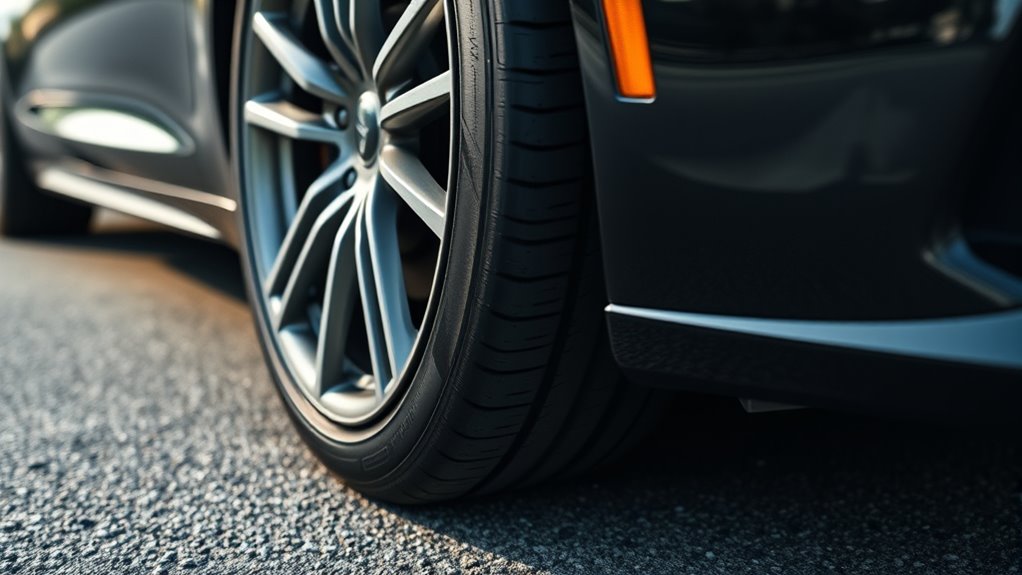
Maintaining proper tire pressure is vital for achieving ideal handling balance in your vehicle. When your tires are inflated correctly, you guarantee that the tire pressure effects work in your favor, providing maximum contact with the road. Proper tire pressure directly influences how your car responds during turns, acceleration, and braking, making handling balance adjustment more predictable and manageable. If your tires are underinflated or overinflated, you’ll notice a shift in handling characteristics that can compromise safety and driving comfort.
Proper tire pressure ensures optimal handling, safety, and performance by maintaining balanced contact with the road during all driving maneuvers.
Underinflated tires tend to make your vehicle feel sluggish and less responsive. They increase the tire’s contact patch with the road, which might sound beneficial, but in reality, it causes uneven wear and reduces the tire’s ability to respond quickly to steering inputs. This can lead to a softer, less responsive handling balance, especially during high-speed turns or sudden maneuvers. Conversely, overinflated tires reduce the contact patch, making the ride feel harsher and decreasing grip. This imbalance can make steering feel overly sensitive, and it’s easier to lose control if you don’t adjust your handling accordingly.
Getting the tire pressure right is vital for proper handling balance adjustment. When tires are inflated to the manufacturer’s recommended pressure, you maintain an even distribution of load across the tread, which provides consistent handling. This balance allows you to maneuver confidently, knowing that the tires will respond predictably to your steering inputs. Regularly checking and maintaining the correct tire pressure helps prevent uneven wear and keeps your handling characteristics stable over time. Proper tire pressure also enhances your vehicle’s handling capacity, making driving safer and more comfortable. Additionally, maintaining correct tire pressure can improve fuel efficiency by reducing rolling resistance.
Understanding tire pressure effects isn’t just about safety; it’s also about performance. Properly inflated tires help distribute forces evenly during cornering, which enhances grip and stability. If your tires are properly inflated, you’ll notice that your vehicle handles turns more precisely and responds more accurately to your commands. Adjusting the handling balance through correct tire pressure also improves fuel efficiency, reduces tire wear, and extends the lifespan of your tires. Maintaining optimal tire pressure is an essential aspect of handling balance and overall vehicle performance. Being aware of how tire pressure affects your vehicle’s handling can help you make better adjustments and ensure safer driving conditions. Proper tire pressure is a fundamental aspect of vehicle maintenance that directly impacts your driving safety.

Tymate TM7 Tire Pressure Monitoring System, Wireless TPMS with 4 External Sensors & 6 Alarm Modes, Colorful Display, Real-time Tire Pressure Monitor System, Ideal for RV SUV MPV Truck Sedan(0-144 PSI)
[Accurate Real-time Monitoring & Multi-Alert System]: Tymate TM7 tpms sensor can be used to monitor your tires’ pressure...
As an affiliate, we earn on qualifying purchases.
Frequently Asked Questions
How Does Tire Pressure Affect Fuel Efficiency?
When you optimize your tire pressure, you improve your vehicle’s fuel efficiency. Proper tire pressure reduces rolling resistance, meaning your engine doesn’t have to work as hard, saving fuel. Regularly check and maintain tire pressure as part of your fuel economy strategies. Properly inflated tires also enhance handling and safety. So, keep your tires at the recommended level for better mileage and a smoother ride.
What Are the Signs of Improper Tire Pressure?
Think of your tires as the heartbeat of your car—when they’re off, your ride signals trouble. You’ll notice improper inflation symptoms like uneven tire wear, a vibrating steering wheel, or decreased fuel efficiency. Tire pressure monitoring alerts you to low or high pressure, helping avoid issues. If you see these signs, check your tire pressure promptly; proper inflation keeps your vehicle running smoothly and safely.
How Often Should I Check My Tire Pressure?
You should check your tire pressure at least once a month for ideal pressure monitoring. Also, remember seasonal adjustments, as colder weather can decrease pressure and warmer weather can increase it. Regular checks help maintain handling balance, extend tire life, and improve safety. Don’t forget to check when the tires are cold for accurate readings, especially if you’re going through temperature changes. Stay proactive to keep your driving smooth and safe.
Can Uneven Tire Pressure Cause Alignment Issues?
Uneven tire pressure is like a crooked mirror distorting your car’s true alignment. Yes, it can cause alignment issues over time, leading to uneven tire wear and handling problems. To keep things straight, regularly perform tire rotations and wheel balancing. These steps help guarantee your tires wear evenly and maintain proper alignment, preventing small issues from turning into costly repairs. Stay proactive, and your ride will stay smooth and true.
Does Tire Pressure Impact Tire Lifespan?
Yes, incorrect tire pressure can shorten your tire lifespan. Under-inflated tires cause uneven tire wear, especially on the edges, while over-inflated tires wear out the center faster. Maintaining proper pressure calibration guarantees even tire wear, prolonging your tires’ life. Regularly checking and adjusting your tire pressure helps prevent premature tire failure and keeps your vehicle running smoothly. Always follow the manufacturer’s recommended tire pressure for maximum performance and longevity.

Masoll Tire Pressure Monitoring System, RV/Trailler TPMS with Solar Charging & Auto Calibration, M13 LCD Display tpms 4 sensors (0-87PSI)
【Wide Application】The Masoll M13 Tyre Pressure Monitoring System commonly used on the vehicles with 4 tires include but...
As an affiliate, we earn on qualifying purchases.
Conclusion
Maintaining proper tire pressure is essential for ideal handling and safety. When your tires are correctly inflated, you gain better control, improved fuel efficiency, and longer tire life. Don’t you want to feel confident every time you hit the road? Regularly check your tire pressure and adjust as needed. Remember, balancing tire pressure isn’t just about performance—it’s about your safety and peace of mind. Are you giving your tires the care they deserve to keep you safe?

Off-Road Traction Boards with Jack Base, Heavy-Duty Recovery Tracks for 4x4, Truck, Jeep, SUV,Ideal Offroad Accessories for Mud, Sand & Snow (Large)
[Enhanced Double-Sided Traction Design] Both sides of the boards feature a diamond array construction and cross-shaped teeth to...
As an affiliate, we earn on qualifying purchases.

BUNKER INDUST Off-Road Traction Boards with Jack Base,Pair Recovery Track 4X4 Jeep Truck Emergency Tire Traction Mat with Bag -Sand, Mud, Snow Tracks Black Traction Pad (Gen 7th)
Jack Base Function: Designed with unique jack base in the center of the traction board is for emergency...
As an affiliate, we earn on qualifying purchases.