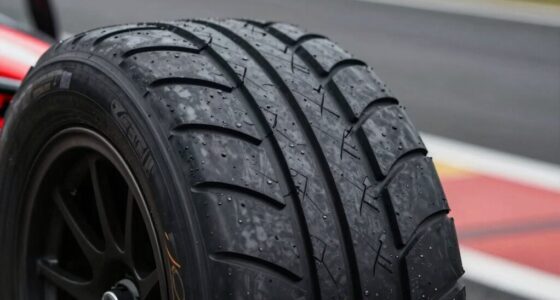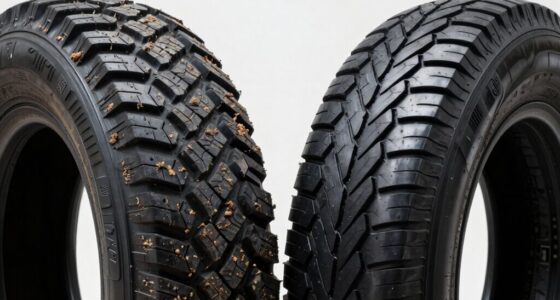
Upgrading your tires is the most impactful improvement you can make because they directly affect your vehicle’s safety, handling, and fuel efficiency. Well-chosen tires enhance grip, control, and braking, especially in changing conditions. Proper maintenance and the right tire type keep you safer and extend their lifespan. When you focus on tires, you optimize your overall driving experience. Keep going to discover more ways to make your vehicle safer and perform better with the right tires.

Get garage and car supplies delivered free — and shop member deals
- Fast, free delivery on millions of items
- Access to Prime Big Deal Days deals on October 6–7
- Prime Video, Amazon Music and more included
Key Takeaways
- Tires directly affect vehicle safety, handling, and braking performance, making them crucial for overall driving security.
- Upgrading tires improves traction and control, especially in adverse conditions like snow or rain.
- Properly maintained tires enhance fuel efficiency and comfort, reducing long-term costs.
- Selecting the right tires tailored to driving conditions maximizes vehicle performance and durability.
- Regular tire maintenance prevents accidents, extends tire lifespan, and ensures consistent safety and performance.

Upgrading your tires might be the most impactful improvement you can make to your vehicle’s performance. The right set of tires can drastically enhance handling, safety, fuel efficiency, and comfort. But before you rush out to buy new tires, it’s essential to understand the importance of tire maintenance and how to choose the right tires for your vehicle and driving style. Proper tire maintenance not only prolongs the lifespan of your tires but also ensures they perform at their best when you need them most. Regularly checking tire pressure, rotating your tires, and inspecting for signs of wear keeps them in top condition. Underinflated or overinflated tires compromise grip and can cause uneven wear, leading to costly replacements down the road. Maintaining correct tire pressure is simple but crucial, and it’s something you should do at least once a month, especially before long trips. Using the proper tire specifications helps optimize your vehicle’s safety and performance. Additionally, understanding tire technology can help you select tires that incorporate the latest advancements for better safety and durability.
Regular tire maintenance boosts safety, longevity, and performance for your vehicle.
Choosing the right tires isn’t just about picking the most attractive or cheapest option. It’s about matching your tires to your vehicle’s specifications and your driving conditions. Consider factors such as tread pattern, rubber composition, and size. For example, if you frequently drive in winter conditions, investing in high-quality winter tires will give you better traction and safety. Conversely, if you mostly commute on highways, all-season tires might be your best bet. Don’t forget to look at the tire’s load capacity and speed rating to guarantee they meet your vehicle’s requirements. Additionally, understanding tire durability can help you select tires that last longer under your specific driving environment. By selecting tires that suit your driving habits, you maximize safety, fuel economy, and overall vehicle performance.
Once you’ve chosen the right tires, maintaining them becomes a continuous process. Proper tire maintenance involves more than just inflating them to the correct pressure; it also involves regularly inspecting for embedded objects, cuts, or sidewall damage. Rotating your tires every 5,000 to 8,000 miles helps promote even wear and extends their lifespan. Additionally, balancing and aligning your wheels as needed prevent uneven tread wear and improve handling. Neglecting tire maintenance can lead to decreased traction, increased stopping distances, and a higher risk of blowouts. On the other hand, attentive tire care ensures you get the most from your upgrade, maintaining safety and performance long-term.
In essence, upgrading your tires isn’t just about picking a new set—it’s about ongoing tire maintenance and choosing the right tires that suit your vehicle and lifestyle. When done correctly, these steps maximize your investment, making your driving safer, smoother, and more efficient. Properly maintained tires are your vehicle’s most essential contact with the road, and giving them the attention they deserve guarantees you’ll experience the full benefits of your upgrade.
As an affiliate, we earn on qualifying purchases.
Frequently Asked Questions
How Often Should I Replace My Tires?
You should replace your tires when the tread depth reaches 2/32 inch or if you notice uneven wear. Regular tire rotation every 6,000 to 8,000 miles helps maintain even tread wear and extends tire life. Check your tires’ tread depth often with a gauge, and look for signs like cracking or bulges. Replacing tires at the right time guarantees safe driving and peak performance.
Do Tire Brands Affect Vehicle Safety?
Tire brands definitely impact your vehicle’s safety, like a foundation supports a house. You should choose brands with a strong reputation for quality and reliability. Manufacturing standards vary, so reputable brands adhere to strict safety protocols, reducing risks like blowouts or poor traction. When you pick a trusted tire brand, you’re investing in better handling, durability, and overall safety, giving you peace of mind on every drive.
What Are the Signs of Worn-Out Tires?
You’ll notice worn-out tires through several signs. Check your tire tread; if it’s low or uneven, it’s time for a replacement. Look for sidewall damage like cuts, cracks, or bulges, which compromise safety. Additionally, you might feel vibrations or notice decreased handling. Regularly inspecting these signs helps prevent accidents and guarantees your vehicle remains safe and reliable on the road.
How Do Tire Types Impact Driving Performance?
Your tire type considerably impacts driving performance through tire tread design and sidewall flexibility. High-performance tires with aggressive tread patterns improve grip on dry surfaces, while all-season tires balance wet and dry traction. Softer sidewalls offer better handling and cornering, but may reduce ride comfort. Choosing the right tire type guarantees ideal traction, stability, and comfort, directly influencing your driving experience and safety on the road.
Can Upgrading Tires Improve Fuel Efficiency?
Think of your tires as the heartbeat of your car—if they’re in top shape, your vehicle runs smoothly. Upgrading tires can boost fuel efficiency by reducing rolling resistance. To maximize this, regularly perform tire rotations and keep tire pressure at recommended levels. Properly maintained tires decrease drag, helping you save fuel and extend tire life. Keep your tires healthy, and your car will reward you with better mileage.
As an affiliate, we earn on qualifying purchases.
Conclusion
Upgrading your tires isn’t just a small tweak—it’s like giving your car a new set of wings. With better grip, handling, and safety, you’ll feel unstoppable on the road. Don’t underestimate the power of quality tires; they’re the backbone of your vehicle’s performance. Think of it this way: neglecting tires is like trying to run a marathon with a flat tire—utter chaos. Invest now, and watch your driving experience soar to new heights.
As an affiliate, we earn on qualifying purchases.
As an affiliate, we earn on qualifying purchases.
Fall Picks
fall essentials
As an affiliate, we earn on qualifying purchases.