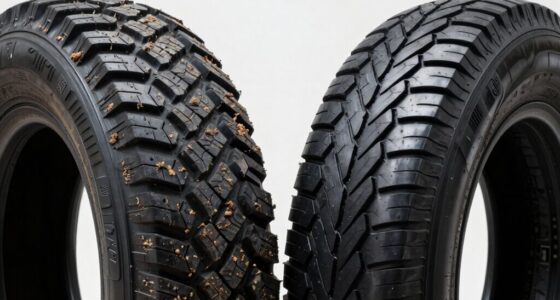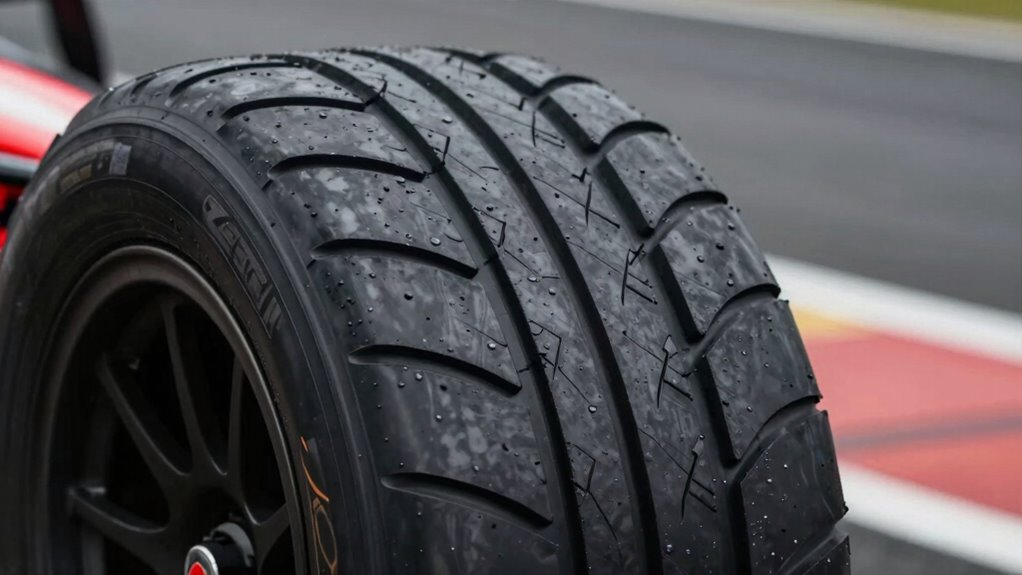

Tire compounds are carefully designed mixtures of rubber, fillers, and chemicals that directly affect your grip, durability, and overall performance. Softer compounds boost traction on dry or wet roads, giving you better handling, while harder compounds last longer and provide comfort. Materials like silica improve wet grip without sacrificing longevity. Understanding these formulations helps you choose the right tires for your driving style and conditions—keep exploring to discover how different compounds impact performance even more.

Get business pricing on garage and car supplies
- Business-only prices and quantity discounts
- Tax-exempt purchasing
- Multiple users, one account, clear invoices
Key Takeaways
- Tire compounds are formulated with specific rubber blends and fillers to optimize grip and performance under different conditions.
- Softer compounds in racing tires provide superior grip but wear faster, while harder compounds in touring tires enhance longevity.
- Silica-enhanced compounds improve wet traction and grip without compromising rolling resistance.
- Material ratios in compounds influence the balance between grip, wear, and fuel efficiency.
- Advanced testing and technologies refine compounds to ensure optimal contact and performance across diverse driving scenarios.
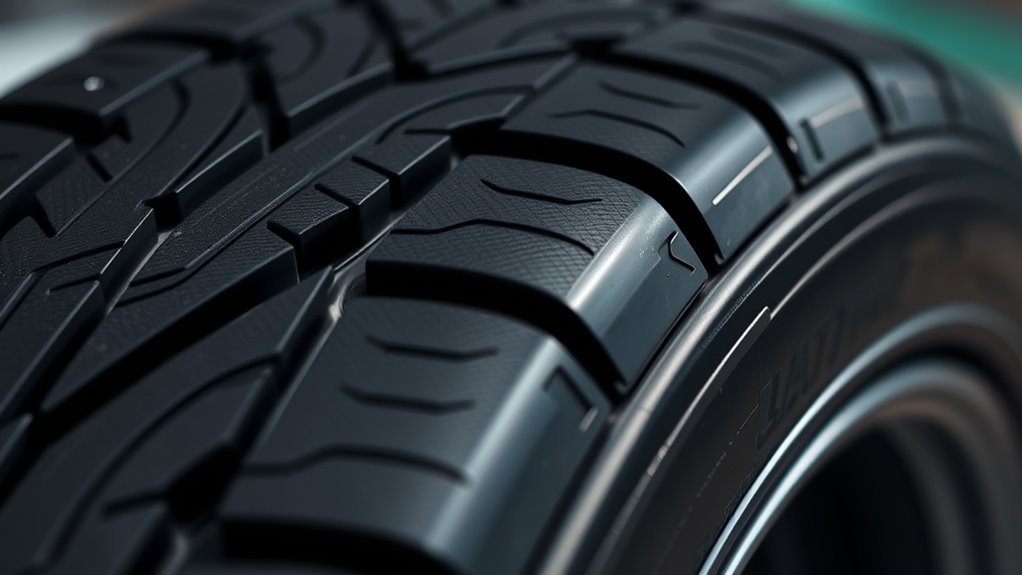
Have you ever wondered how tire compounds influence your vehicle’s grip on the road? It all comes down to the specialized compound formulations that manufacturers develop to maximize performance. These formulations are carefully engineered blends of rubber, fillers, and chemical additives designed to deliver specific characteristics, such as traction, durability, and heat resistance. When it comes to grip optimization, the right compound formulation becomes essential because it directly affects how well your tires stick to the road surface under different conditions.
Different compounds are tailored for particular driving needs and environments. For example, racing tires often use softer compounds that provide superior grip but wear out quickly, while touring tires favor harder compounds for longevity and comfort. By adjusting the ratio of natural and synthetic rubbers, along with fillers like carbon black or silica, manufacturers can fine-tune the tire’s grip. Silica, in particular, is known to improve wet traction without sacrificing rolling resistance, which is crucial for grip optimization in diverse weather conditions. The development of these compounds also involves understanding how different rubber blends respond to heat and pressure**, ensuring optimal performance across a range of driving scenarios. Additionally, advances in compound chemistry enable manufacturers to create more tailored and effective tire formulations. Furthermore, innovations in material science continue to push the boundaries of what tire compounds can achieve for enhanced grip, with ongoing research focused on sustainable materials**.
The process of developing these compounds involves rigorous testing and refinement. Chemists experiment with various formulations to identify the ideal balance between grip and longevity. They evaluate how different rubber blends perform under heat, pressure, and varying temperatures, ensuring the tires maintain consistent contact with the road. The goal is to create a compound that offers peak grip when needed while resisting wear and reducing rolling resistance for fuel efficiency. Additionally, advancements in Free Floating technology have allowed for even greater customization of tire compounds to match specific driving scenarios.
Understanding the importance of compound formulations helps you appreciate how tire manufacturers tailor their products for specific driving scenarios. If you’re looking for high-performance summer tires, you’ll notice they use softer compounds that deliver exceptional grip on dry roads, but they may not perform as well in cold or wet conditions. Conversely, all-season tires incorporate more resilient compounds to provide a balanced grip throughout the year. The key is that each formulation is designed with grip optimization in mind, aligning with the tire’s purpose and the driver’s needs.
In essence, the science behind tire compounds isn’t just about raw materials but about how those materials come together to improve your driving experience. When you select tires suited to your driving style and conditions, you’re benefiting from precisely engineered compound formulations that optimize grip, safety, and performance. Whether you’re tearing up a race track or cruising through city streets, understanding how tire compounds influence grip helps you make smarter choices and get the most out of your vehicle.
Frequently Asked Questions
How Do Tire Compounds Affect Wet Traction?
You’ll notice that softer tire compounds improve wet traction because they enhance rubber elasticity, allowing better grip on wet surfaces. However, these compounds may sacrifice some durability over time. Harder compounds, while more durable, tend to reduce traction in wet conditions. So, when choosing tires, consider the balance between compound durability and rubber elasticity to optimize wet traction suited for your driving needs.
Can Changing Tire Compounds Improve Fuel Efficiency?
Yes, changing tire compounds can improve your fuel efficiency. Eco-friendly compounds are designed to reduce rolling resistance, helping you save fuel. Racing-grade compounds, while tailored for performance, often have higher rolling resistance, which can decrease efficiency. By choosing eco-friendly compounds, you minimize energy loss and enhance fuel economy, making your drive more cost-effective and environmentally friendly. Always consider your driving needs when selecting the right tire compound for ideal fuel savings.
Are There Specific Compounds for Off-Road Versus On-Road Use?
Oh, sure, because your tires have a secret personality. Off-road compounds are designed for rugged durability and superior off-road grip, resisting mud and rocks, while on-road compounds focus on smooth handling and longevity on pavement. You wouldn’t want to swap them, unless you enjoy spinning out or quick wear. So yes, there are specific compounds tailored for each terrain, ensuring your adventures stay on track and your tires last longer.
How Often Should Tire Compounds Be Replaced for Optimal Performance?
You should replace your tire compounds every 6,000 to 10,000 miles, depending on their compound longevity and your driving habits. Regularly inspect for signs of wear, such as smoothness or cracking, which indicate it’s time for replacement. Following proper replacement intervals helps maintain peak performance, safety, and grip. Keep an eye on how your tires respond, and don’t delay replacing them when they show signs of deterioration.
Do Tire Compounds Influence Tire Noise Levels?
Yes, tire compounds influence tire noise levels through their composition and flexibility. Softer compounds tend to generate more noise because they deform more under load, creating increased vibration and sound. Your choice of compound affects tire noise, especially on different road surfaces. To reduce tire noise, opt for a compound designed for quieter operation, as manufacturers often engineer specific compounds to minimize noise while maintaining good performance.
Conclusion
Think of tire compounds as the soul of your grip, shaping how your car dances on the road. When you choose the right mix, it’s like planting your wheels in sticky honey—firm, responsive, and confident. You’ll feel every turn and acceleration as if the road’s a partner in your ride. So, pick your compounds wisely; they’re the secret ingredients turning a good drive into a great one, like a master chef perfecting a signature dish.
Fall Picks
fall essentials
As an affiliate, we earn on qualifying purchases.