
Your car’s USB ports charge your devices slowly because they are designed mainly for data transfer, not fast charging, and provide less power than wall chargers. Additionally, your vehicle’s electrical system and the device’s battery health can limit charging speed. Wireless charging offers an alternative but is also slower and depends on compatibility. To improve your charging speed and understand how to maximize it, keep exploring these key factors.

Get business pricing on garage and car supplies
- Business-only prices and quantity discounts
- Tax-exempt purchasing
- Multiple users, one account, clear invoices
Key Takeaways
- Car USB ports are mainly designed for data transfer, not fast charging, resulting in lower power output.
- Vehicle electrical systems may not be optimized for rapid charging, limiting power delivery.
- Wireless chargers depend on device compatibility and output, often providing slower charging speeds.
- Older batteries or poor battery health reduce charging efficiency and speed.
- To fix slow charging, use high-quality, dedicated fast chargers or install upgraded electrical components.
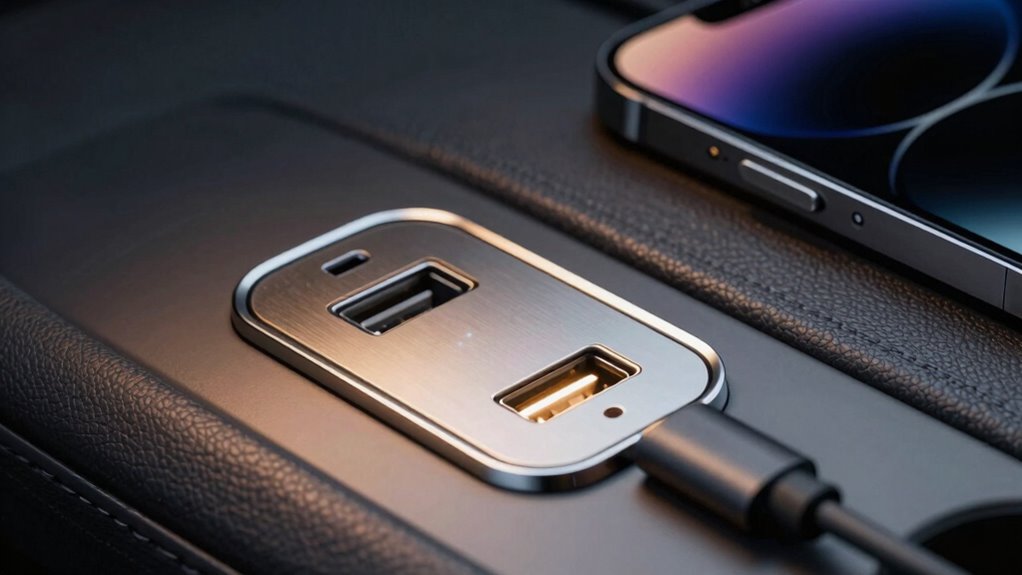
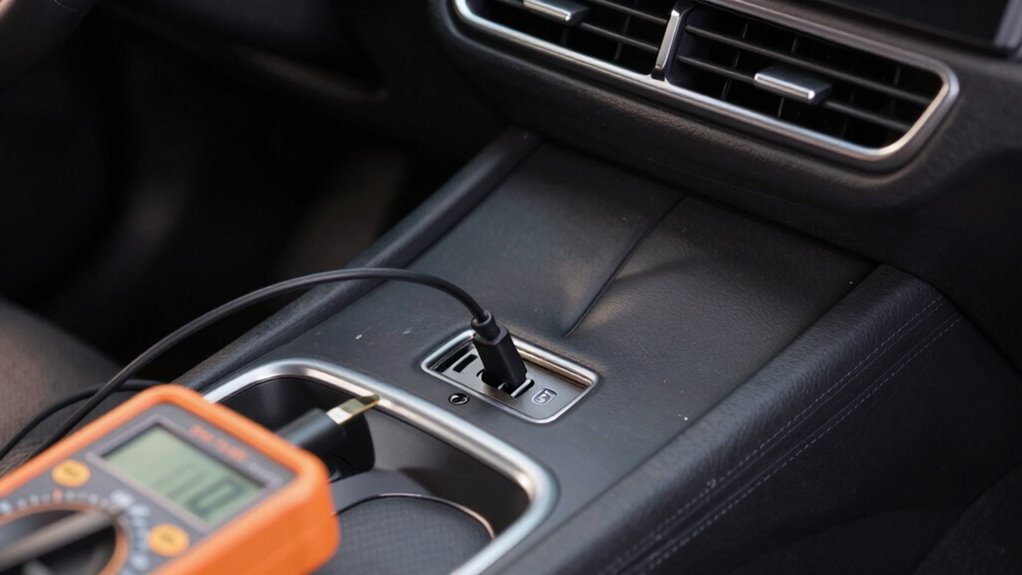
Many drivers notice that their car’s USB ports charge devices more slowly than expected, which can be frustrating when you need a quick power boost. The main reason behind this slower charging speed is that most car USB ports are designed primarily for data transfer rather than fast charging. Unlike wall chargers, which often supply higher wattage, USB ports in cars typically deliver less power, which limits how quickly your devices can recharge. Additionally, the car’s electrical system isn’t optimized for rapid charging, so your devices might take longer to reach full capacity.
Car USB ports often charge devices slowly due to lower power output and limited electrical system optimization.
Another factor to contemplate is the increasing popularity of wireless charging in cars. Many newer vehicles now come equipped with built-in wireless charging pads. These pads are designed to provide a more convenient way to power up compatible devices without the need for cables. Wireless charging can sometimes be more efficient because it maintains a steady power transfer, but its charging speed still depends on the device’s compatibility and the power output of the charging pad. While convenient, wireless chargers often don’t match the fast-charging speeds of high-wattage wall adapters, so your device still might take longer to fully charge compared to traditional home chargers. It’s also worth noting that the electrical system of a vehicle can influence the efficiency of charging methods.
Furthermore, the quality of the vehicle’s electrical components can vary, impacting overall charging performance. The battery efficiency of your device also plays a role in how quickly your device charges in the car. Devices with better battery management and optimized charging circuits tend to charge faster, even with lower power input. Conversely, older or less efficient batteries may charge more slowly and could degrade over time, further reducing charging speed. When you’re in your car, your device’s battery health and efficiency influence how quickly it can replenish its energy, regardless of the charging method. Understanding battery health can help you better manage your device’s charging performance over time.
high wattage car USB fast charger
As an affiliate, we earn on qualifying purchases.
As an affiliate, we earn on qualifying purchases.
Frequently Asked Questions
Do All Car USB Ports Charge Devices at the Same Speed?
Not all car USB ports charge devices at the same speed. Some provide higher power output, like fast-charging ports, while others are limited, affecting charging speed. If your car offers wireless charging or Bluetooth connectivity, you might find these options more efficient for keeping devices powered. To improve charging, use ports labeled as high-power or dedicated fast-charging, and avoid relying solely on standard USB ports that may be slower.
Can Using a Different Cable Improve Charging Speed?
Using a different cable can improve your charging speed, especially if the cable quality is poor or outdated. High-quality cables that support modern charging protocols transfer power more efficiently and safely. Look for cables with thicker wires, proper shielding, and compatibility with fast-charging standards. Upgrading your cable guarantees better connectivity, faster charging, and reduces potential damage, helping you get your device powered up quickly and reliably.
Are Factory-Installed USB Ports Slower Than Aftermarket Ones?
Factory-installed USB ports are often slower than aftermarket ones because they prioritize factory compatibility and cost efficiency over maximum charging speed. Their port design may limit power output, and they might not support fast charging standards. Aftermarket options usually feature improved port design and higher wattage capabilities, allowing for faster charging. Upgrading to a high-quality, compatible aftermarket port can considerably boost your charging speed.
How Does Temperature Affect USB Charging in Cars?
Warm temperatures can subtly slow down your USB charging, as heat impacts thermal conductivity and battery efficiency. When your car gets too hot, it hampers the transfer of energy, leading to slower charge times. Cooler conditions help maintain best thermal conductivity, ensuring your device charges efficiently. Keeping your car well-ventilated or shaded can help manage temperature, ultimately supporting better battery performance and faster charging through your USB port.
Is It Safe to Use Third-Party Chargers in Car USB Ports?
Using third-party chargers in your car’s USB ports can be safe if they meet proper charging standards and are compatible with your device. Always check third-party compatibility and confirm they follow recognized charging standards, like USB Power Delivery or Qualcomm Quick Charge. Avoid cheap or uncertified chargers, as they may cause damage or pose safety risks. Opt for reputable brands to guarantee safe, efficient charging without harming your device or your car’s electrical system.
car wireless charging pad compatible with iPhone
As an affiliate, we earn on qualifying purchases.
As an affiliate, we earn on qualifying purchases.
Conclusion
So, next time your phone’s battery barely budges after hours in your car, remember: it’s not just the USB port’s fault. Maybe, just maybe, your car’s charging port is secretly auditioning for a role in a slow-motion movie. Instead of blaming technology, consider it a chance to practice patience—after all, who needs fast charging when you can have a Zen-like experience of waiting? Embrace the slow, and maybe, just maybe, you’ll find inner peace.
car USB port splitter with fast charging
As an affiliate, we earn on qualifying purchases.
As an affiliate, we earn on qualifying purchases.
vehicle electrical system upgrade kit
As an affiliate, we earn on qualifying purchases.
As an affiliate, we earn on qualifying purchases.
Halloween Picks
halloween
As an affiliate, we earn on qualifying purchases.